
Blue Book Launch Conference for the Development Report on the Capital of China (2025–2026) and the First Symposium on Chinese Capital Studies Successfully Held
 打印
打印 收藏
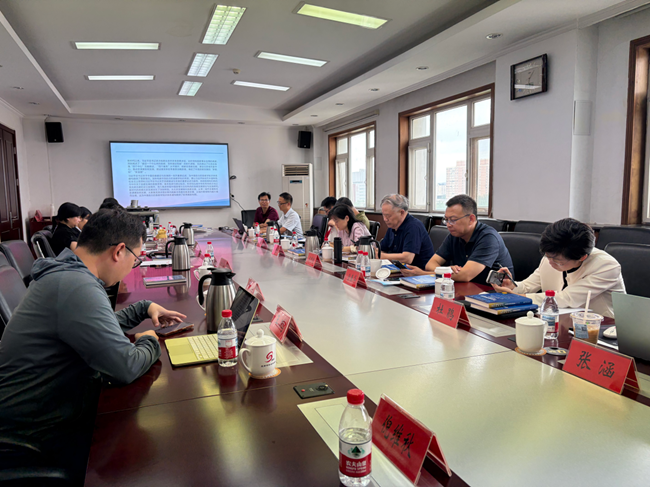
收藏 On July 22, the Blue Book Launch Conference for the Development Report on the Capital of China (2025–2026) and the First Symposium on Chinese Capital Studies were held in Beijing. The event, themed “Building an Independent Intellectual System for Chinese Capital Studies: Defining Concepts and Pathways Forward” was jointly organized by the academy’s Institute of Municipal Situations and the Beijing World City Research Base. President He Yalan attended the conference and delivered remarks. Invited experts and scholars who provided commentary and delivered thematic presentations included Professor Wang Deqi, Dean of the Institute for Coordinated Urban-Rural Development and Territorial Spatial Governance at Capital University of Economics and Business; Professor Che Feng, Associate Dean of the School of Management at Minzu University of China; Professor Jin Chunhua, Dean of the Business School at Beijing Information Science & Technology University; Research Fellow Wang Xiaoyan, Deputy Director of the Beijing Municipal Institute of Urban Management; Associate Professor Du Juan, Director of the Beijing Municipal Research Center for City Conditions at the Party School of the CPC Beijing Municipal Committee; and Assistant Researcher Zhao Biao of the Institute of Chinese Borderland Studies at the Chinese Academy of Social Sciences. Other attendees included Liu Aijun, Director of the Editorial Department of Urban Problems; Zhao Yong, Director, and Ni Weiqiu, Deputy Director of the Editorial Department of Beijing Social Sciences; and Zhang Han, an editor with China National Conditions and Strength. Researchers from the Academy’s Institute of Economics, Institute of Marxism, Institute of International Issues, Institute of Management, Institute of Municipal Situations, Institute of Media and Public Opinion, and the Beijing World City Research Base also attended.
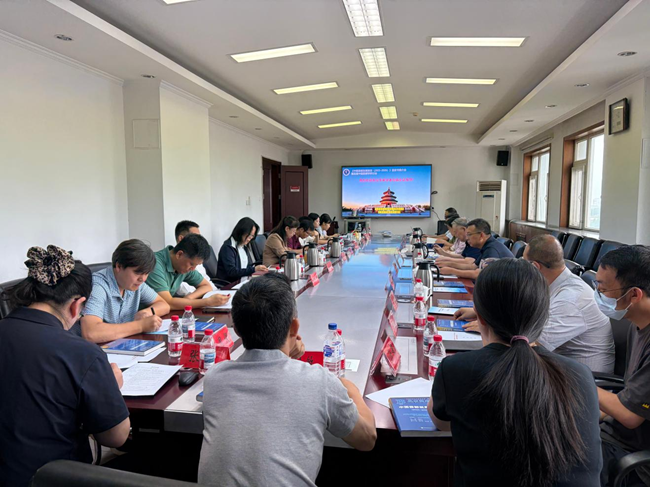
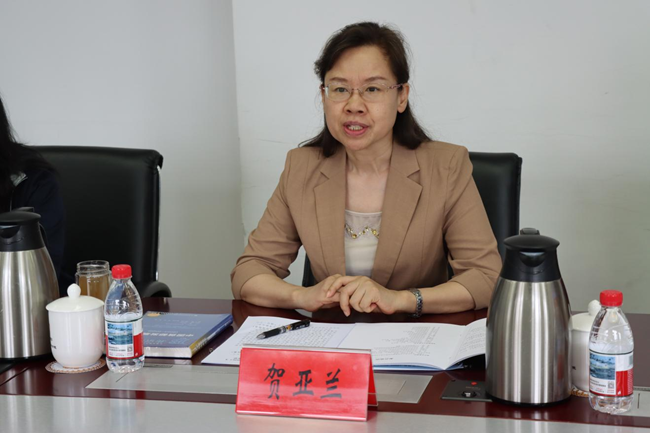
The Blue Book launch conference was chaired by Research Fellow Lu Xiaocheng, Director of the Institute of Municipal Situations at the academy in the morning. In her opening remarks, President He Yalan stated that the Development Report on the Capital of China (2025–2026) remains committed to its core orientation of “grounding itself in the capital’s practice and serving the capital’s governance.” The report continues to track and document the pulse of the capital’s development, systematically review the results of policy implementation, objectively assess current bottlenecks and challenges, and put forward forward-looking and targeted policy recommendations. It therefore serves as an important vehicle for advancing theoretical innovation in Capital Studies. Going forward, efforts should continue to advance the development of an independent intellectual system for Chinese Capital Studies. Research topics should be closely aligned with the major strategic plans of the CPC Central Committee and the Beijing Municipal Committee, with a view to producing more high-quality research outcomes that are rooted in the capital, serve the country, and engage with the world, thereby contributing think tank expertise to writing a new chapter in Beijing’s practice of Chinese modernization.
Dr. Liu Xiaomin, Deputy Editor-in-Chief of the Development Report on the Capital of China (2025–2026) Blue Book, presented on the development of the “Comprehensive Evaluation Index System for China’s Capital Development” and the results of its application. Guided by the concept of “coordinated development of the capital,” the report proposes a four-in-one theoretical framework encompassing mission orientation, hub capacity, security and resilience, and an innovation ecosystem. On this basis, it establishes a comprehensive evaluation system comprising three first-level indicators, nine second-level indicators, 30 third-level indicators, and 60 fourth-level indicators. The assessment results show that the Comprehensive Index for the Development of China’s Capital has increased from 0.09 to 0.92, following a J-curve nonlinear growth pattern, indicating that the capital’s development has entered a mature stage characterized by functional coordination and quality improvement. For the first time, the report uses quantitative analysis to identify a composite driving mechanism featuring “dual engines” of political support capacity and the development of an international science and technology innovation center; the “green foundation” of ecological civilization and public welfare, and the “new growth pole” of coordinated development in the Beijing-Tianjin-Hebei Region. This mechanism reveals the underlying logic of Beijing’s high-quality development characterized by “reducing scale without compromising quality.”
Research Fellow Lu Xiaocheng, the Executive Editor-in-Chief of the Blue Book, introduced the main content of the general report, systematically reviewing and comprehensively summarizing Beijing’s achievements and valuable experiences at different stages in areas such as politics, culture, international exchanges, scientific and technological innovation, green and low-carbon development, and urban governance. In developing Beijing as the national political center, the spatial layout of central government functions has been continuously optimized, while the coverage of “one-stop online government services” has reached 98%. Mechanisms such as “service packages” and “service stewards” have been fully implemented, and service and logistical support have been successfully provided for more than ten major international events involving heads of state, fully demonstrating the stature of the capital of a major country. In developing Beijing as an international science and technology innovation center, the city has ranked first among the Nature Index Science Cities Ranking for nine consecutive years, while the added value of the digital economy has exceeded 52% of GDP. In terms of developing Beijing as the national cultural center, the Beijing Central Axis was successfully inscribed on the World Heritage List, and the monitoring index for the development of the national cultural center has reached 129.53. In developing Beijing as an international exchange center, its global attractiveness ranking rose from 32nd to 19th, while entries and exits by foreign nationals increased by 34.5% year-on-year. Beijing’s capacity to support international exchanges and its urban soft power have been both improved, fully demonstrating the open and inclusive character of the capital of a major country.
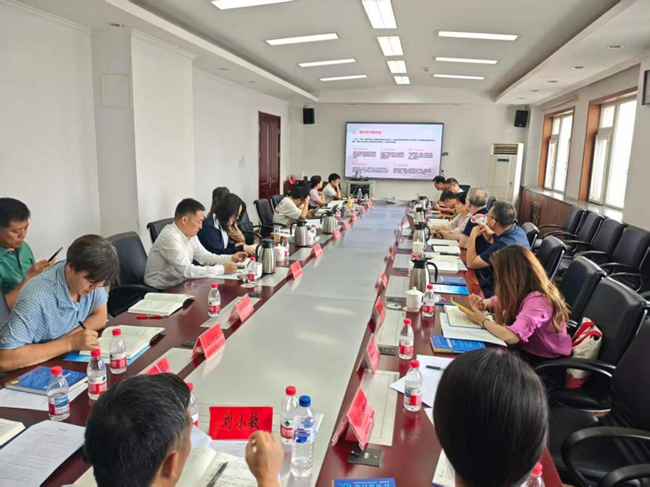
Subsequently, Deputy Editors-in-Chief Research Fellow He Renwei, Dr. Liu Xiaomin, Dr. Zhao Yaping, and Dr. Xu Shuang respectively presented the key perspectives in four sections: the development of the “Four Centers,” green and low-carbon development, the capital metropolitan area, and international experience. Several contributing authors also presented their principal findings at the conference. Among the presenters, Associate Researcher Wang Peng of the Institute of Management, introduced “A Comparative Study of Digital-Friendly City Development: International Experience and the Capital’s Practice”; Dr. Li Yuan of the Institute of Municipal Situations presented “Achievements and Prospects in Developing the International Science and Technology Innovation Center, 2025-2026”; and Assistant Researcher Tian Lei of the Institute of Municipal Situations, presented “A study on Beijing’s development as an international consumption center city from the perspective of the Beijing-Tianjin-Hebei Urban Agglomeration.”
During the expert review session, the participants spoke highly of the Blue Book’s structure and content and offered targeted recommendations for its further improvement. Professor Wang Deqi noted that the Blue Book’s international comparison section was particularly distinctive and suggested incorporating an assessment of optimized urban spatial layouts into the indicator system. Professor Che Feng observed that the Blue Book reflects the latest developments in the capital and suggested that, while preserving its distinctive features, its sections could be further refined and made more specialized, thereby developing clearly refined research themes in the field of Capital Studies. Professor Jin Chunhua proposed strengthening research on digital city development, the platform economy, and related fields. Research Fellow Wang Xiaoyan noted that the Blue Book demonstrates a strong focus on megacity governance in the capital. Wang Xiaoyan suggested that, while careful attention has been paid to the selection of cities for international comparison, research into specific governance issues should be further strengthened. Director Du Juan observed that the Blue Book is firmly grounded in the practice of the capital’s development and recommended reinforcing its policy orientation. Dr. Zhao Biao emphasized the significant value of the Blue Book’s research on the development of the capital metropolitan area and suggested maintaining close attention to the coordinated development of the Beijing-Tianjin-Hebei Region.
Director Lu Xiaocheng concluded the Blue Book Launch Conference for the Development Report on the Capital of China (2025–2026). He thanked the participating experts for their valuable suggestions on the Blue Book’s section structure, content selection, indicator innovation, research methodologies, and other aspects, which helped forge important consensus on the theoretical framework and disciplinary development of Capital Studies. On the new journey ahead, the Institute of Municipal Situations will continue to fulfill its role as a new-type think tank, focus on Capital Studies as an emerging academic field, conduct in-depth research on the capital’s development, and deepen academic exchanges and scientific research collaboration. In doing so, it will contribute its think-tank expertise to advancing Beijing’s high-quality development and building an independent intellectual system for Chinese Capital Studies.
The First Symposium on Chinese Capital Studies, held in the afternoon, was chaired by Research Fellow He Renwei of the Institute of Municipal Situations at the Beijing Academy of Social Sciences. Research Fellow Lu Xiaocheng, Director of the Institute of Municipal Situations, delivered a thematic presentation titled “Building an Independent Intellectual System for Chinese Capital Studies: Reflections from a multi-scale perspective.” He noted that examining the field at the municipal, cross-regional, practical, and global scales while strengthening knowledge development and theoretical innovation in Chinese Capital Studies would not only provide theoretical support for Beijing’s own development but also establish a knowledge platform for promoting exchanges and mutual learning on capital development with other countries.
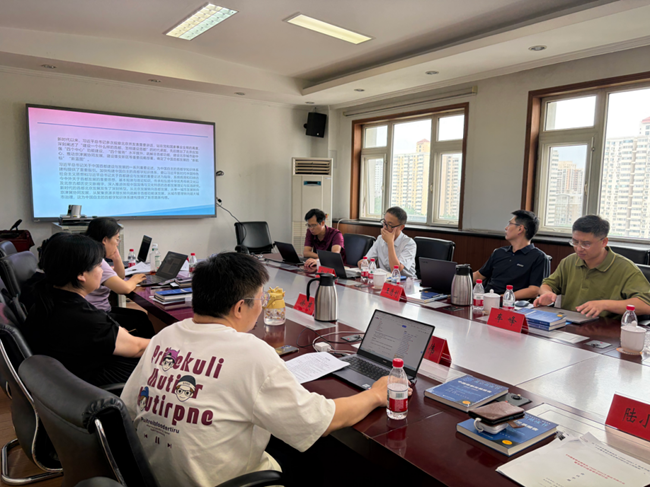
Professor Wang Deqi of Capital University of Economics and Business delivered a thematic presentation titled “Research on Mechanisms and Pathways for Building Beijing into a Modern People’s City from the Perspective of Capital Studies.” He noted that Capital Studies should focus on the capital’s functional positioning, patterns of evolution, modernization of governance, and high-quality development. Wang Deqi emphasized that developing Capital Studies as a discipline requires not only adherence to the general principles of megacity governance but also a political orientation toward ensuring the orderly functioning of the state, a problem-oriented approach to megacity governance, and a mission-oriented commitment to the capital’s high-quality development. He offered recommendations for developing the discipline in terms of its subject matter, conceptual scope, value position, and research paradigms.
Professor Che Feng from Minzu University of China delivered a thematic presentation titled “Innovative Practices in the Grassroots Governance of Beijing as a Megacity from the Perspective of Capital Studies.” Che Feng noted that Beijing’s urban governance is an important field of research within Capital Studies, shared a wide range of grassroots governance cases from Beijing, and summarized the city’s innovative practices in areas such as the reform of Swift Response to Public Complaints, the improvement of deliberative consultative mechanisms, Party-building-led grid-based governance, and digital and intelligent empowerment. These practices provide an empirical foundation for Capital Studies to distill theoretical concepts from practice and offer important support for building an independent intellectual system for Chinese Capital Studies.
Professor Jin Chunhua from Beijing Information Science & Technology University delivered a thematic presentation titled “Practices and Optimization Pathways for Developing the Beijing (Beijing-Tianjin-Hebei) International Science and Technology Innovation Center.” Jin Chunhua noted that the CPC Central Committee’s explicit call to develop the “Beijing (Beijing-Tianjin-Hebei) International Science and Technology Innovation Center” marks a historic convergence of two major strategies: the coordinated development of the Beijing-Tianjin-Hebei Region and the development of an international science and technology innovation center. Going forward, the Beijing (Beijing-Tianjin-Hebei) International Science and Technology Innovation Center should establish a tiered and interconnected regional innovation landscape, deepen reform of benefit-sharing mechanisms, strengthen its capacity as a source of original innovation, and enhance its distinctly international character through institutional opening-up.
Research Fellow Wang Xiaoyan from the Beijing Municipal Institute of Urban Management delivered a thematic presentation titled “International Comparisons and Optimization Pathways for Beijing’s Waste-Sorting Governance Model from the Perspective of Capital Studies.” Wang Xiaoyan summarized Beijing’s achievements at different stages, including increases in the calorific value of waste and reductions in the volume of waste requiring treatment. Wang Xiaoyan also objectively identified several practical challenges the city faces, including an incomplete recycling system, underdeveloped corporate responsibility mechanisms, and a multi-stakeholder governance framework that requires strengthening. Drawing on the governance approaches of Japan and Germany, she proposed strengthening the foundations of grassroots governance, improving resource recovery, and maintaining a firm focus on green and low-carbon development to create a world-class waste-governance model with the distinctive characteristics of the capital.
Associate Professor Du Juan, Director of the Beijing Municipal Research Center for City Conditions at the Party school of the CPC Beijing Municipal Committee, delivered a thematic presentation titled “Beijing Research in Development: The Evolution and Future Trends of Beijing Studies, Capital Studies and Jingji Studies.” Du Juan systematically traced the theoretical development of Beijing Studies, Capital Studies, and Jingji Studies and clarified the distinctions and interrelationships among the three fields. Du Juan emphasized that Capital Studies should focus more closely on a city’s “capital character,” with particular attention to the modernization of capital governance and national strategic functions. It should also establish an independent disciplinary perspective that complements Beijing Studies, thereby jointly supporting the development of the capital’s independent intellectual system.
Research Fellow Wang Deli, Deputy Director of the Institute of Economics at the Beijing Academy of Social Sciences, delivered a thematic presentation titled “Reflections on Development Sequence of the Beijing-Tianjin-Hebei World-Class Urban Agglomeration.” Wang Deli argued that fostering and developing modern metropolitan areas is an essential stage in building the Beijing-Tianjin-Hebei world-class urban agglomeration. He proposed that future efforts should give top priority to developing a “one-hour commuting circle,” explore institutional reforms and mechanisms for the integrated development of cross-boundary commuting areas, and accelerate the formation of a more mature, polycentric, and networked spatial structure in the capital metropolitan area.
Assistant Researcher Zhao Biao of the Institute of Chinese Borderland Studies at the Chinese Academy of Social Sciences delivered a thematic presentation titled “The Historical Interplay between Capital Governance and Borderland Development and its Implications from the Perspective of Capital Studies.” Zhao Biao noted that Beijing has a distinctive borderland heritage, tracing its origins to Jicheng, located at the junction of the North China Plain and the northern grasslands, and has long served as a major military stronghold and trading hub. Going forward, capital governance should adopt a borderland perspective, promote mutual empowerment, establish a new framework for coordinated development between the capital and borderland regions, and achieve shared prosperity.
Dr. Meng Gui, Assistant Researcher at the institute of city situations of the Beijing Academy of Social Sciences, delivered a thematic presentation titled “Achievements, Regional Disparities, and Optimization Strategies for Ecological Civilization Development in China’s Capital.” He presented a systematic assessment of ecological civilization development across the capital’s 16 administrative districts. The assessment found that the overall level of ecological civilization development in the capital has followed a fluctuating upward trend. The central urban area leads in ecological quality; the Beijing Municipal Administrative Center has demonstrated a notable role in promoting green development; the new towns in the plains are key areas for green transformation but exhibit considerable disparities; and the ecological conservation areas perform a prominent role as ecological barriers. He proposed further developing a coordinated governance system covering the entire municipality, adopting differentiated strategies tailored to each area, and continuously advancing the realization of the capital’s ecological value.
The participating experts engaged in extensive discussions and agreed that developing Chinese Capital Studies and establishing theories, methods, and research approaches aligned with the realities of the capital’s development constitute an important mission and responsibility of the capital’s philosophy and social sciences community. Going forward, cooperation and exchanges should be strengthened by establishing long-term collaborative mechanisms with institutions including the Chinese Academy of Social Sciences, Minzu University of China, Capital University of Economics and Business, Beijing Information Science & Technology University, and the Party School of the CPC Beijing Municipal Committee. Continued in-depth research on the capital should be promoted, while experts from different fields should be brought together to further refine the theoretical framework of Chinese Capital Studies.