
Xu Shuang’s New Monograph Explores Science, Technology Policy and Innovation in China and Japan
 打印
打印 收藏
收藏Publication Information
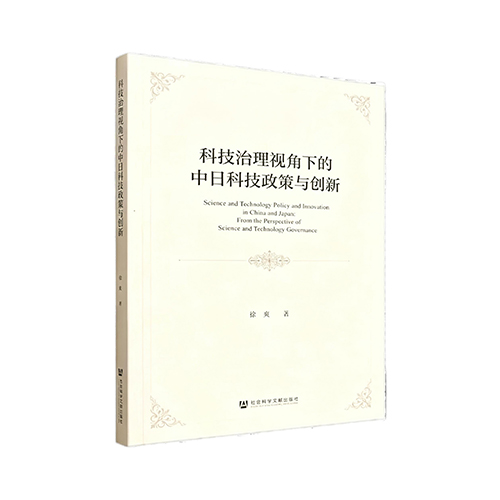
Science and Technology Policy and Innovation in China and Japan: From the Perspective of Science and Technology Governance
By Xu Shuang
Social Sciences Academic Press

Xu Shuang
Assistant Research Fellow, Institute of Municipal Situations
Beijing Academy of Social Sciences
Recently, Science and Technology Policy and Innovation in China and Japan: From the Perspective of Science and Technology Governance, an academic monograph by Xu Shuang, Assistant Research Fellow from the Institute of Municipal Situations of BASS, was officially published by the Social Sciences Academic Press.
Introduction
Adopting a science and technology governance theoretical framework, this book undertakes a systematic analysis and comparative study of Chinese and Japanese science and technology policies and innovation systems, offering fresh academic perspectives into the drivers of national innovation and global science and technology governance. Centered on the core analytical framework of science and technology governance, the monograph thoroughly examines the collaborative mechanisms underlying legal provisions, policy instruments, and institutional arrangements. It aims to streamline and regulate technological innovation procedures, and thereby foster social progress and economic growth. The author underscores that robust science and technology governance constitutes a strategically central position in optimizing national innovation systems and strengthening international technological competitiveness.
The book consists of two parts. The first part offers a systematic review of the historical evolution and developmental trajectories of science and technology policies in China and Japan. With regard to China, the author traces the country’s policy development process spanning from technology introduction in the early years after the founding of the People’s Republic of China, through a series of major national science and technology programs launched after the reform and opening-up, to the full-fledged development of the national innovation system and the nation’s progressive pursuit of becoming a global science and technology power. In the context of Japan, the book analyzes the nation’s science and technology policy shifts since the Meiji Restoration. Evolving from proactive technology introduction and absorption of foreign technology to a focus on independent innovation, Japan has ultimately established its status as a major science and technology power. The second part centers on comparative analysis and emerging frontier challenges. Through cross-national comparison, the book reveals key differences between China and Japan in the governance of science and technology, specifically regarding technological resource allocation, the role of enterprises in research and development, government policy intervention, and intellectual property protection. Furthermore, the monograph places particular emphasis on the significance of talent strategies for technological innovation. It compares different approaches and results of the two countries in such areas as incentives for researchers, research funding management, institutional cooperation, and young talent development. Against the backdrop of global digitalization and green industrial transformation, the author further points out in a forward-looking way that contemporary science and technology governance is facing a series of serious challenges, including technological risk regulation, social fairness and inclusion, science and technology ethics, and environmental sustainability. Accordingly, future science and technology policymaking necessitates strengthened international cooperation and transnational governance. Through the sharing of experience and technical collaboration, global scientific and technological innovation can be guided to serve the Sustainable Development Goals (SDGs).