
Bibliography of Chinese Publications on Manchuology (1949–2019): A New Research Work from the Institute of Manchuology, Beijing Academy of Social Sciences
 打印
打印 收藏
收藏
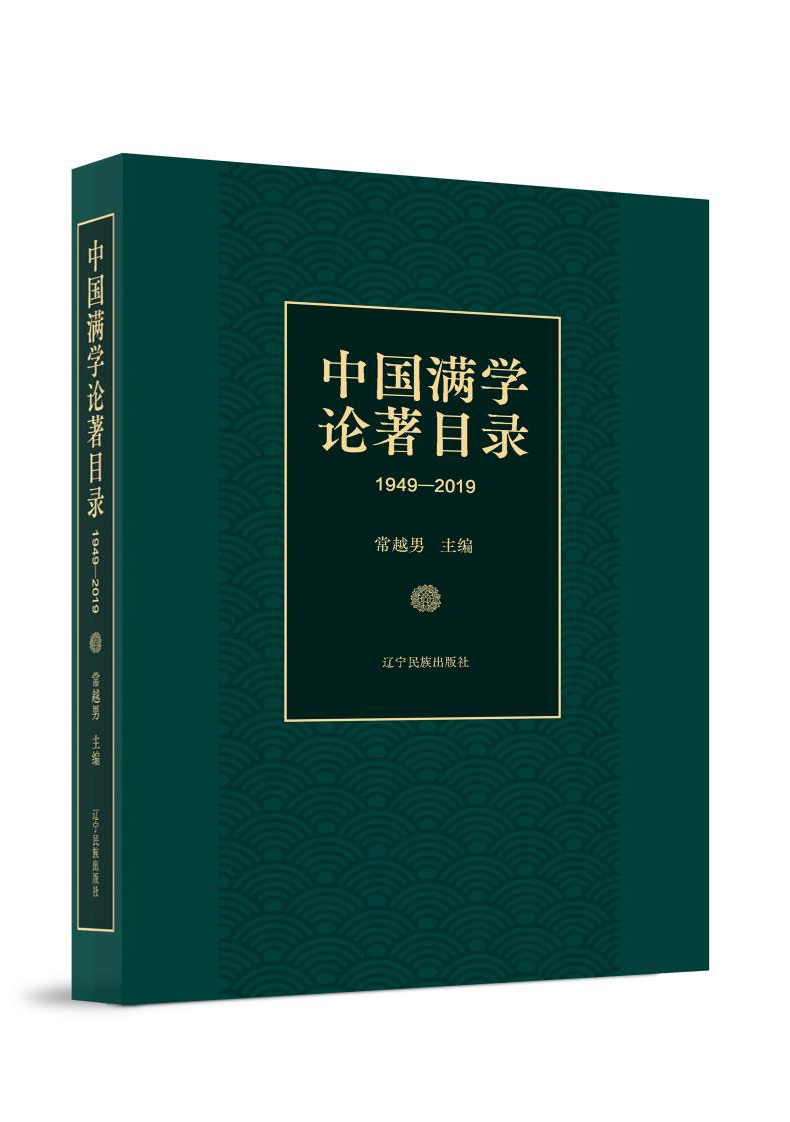
Bibliography of Chinese Publications on Manchuology (1949–2019)
Edited by Chang Yue-nan
Liaoning Ethnic Publishing House
Book Description
Manchuology(Manchu studies) is a comprehensive and international field of research. It is also a “rare discipline” and niche discipline that holds significant cultural value and importance for cultural inheritance. Research on Manchu has a long history in Chinese academia. Since the founding of the People’s Republic of China in 1949, and through the efforts of several generations of scholars, Manchuology has gradually evolved into a specialized discipline encompassing multiple fields, including history, linguistics, and bibliography. With the rapid development of Manchuology in China, relevant research institutions have been established one after another, talent cultivation and the building of academic teams have been gradually improved, and theoretical exploration and disciplinary development have steadily advanced.
Over the past seven decades, a large number of outstanding achievements in the field of Manchuology have emerged in China, with a steady stream of academic works and journal articles published. The publication of primary archival documents in Manchu and other languages has brought new vitality to the flourishing of Manchuology. As research has progressed, the discipline of Manchuology has exhibited distinct characteristics across different historical periods. A systematic study of the academic development of Manchuology in China holds significant theoretical value and practical significance for building a system of philosophy and social sciences with Chinese characteristics.
In ancient China, there was a field of study known as “textual collation” which involved research on bibliographies, editions, and textual emendation. In his book A Critical Examination of the Seventeen Histories, Wang Mingsheng, a Qing dynasty scholar, specifically highlighted the “study of bibliography,” stating that “this is the first essential task in scholarship; one must begin here to find the proper gateway into the field.” Later scholars of bibliography placed even greater emphasis on the principle of “locating books by category and exploring scholarship through books.” In view of the fact that existing bibliographies and article indexes on Manchuology tend to be dated, incomplete in coverage, and unclear in disciplinary positioning, the Institute of Manchuology at the Beijing Academy of Social Sciences has compiled this specialized bibliography of Manchuology from the perspective of disciplinary development.
The book is organized into General Overview of the Discipline, Historical Research, Linguistic Research, Cultural Research, Literature and Historical Sites, and Others, and includes a Guide to the Use and an Author Index. To ensure the accuracy of the bibliographic materials, we made every effort to consult the original journals and books. Since Taiwanese journals from different periods followed different citation conventions and annotation practices, we also specially invited scholars in Taiwan to assist us in verifying information from the original publications. After repeated screening, review, and proofreading, the final compilation includes a bibliography of over 8,000 journal articles and nearly 1,700 books.
This book presents the achievements of Manchuology in China over the past 70 years since the founding of the People’s Republic of China, highlighting in particular the development of an independent knowledge system for Manchuology, the autonomy of research, and the distinctive characteristics of the field. It is hoped that this volume will serve as a valuable resource for scholars in the academic community. The compilation of this book spanned three years, during which the research team devoted considerable effort to every stage of the process, including topic selection, content development,stylistic rules, cataloging, verification, classification, selecting, and proofreading. Despite multiple rounds of review and proofreading, omissions and errors are still difficult to avoid,and we sincerely welcome our readers’ criticism and corrections. We would like to extend our heartfelt gratitude to all colleagues who have supported and assisted us!
(Compiled and edited based on the “Preface” and “Afterword” written by the book’s editor-in-chief)
About the Editor-in-Chief
Professor Chang Yue-nan is the director of the Institute of Manchuology at the Beijing Academy of Social Sciences. Her research focuses primarily on Qing history and Manchuology. She is the author of A Study on the system of Kao Ke of the Qing Dynasty and Between Family and State: A Study of the Eight “Prominent Clans” of the Manchu in the Early Qing Dynasty, as well as the editor of Research on Manchuology from the Perspective of Chinese Cultural Identity. She has also served as the chief editor of the academic journal Essays on Manchuology (Volumes 9–14).