
Dr. Zhang Jing from BASS Attended the Second International Conference on the Overseas Dissemination of Chinese Classical Fiction and Had an Academic Presentation
 打印
打印 收藏
收藏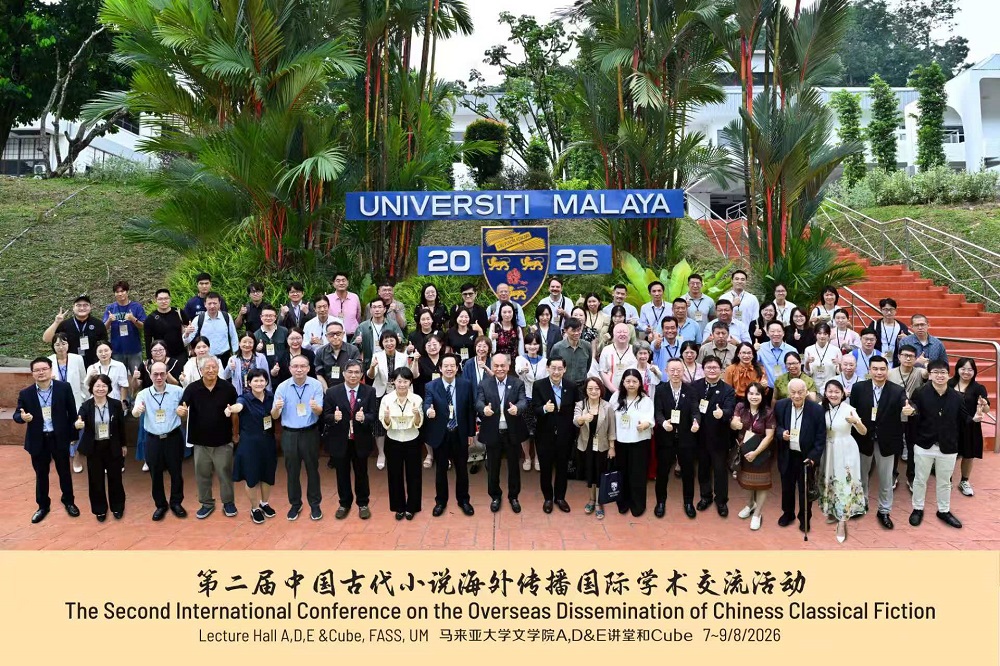
From August 7 to 9, the Second International Conference on the Overseas Dissemination of Chinese Classical Fiction was held at the University of Malaya. It was co-hosted by the Department of Chinese Studies, University of Malaya, and the Collaborative Innovation Center for the Inheritance and Dissemination of Chinese Culture in Hong Kong, Macao, Taiwan, and Overseas, Jinan University (Guangzhou, China). The event was co-organized by the School of Humanities, Anqing Normal University; the Red Chamber Dream Research Centre, University of Malaya; the Department of Chinese Studies Alumni Association, University of Malaya; and Sin Chew Daily. Nearly 90 scholars from more than 10 countries and regions, including China, Malaysia, Singapore, Thailand, Vietnam, Japan, South Korea, Russia, and Australia, attended the event. Dr. Ho Kee Chye, Head of the Department of Chinese Studies, University of Malaya, said that ancient Chinese fiction is an important medium through which Chinese civilization reaches the world. It spread globally through trade, migration, and book circulation, and exerted far-reaching influence in diverse cultural environments. The conference featured two keynote sessions, in which eight scholars—Tan Sri Chan Kong Choy, Visiting Professor at the University of Malaya; Professor Cheng Guofu, Changjiang Distinguished Professor of the Ministry of Education of China; Professor Chen Weizhao of Fudan University; Professor Mao Wenfang, Dean of the College of Humanities, National Chung Cheng University, Taiwan, China; Professor Yumi Okazaki of Waseda University, Japan; Professor Han Hye-kyung, President of the Korean Society for the Study of A Dream of Red Mansions and Professor at the Catholic University of Korea; Professor Chua Soo Pong of Raffles Music College, Singapore; and Professor Wu Qiong of Kasetsart University, Thailand—took the historical dissemination of ancient Chinese fiction in various countries and regions, including Malaysia, Japan, South Korea, Thailand, Vietnam, France, and Germany, as their point of departure, and shared the development of ancient Chinese fiction across geographical, linguistic, and cultural boundaries as well as the latest research findings.
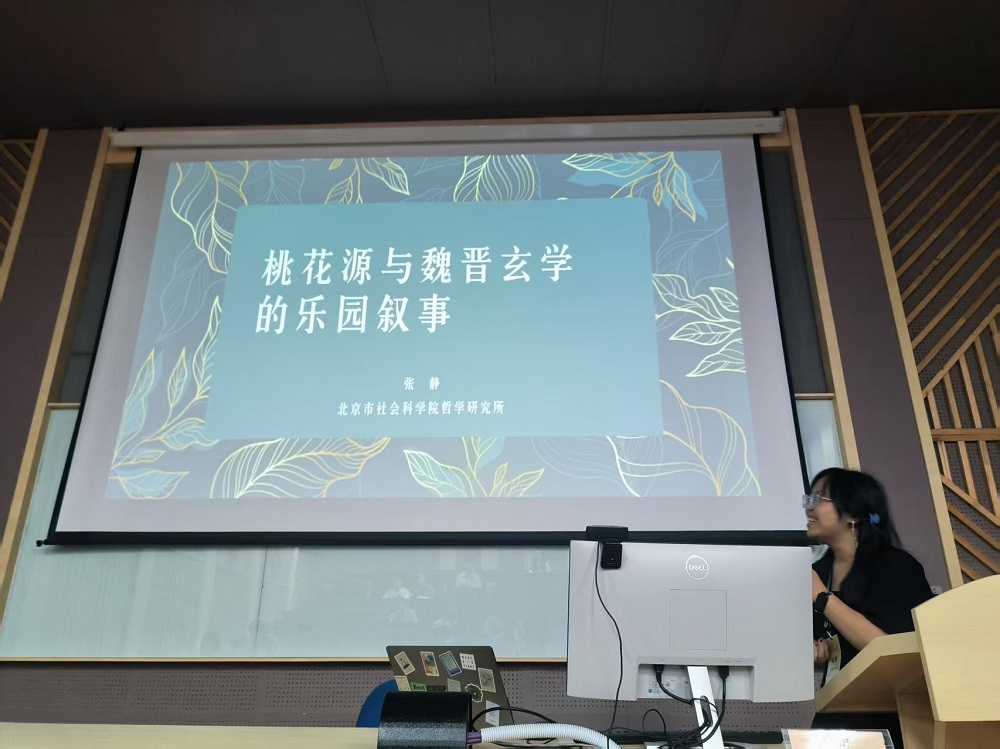
On the morning of August 8, Assistant Research Fellow Zhang Jing of the Institute of Philosophy, Beijing Academy of Social Sciences(BASS), presented her paper "The Peach Blossom Spring and the Paradise Narrative" in Panel 3A of the parallel sessions. She noted that after Tao Yuanming composed "Record of the Peach Blossom Spring" and "Poem on the Peach Blossom Spring", the Peach Blossom Spring gradually evolved into a classic literary motif. Nostalgia for and veneration of antiquity was one of the mainstream intellectual trends of the Wei-Jin period. Placing Tao Yuanming in the historical context of Wei-Jin Xuanxue clearly reveals the protagonist, the journey, and the ordering of the paradise in paradise narratives. The spiritual spaces and paradises depicted by different thinkers, delimited by the presence or absence of a ruler, exhibit entirely different configurations of political order.
The fellow panelists also took narrative as their theme. Lecturer He Ganshuo of the School of Political Science and Law, Capital Normal University, and Senior Lecturer Chong Fook Kheong of the Department of Chinese Studies, University of Malaya, presented papers respectively titled “Periphery and Center: A Preliminary Study of the ‘Positional’ Narrative of Kunlun Mythology” and “Is It Not Sorrowful? The Sorrow of Dying for Things as the Narrative Origin of the Fables in *Zhuangzi*.” They engaged in extensive exchange and discussion on issues such as how to conduct interdisciplinary research across literature, philosophy, and religion, and how narrative reflects changes in intellectual history.
During Keynote Speech II at the closing ceremony, Professor Chen Weizhao of Fudan University, in his paper “The Comic Narrative of the Imperial Examination: With a Focus on the Copy of *Poti Wenzhang* Held in Germany,” cited "The Peach Blossom Spring and the Paradise Narrative" while summarizing literary narrative studies, treating it as one of the case studies in non-human narrative. The summary report for Panel 3 was delivered by Senior Lecturer Teoh Hui Choo of the Department of Chinese Studies, University of Malaya, who fully affirmed the discussions in Panel 3A and its interdisciplinary endeavors. Zhang Jing actively participated in the international academic conference, engaged in extensive exchanges with scholars both in and outside the sessions, sparked scholarly inspiration, and, through interaction, came to understand the rich and diverse practices and creativity of global Chinese culture.