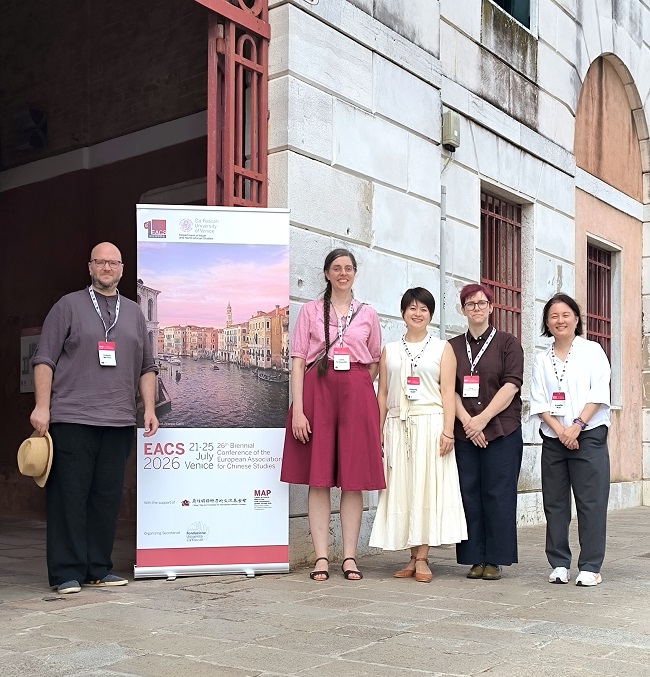
Guan Xiaojing of the Institute of Manchuology at BASS Attended the 26th Biennial Conference of the European Association for Chinese Studies (2026) in Italy
 打印
打印 收藏
收藏From July 21 to 25, 2026, the 26th Biennial Conference of the European Association for Chinese Studies was held at Ca’ Foscari University of Venice, Italy. At the invitation of the European Association for Chinese Studies, Guan Xiaojing of the Institute of Manchuology at the Beijing Academy of Social Sciences traveled to Italy to attend the conference, where she convened a thematic panel and delivered an academic presentation.
The European Association for Chinese Studies was formally established in Paris, France, in 1975. Since 1976, it has regularly held its biennial conference, which has developed into one of Europe’s largest and most academically authoritative multidisciplinary conferences on Chinese studies. This year’s conference attracted more than 700 scholars from dozens of countries and regions worldwide and featured over 220 parallel sessions. Through a diverse range of formats, including keynote speeches, roundtable discussions, finalist presentations for the Young Scholars Award (YSA), and poster presentations, the conference showcased the latest multidisciplinary research findings in Chinese studies spanning the period from the pre-Qin era to the present. Topics covered history, literature and the arts, philosophy and religion, linguistics, international relations, and other fields.
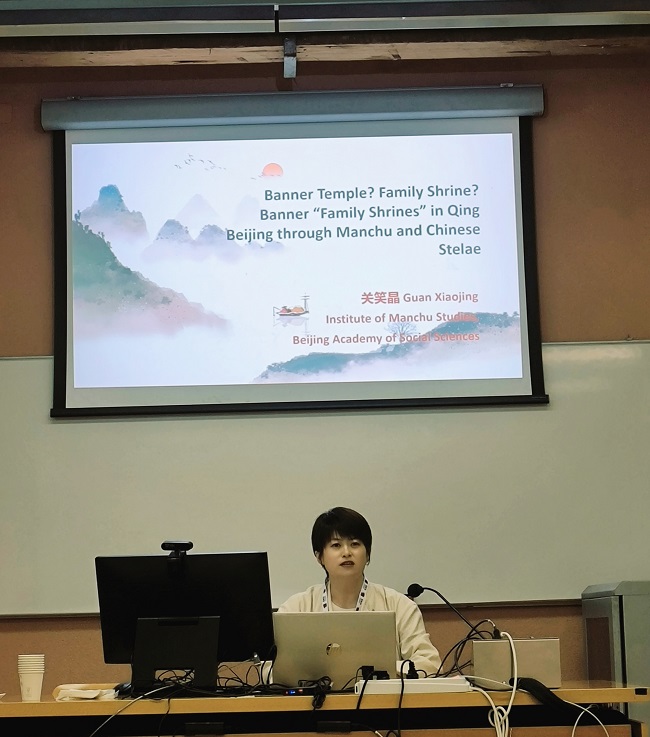
At the conference, Guan Xiaojing convened the thematic panel titled “Imprints, Classrooms, and Incense: Knowledge Circulation, Shared Space, and Banner Identity in the Qing Empire”. The panel focused on Bannerman identity and Manchu-Chinese cultural interaction during the Qing Dynasty. Its members came from the Beijing Academy of Social Sciences, the University of Hong Kong, the University of Chicago, and Bates College, while Julia Schneider from the Asia-Africa Institute (AAI) of University of Hamburg served as the panel discussant. Guan Xiaojing delivered an academic presentation titled “Banner Temple? Family Shrine?Banner ‘Family Shrines’ in Qing Beijing through Manchu and Chinese Stelae”. Focusing on references to “Banner family shrines” in Manchu-Chinese stelae, her research examined two representative cases: the Fu Heng family’s shrines in the Inner City during the Qianlong reign in the Qing Dynasty and the Banner Temples of the Old Summer Palace Imperial Guards. She examined the establishment, architectural forms, and activities of Banner family shrines in Qing Beijing, demonstrating how the Banner people in the capital expressed complex and shifting identities through various forms of spiritual practices. The presentation and panel discussion received positive feedback from the scholars in attendance. Participants also engaged in in-depth exchanges on the social impact of the Manchu-Chinese bilingual policies and new methods for utilizing stelae inscriptions as historical sources.
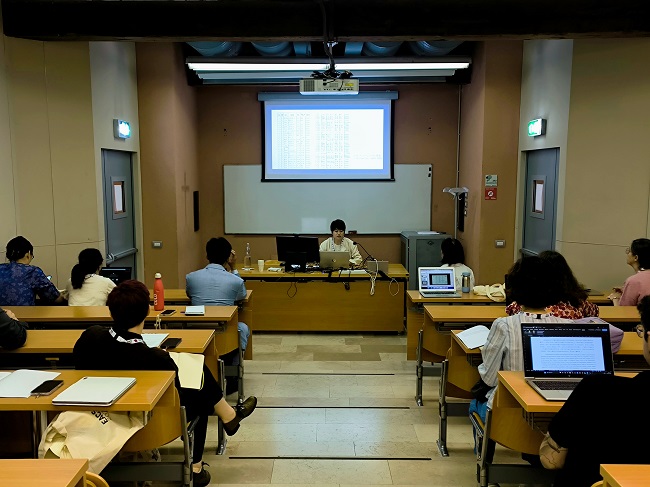
Participation in this conference showcased the Beijing Academy of Social Sciences’ academic achievements and distinctive research strengths in Manchuology, elevated the international academic influence of our Academy’s research in this area, and provided an important opportunity to learn from and adopt cutting-edge research methods in the international academic community and expand our academic horizons.