A Researcher from Our Academy Attended the 2026 Public Management Research Conference in the US
 打印
打印 收藏
收藏
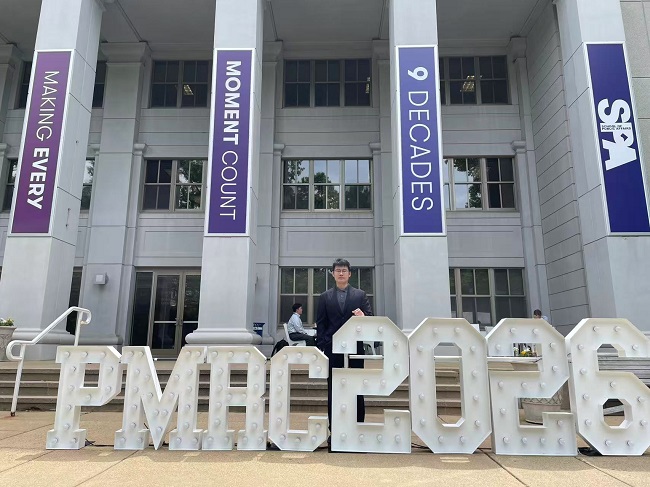
From June 3 to 6, the 2026 Public Management Research Conference (PMRC 2026) was held at American University in Washington, D.C., the United States. Organized by the Public Management Research Association (PMRA), the conference focused on frontier issues in public management research and attracted experts and scholars from universities, research institutions, and the field of public affairs around the world. Fu Shuaize, a researcher from our academy, was invited to attend the conference and delivered an academic presentation at a parallel session.
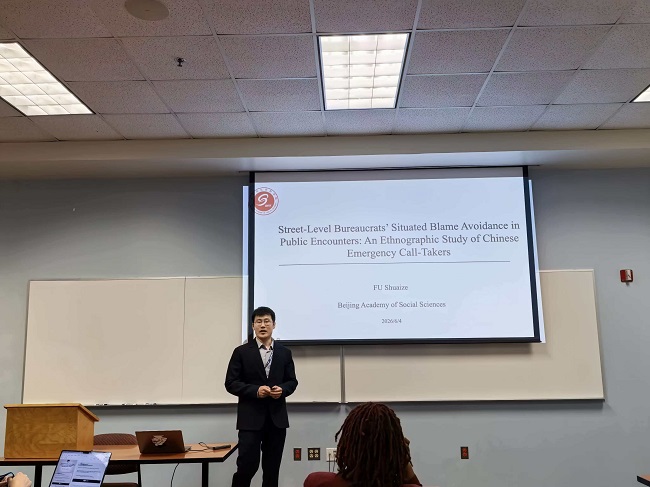
On the afternoon of June 4, Fu Shuaize presented a paper titled “Street-Level Bureaucrats’ Situated Blame Avoidance in Public Encounters” at the panel “The Frontline Paradox: Navigating Discretion, Accountability, and Trust”. The participating experts offered constructive feedback on the paper’s core arguments, data analysis, theoretical contributions, and written expression, and engaged in in-depth discussion on topics such as street-level bureaucrats, accountability in public organizations, and citizen interaction.
During the conference, Fu Shuaize also participated in several parallel sessions and pre-conference workshops on topics such as collaborative governance and the application of artificial intelligence, with a focus on gaining insight into the latest research developments in the international public management community in areas including collaborative governance, citizen participation, artificial intelligence, and organizational change in public service organizations. He also shared Beijing’s practical experience in governing a megacity with international peers on topics such as Beijing’s “swift response to public complaints” mechanism, “Party-led grassroots governance”, and exchanged views on the theoretical refinement and academic contributions of related research.
PMRC is a highly influential international academic conference in the field of public management. Participation in this event not only promoted academic exchange and cooperation between our researchers and their international counterparts and enhanced the international visibility of our academy, but also provided a valuable opportunity to convey China’s narratives and present China’s voice more effectively on the global academic stage.