BASS Scholar Xiao Chun Attends International Manchuology Symposium Marking Katalin Köhalmi Centenary in Hungary
 打印
打印 收藏
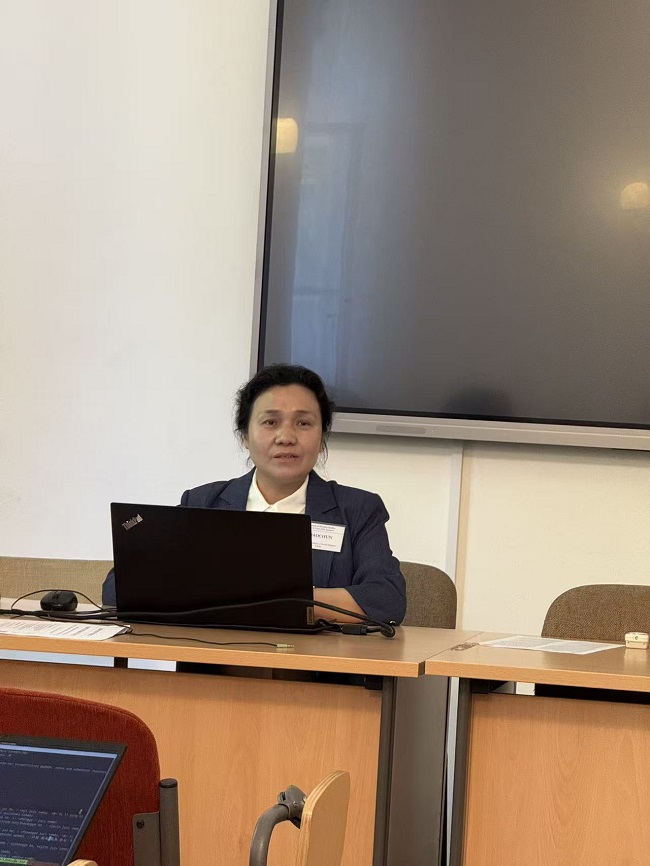
收藏On May 21–22, 2026, the “International Manchuology Symposium Commemorating the 100th Anniversary of Professor Katalin Köhalmi’s Birth” was held in Budapest, Hungary. At the invitation of the Center of Mongolian and Inner Asian Studies at Eötvös Loránd University, Xiao Chun, Associate Research Fellow at the Institute of Manchuology of the Beijing Academy of Social Sciences, attended the symposium and delivered an academic presentation.
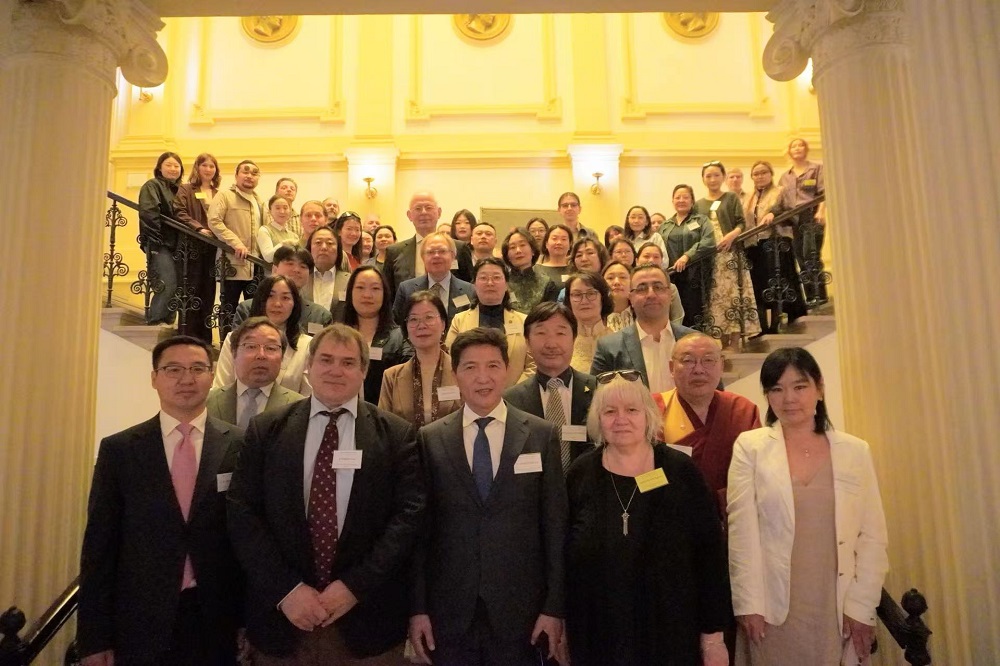
Eötvös Loránd University is one of the birthplaces of Manchuology in Europe. Since the late nineteenth century, it has conducted in-depth research on the Manchu language, history, and culture, producing leading scholars such as Joseph Budenz, Gábor Balint, and Katalin Köhalmi, and has exerted significant influence in European and international Manchuology. Over 50 experts and scholars from eight countries, including China, Mongolia, Hungary, the United Kingdom, Germany, Canada, South Korea, and Turkey, attended the symposium. The discussions covered a wide range of topics, including overseas Manchuology, linguistics, Qing dynasty history and archives, court culture, literature, religious culture, and lexicography.
In the field of linguistics, scholars explored topics such as causative and passive voice markers in Manchu, Manchu loanwords in the Daur language, and comparisons of verb adverbial forms in Manchu and Xibe. Regarding Qing history and archives, Chinese scholars introduced the academic value of newly discovered multilingual archives and the process of Mongolian tribes submitting to Qing rule in the early Qing period. There were also many excellent presentations on court culture, literature, and religious culture.
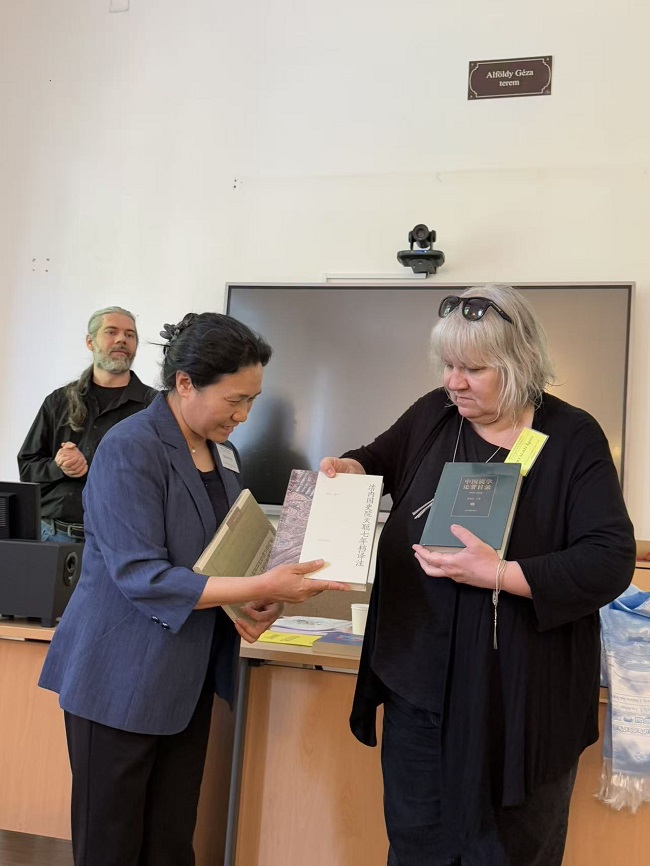
Xiao Chun delivered a keynote speech titled “A Study of the Three-Script Dictionary of Manchu, Mongolian and Uyghur” in which she examined the dictionary’s date of compilation, lexical sources, and academic value, and presented the organizers with the latest research publications of the Institute of Manchuology.