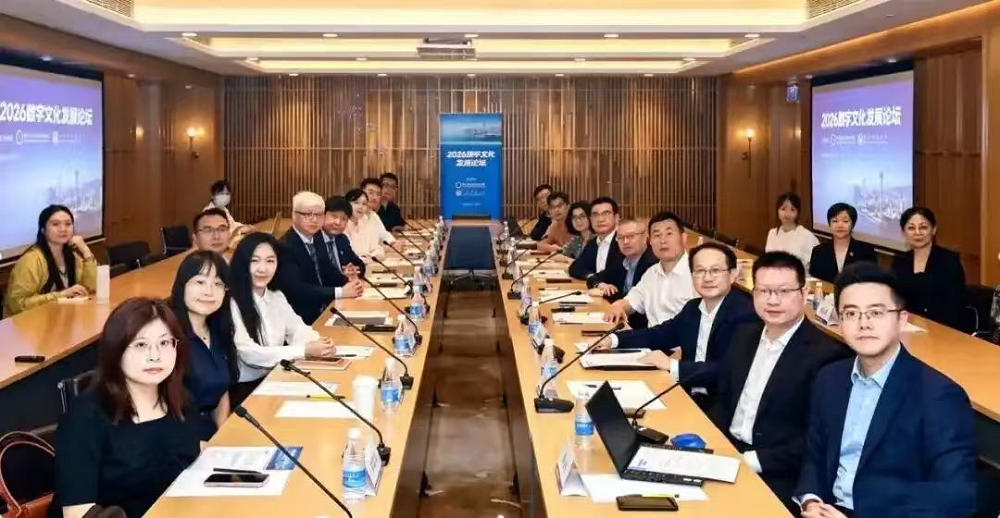
Guo Wanchao Delivered a Keynote at the 2026 Digital Culture Development Forum Held in Macau
 打印
打印 收藏
收藏
At the invitation of Macau University of Science and Technology, the China Development Institute (CDI Shenzhen, China), a national high-level think tank, and the Macau Youth Innovation and Entrepreneurship Association, Guo Wanchao, Research Fellow and Director of the Institute of Media and Public Opinion at BASS, traveled to Macau for academic exchanges from May 15 to 17, 2026.
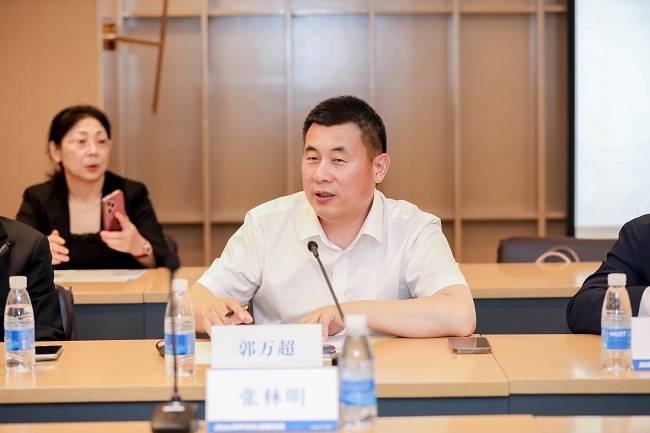
As the 2026 APEC Tourism Ministerial Meeting approaches in Macau, the “2026 Digital Culture Development Forum”, jointly hosted by the China Development Institute (CDI) and Macau University of Science and Technology, was successfully held in Macau on May 15, with the aim of contributing cultural perspectives and intellectual insights to broader Asia-Pacific regional cooperation. The Outline of the 15th Five-Year Plan also explicitly calls for “advancing the integration of culture and technology, promoting the digital and intelligent empowerment and information-based transformation of cultural development, and developing new cultural businesses.” Held in Macau, a hub for multicultural exchange, the forum was designed to fully leverage the city’s unique strengths as a global cultural nexus by bringing together experts and scholars from universities, think tanks and industry in Beijing, Shenzhen, Guangzhou, Hong Kong, and Macau. They engaged in in-depth discussions on the new opportunities, pathways, and challenges facing digital culture in the era of artificial intelligence, so as to better promote the high-quality development of digital culture during the 15th Five-Year Plan period and help Chinese culture reach global audiences. At the opening ceremony of the forum, Pang Chuan, Vice President of Macau University of Science and Technology, and Guo Wanda, Executive Vice President of the China Development Institute, delivered remarks on behalf of the organizers, expressing high expectations for the forum and outlining a forward-looking blueprint for the development of digital culture. Guo Wanchao then delivered a keynote speech titled “The Digital and Intelligent Revolution and the New Leap in China’s Cultural Productivity.” He argued that the digital cultural industry has entered its fourth phase, characterized by “culture + artificial intelligence,” where generative AI is driving a leap in cultural productivity and ushering in a new era of mass literature and art. At present, China’s “new three cultural exports” — online literature, web series, and online games — have achieved remarkable success in global overseas expansion. Looking ahead, greater efforts should be made to improve value-guidance mechanisms empowered by technology, prevent cultural hollowing-out and superficiality, increase investment in cultural technology R&D and the cultivation of core IP competitiveness, and fully unlock the advantages of China’s ultra-large domestic market and complete industrial chain. After the forum, Guo Wanchao and Zhu Xiaoying, President of the Macau Fashion Culture Association, had a dinner meeting at Macau University of Science and Technology.
On May 16, Guo Wanchao visited Pearl Times in Macau for an inspection and a symposium, attended by the President of the Macau Youth Innovation and Entrepreneurship Association, members of the cultural sector, and other participants. The discussion focused on“Cultural Industry Innovation and Public Opinion Management in the Digital Age”as well as opportunities for cooperation between Macau and the Mainland. Following the event, Guo Wanchao received visiting researchers from the Institute for Social, Economic and Public Policy of Macao Polytechnic University at the hotel. The two sides exchanged views on the economic and social development trends in Macau and the Mainland, as well as on academic exchanges and cooperation. This visit to Macau not only generated valuable academic exchange on the frontiers of digital cultural development but also strengthened ties with Macau’s academic and think tank communities, laying an important foundation for future cooperation.