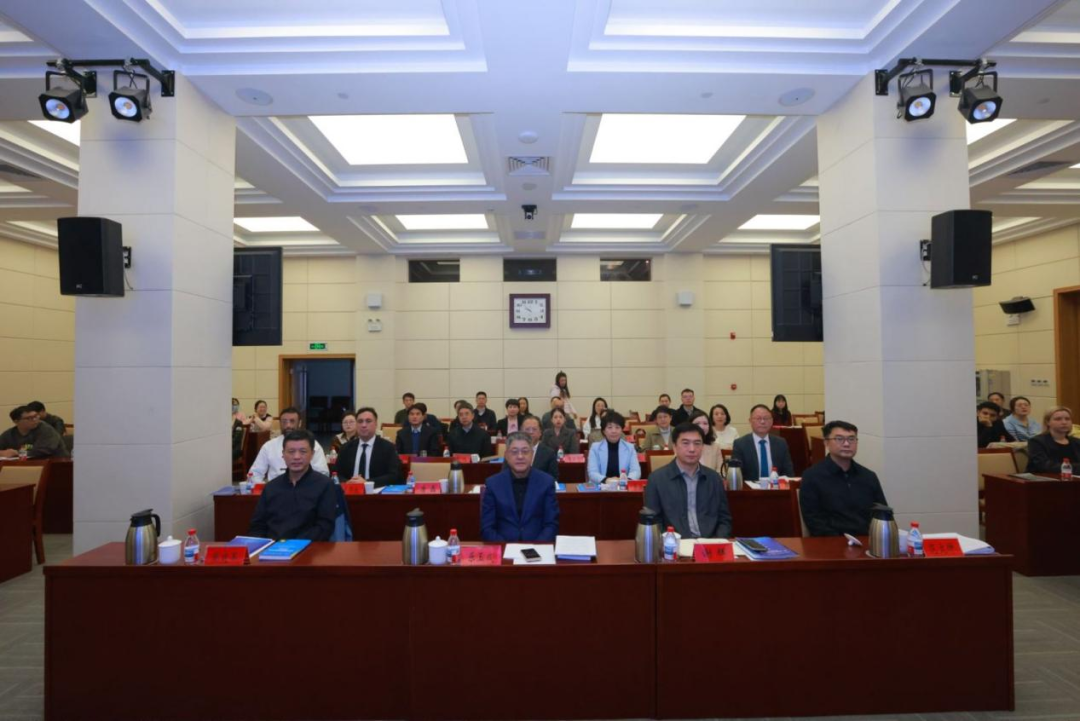
On October 28, the Second Academic Symposium on Cutting-Edge Issues in International Exchanges was successfully held in Beijing. General Secretary Xi Jinping has noted that exchanges and mutual learning are the essential requirement for the development of civilizations. This important statement provides fundamental guidance and a framework for action as Beijing advances the development of the national center for international exchanges, strengthens international communication and exchange, and puts into practice China’s four major global initiatives in the new era. Focusing on the theme of “Advancing Exchanges and Mutual Learning Among World Civilizations and Building a New Pattern of International Exchanges in Beijing,” the symposium followed up on the arrangements and requirements of the Fifth Plenary Session of the 20th CPC Central Committee, thoroughly implemented Xi Jinping Thought on Diplomacy, and focused on strengthening Beijing’s role as a center for international exchanges. It aimed to contribute academic expertise to building a community with a shared future for mankind, serving the country’s overall diplomatic strategy, and supporting Beijing’s high-quality development.
Professor Xie Hui, Secretary of the Party Leadership Group of our Academy, delivered remarks, while Fan Wenzhong, Member of the Party Leadership Group and Vice President, chaired the first session of keynote addresses. Le Yucheng, former Deputy Director of the State Administration of Radio and Television and a senior expert on international affairs, and Dai Jianjun, Secretary-General of the Beijing People’s Association for Friendship with Foreign Countries and Level-Ⅱ Inspector, attended the conference and delivered keynote speeches. The symposium brought together nearly 100 scholars from China and abroad representing more than 20 institutions, including universities such as Renmin University of China, Communication University of China, Beijing Normal University, University of International Business and Economics, China University of Petroleum, Beijing International Studies University, Beijing University of Chinese Medicine, and Beijing Youth Politics College; research institutions such as the Chinese Academy of Social Sciences, the China Institutes of Contemporary International Relations, the China Foreign Languages Publishing Administration, the Hebei Academy of Social Sciences, the Tianjin Institute for Asia-Pacific Cooperation and Development, the Beijing Academy of Science and Technology, and the National Institute of International Strategy for Cultural Development; international and social organizations including the World Tourism Cities Federation, the Center for China & Globalization, the Global Smile Cities Alliance, and the Belt and Road Legal Services Alliance; and enterprises such as the Beijing Fengtai Culture and Tourism Group and Kenya’s Development Reimagined; In addition, more than 20 international students from institutions including Beijing Institute of Technology, Capital Normal University, and Beijing Youth Politics College participated in the event.
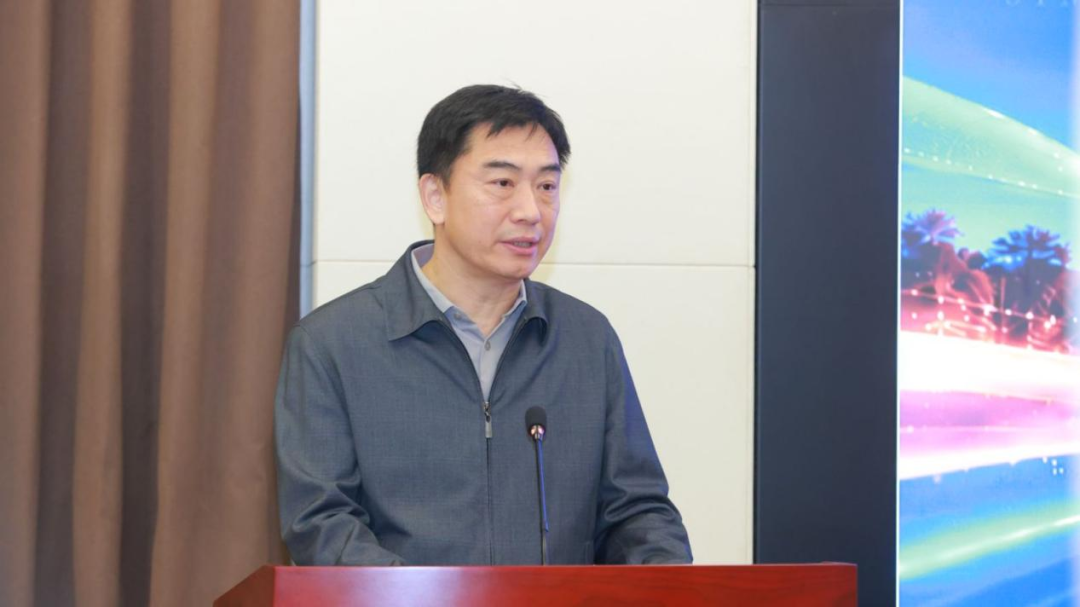
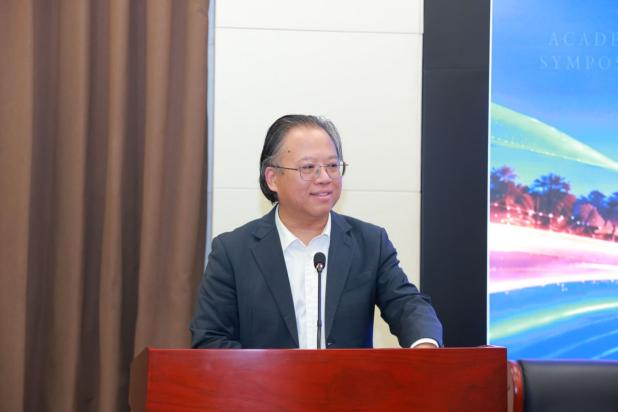
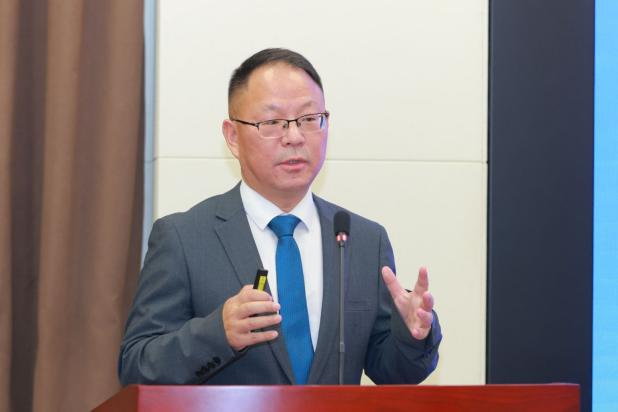
(Professor Xie Hui, Secretary of the Party Leadership Group of the Beijing Academy of Social Sciences delivers remarks)
In his remarks, Xie Hui noted that the world is undergoing accelerating changes unseen in a century, with profound shifts in the international balance of power and digital technologies reshaping the ways in which civilizations interact. Under such complex circumstances, it is all the more important to uphold equal-footed dialogue and mutual learning and draw wisdom from the practices of different civilizations. Focusing on the exchanges and mutual learning among civilizations and cities’ international exchanges, the symposium combines the theoretical value of addressing global issues with the practical significance of serving the development of the capital. He noted that as Beijing continues to fulfill its role as the "Four Centers" and its functions as the national capital are further optimized, the scope for international cooperation continues to expand. Advancing Beijing’s development as a center for international exchanges requires not only deepening research on global governance but also exploration of pathways for people-to-people and cultural exchanges between cities, greater effectiveness in international communication, and the translation of research into practical policy recommendations. Rooted in and serving the capital, our Academy plays its role as a high-end think tank by linking international academic exchanges with major issues in the capital’s development. Our Academy’s Institute of International Issues has long focused on international politics and global governance, continuously assessing the impact of the international situation on the capital. Research outputs such as the Report on the Development of Beijing as an International Exchange Center have organically integrated international studies with the development of Beijing as a center for international exchanges. This is the Second Academic Symposium on Cutting-Edge Issues in International Exchanges, themed “Advancing Exchanges and Mutual Learning Among World Civilizations, and Building a New Pattern of International Exchanges in Beijing.” It features two parallel sub-forums, addressing both theoretical foundations and emerging communication issues in the digital and intelligent era. He expressed the hope that the symposium would serve as a platform for interdisciplinary dialogue. He emphasized that civilizations gain diversity through exchange and richness through mutual learning. The Academy will continue to deepen international academic cooperation, support the Institute of International Issues in advancing relevant research, and translate academic strengths into tangible results that serve the capital’s high-quality development. He looked forward to experts from all sectors working together to contribute to exchanges and mutual learning among civilizations and to the broader national foreign-affairs agenda.
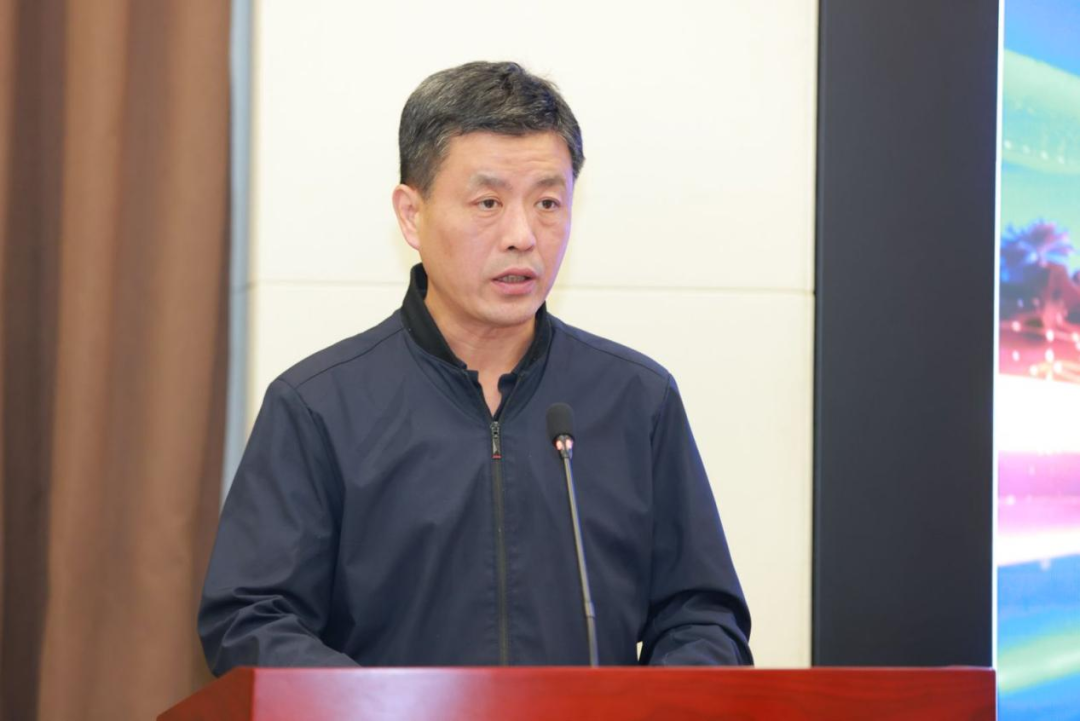
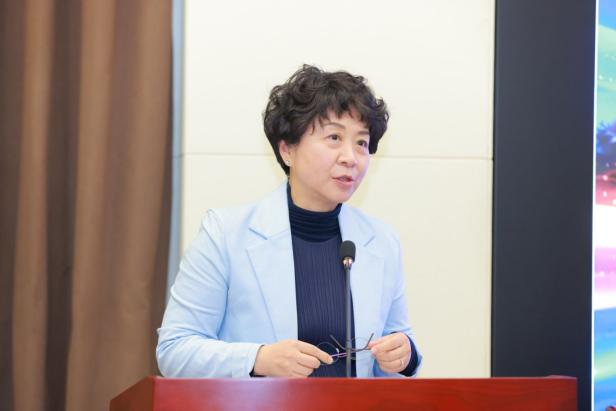
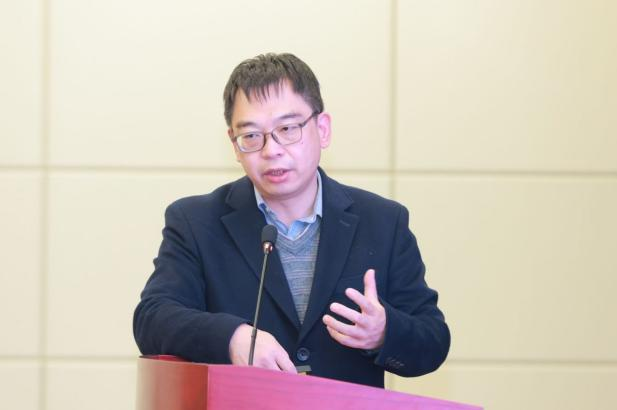
(Dai Jianjun, Secretary-General of the Beijing People’s Association for Friendship with Foreign Countries and Level-Ⅱ Inspector, delivers a keynote speech)
In their keynote speeches, experts Le Yucheng and Dai Jianjun focused on the contemporary requirements for exchanges and mutual learning among civilizations amid changes unseen in a century, as well as Beijing’s practice in people-to-people diplomacy. Grounded in the country’s diplomatic strategy and the front-line practice of Beijing’s friendly exchanges with foreign countries, they offered an in-depth interpretation of the practical implications of the Global Civilization Initiative. Both experts stressed that the more complex and volatile the situation becomes, the more important it is to uphold dialogue among civilizations and balance external communication with active listening and mutual learning. Through sincere communication, gaps in understanding can be bridged, consensus on cooperation built, and the foundations of people-to-people bonds strengthened. People-to-people exchanges are an important vehicle for fostering mutual understanding among peoples. Such work should be innovative, dynamic, and substantive, remain grounded and people-centered, and make use of a range of non-governmental platforms, including sister-city partnerships, to broaden channels of exchange.
The keynote speeches combined a macro-level diplomatic perspective with practical local experience. They proposed fully leveraging Beijing’s unique strengths in history and culture, scientific and technological innovation, and international exchanges; continuing to build platforms for exchanges and mutual learning among civilizations; better serving the country’s overall diplomatic strategy; and strengthening Beijing’s development as a center for international exchanges. These proposals offered useful ideas and inspiration for deepening people-to-people bonds and expanding the capital’s pattern of international engagement.
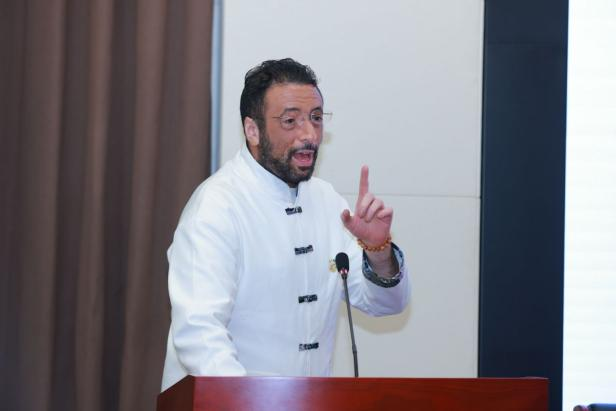
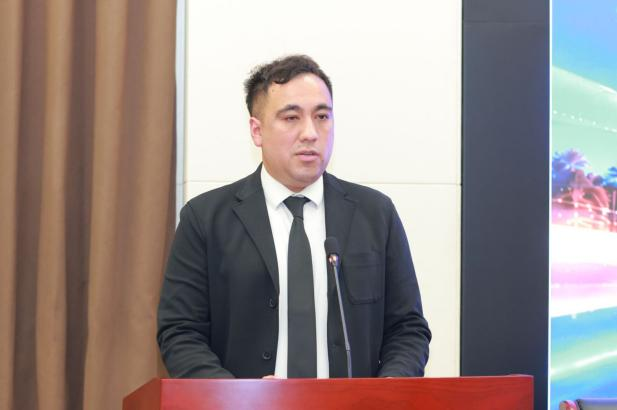
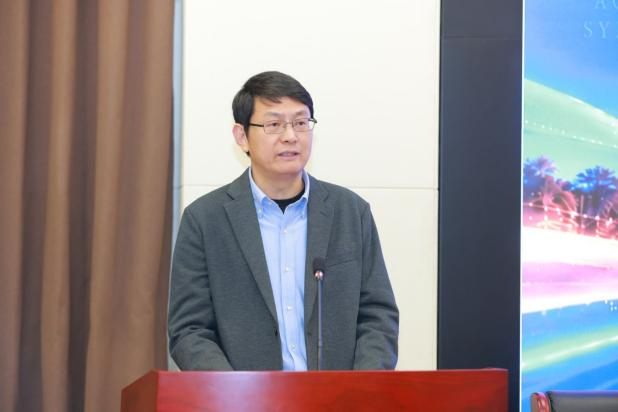
(Presentations by eight experts: Zhang Yuncheng, Li Jiashan, Miao Lü, Lokmane Benaicha, Zeng Yong, Tang Lei, Bayramdurdyyev Rahman, and Liu Bo)
The second session of the symposium, the main forum titled “Xi Jinping Thought on Culture and Exchanges and Mutual Learning Among World Civilizations,” was chaired by Research Fellow Liu Bo, Director of the Institute of International Issues at our Academy, who also delivered a thematic presentation. The other speakers were Research Fellow Zhang Yuncheng, Deputy Secretary-General of the Academic Committee at the China Institutes of Contemporary International Relations; Li Jiashan, President of the National Institute of Cultural Development of International Strategy; Miao Lü, Co-founder and Secretary-General of the Center for China and Globalization (CCG); Lokmane Benaicha, a foreign faculty member at Beijing University of Chinese Medicine; Zeng Yong, Executive Chair of the Global Smile Cities Alliance; Research Fellow Tang Lei, Director of the International Sinology Research Center at the Chinese Academy of Social Sciences (CASS); Bayramdurdyyev Rahman, a foreign faculty member at China University of Petroleum (Beijing) and Research Fellow Liu Bo from the Institute of International Issues at the Beijing Academy of Social Sciences. They delivered thematic presentations in succession. Centering on the symposium’s theme, the experts discussed a range of topics, including ideological guidance for global development, the development of city friendship networks, stimulating the vitality of people-to-people exchanges, distinctive practices of civilizational dialogue, innovation in the evaluation of urban soft power, grassroots co-governance in international communities, building ties through youth diplomacy, and a forward-looking outlook on the development of international exchange functions during the 15th Five-Year Plan period. The experts closely linked theoretical interpretation with practical experience in the capital and engaged in in-depth exchanges of ideas on how Xi Jinping Thought on Culture can guide the exchanges and mutual learning among civilizations and how the Global Civilization Initiative can be put into practice through Beijing’s platform as a center for international exchanges. Their contributions provided rich theoretical perspectives, practical pathways, and intellectual support for deepening theoretical research on Xi Jinping Thought on Culture and exploring practical pathways for the capital of a major country to conduct dialogue between Chinese and foreign civilizations.
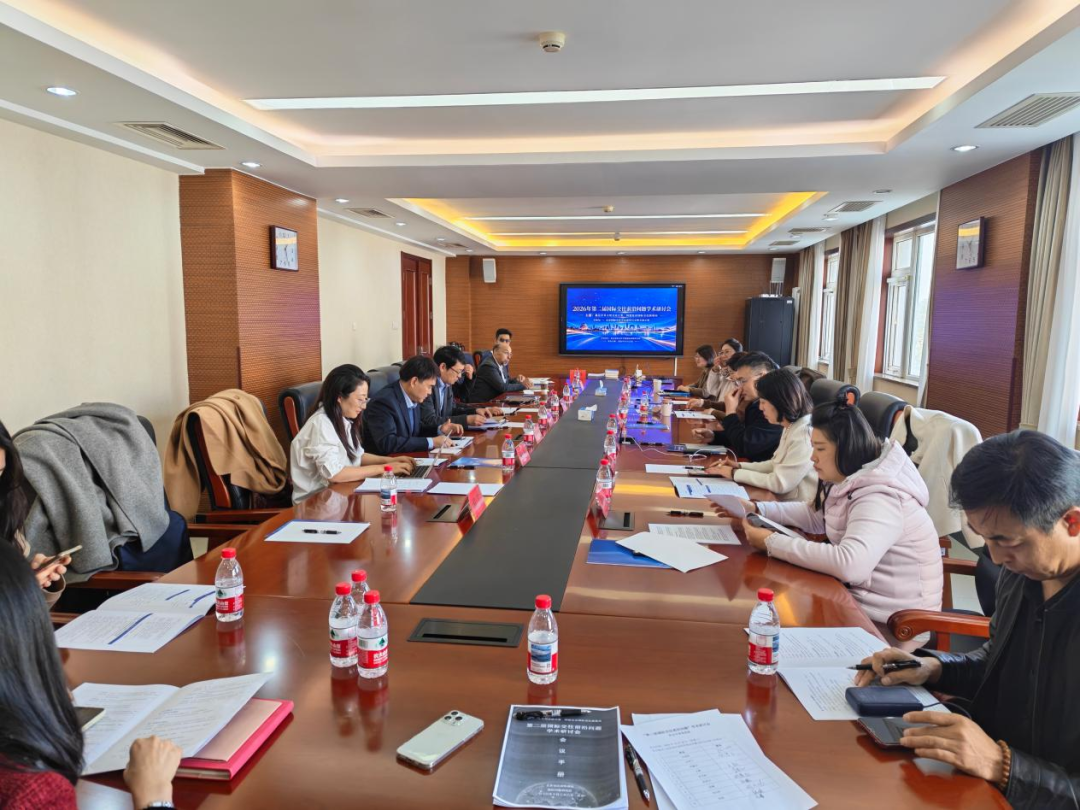
(Sub-forum One: “Building Beijing as a Center for International Exchanges and Promoting Exchanges and Mutual Learning Among Civilizations”)
The symposium featured two parallel sub-forums. The first sub-forum, titled “Building Beijing as a Center for International Exchanges and Promoting Exchanges and Mutual Learning Among Civilizations,” was chaired by Research Fellow Liu Bo, Director of the Institute of International Issues and Director of the International Exchange Center at our Academy. Nearly ten experts and scholars from universities, research institutions, and international organizations engaged in in-depth discussions on the theory and practice of developing Beijing as a center for international exchanges. The participating experts exchanged views on multiple dimensions, including international cooperation in grassroots governance, innovation in foreign-related legal services, the development of sister-city cooperation, the expansion of overseas Chinese affairs diplomacy, the development of Beijing as an international consumer city, support from science and technology think tanks, global risks and multicultural governance, the creation of an international language environment, and cultural connections among overseas Chinese. The experts noted that advancing Beijing’s development as a center for international exchanges should be guided by mutual learning among civilizations. It should integrate resources in the rule of law, overseas Chinese affairs, think tanks, and urban governance, balance the development of domestic functions with external exchange and communication; and continuously enhance the city’s overall effectiveness in international exchanges while responding to global issues.
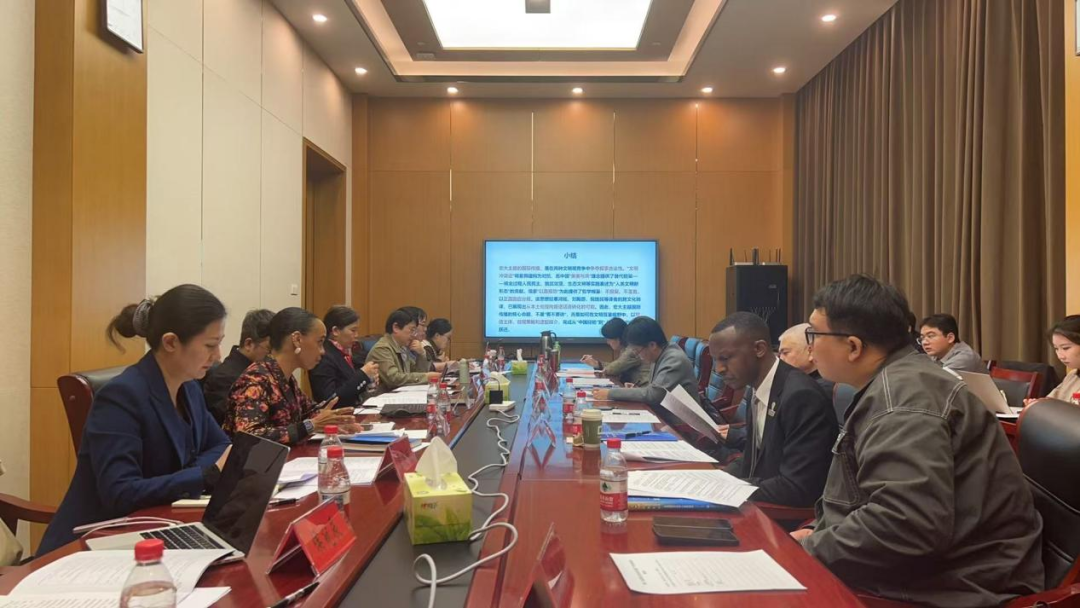
(Sub-forum Two: “International Communication and Civilizational Exchanges and Mutual Learning in the Digital and Intelligent Era”)
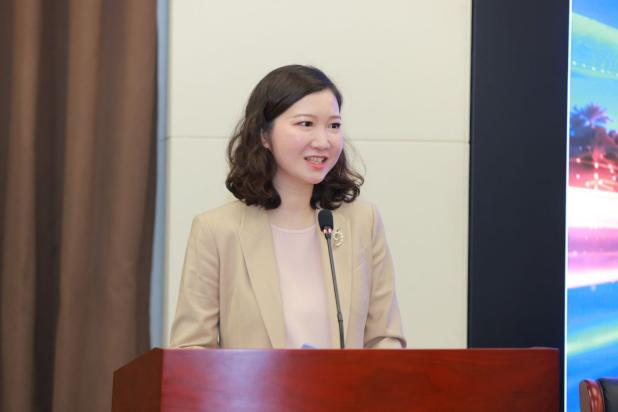
The second sub-forum, titled “International Communication and Civilizational Exchanges and Mutual Learning in the Digital and Intelligent Era,” was chaired by Associate Research Fellow Zhang Li, Deputy Director of the Institute of International Issues at our Academy. Experts from universities, research institutions, international organizations, and relevant enterprises—engaged in lively discussions on key issues including the use of digital and intelligent technologies to empower international communication, governance of the digital space, and the development of a framework for exchanges and mutual learning among civilizations. The experts held in-depth exchanges on a range of topics, including the opportunities and challenges of using digital and intelligent technologies to empower cities’ international communication; new forms of mutual learning among civilizations generated by digital cultural platforms; reflections on the practice of digital and intelligent international communication; cross-border data governance against the backdrop of “digital geopolitics”; the empirical development of an indicator system for cities’ international communication capacity; local explorations of revitalizing cultural heritage to promote mutual learning among civilizations; case studies of communication by international organizations in the cultural and tourism sectors; and the use of digital and intelligent tools to build accessible bridges for cross-cultural communication. The experts noted that digital and intelligent technologies have reshaped the settings and logic of civilizational dialogue. While it is essential to seize the new opportunities brought by digital communication, it is equally important to maintain a clear understanding of the risks and challenges posed by digital geopolitics and data governance. By upholding fundamental principles while innovating and maximizing benefits while minimizing harm, responsible digital practices can strengthen the digital foundation for exchanges and mutual learning among civilizations.
The participating experts agreed that, with Xi Jinping Thought on Culture as the fundamental guide, the Second Academic Symposium on Cutting-Edge Issues in International Exchanges centered closely on the core themes of advancing exchanges and mutual learning among world civilizations and building a new pattern of international exchanges in Beijing. Against the backdrop of changes unseen in a century, the discussions unfolded progressively along a logical sequence encompassing macro-strategic assessment, theoretical interpretation, practices in open urban governance, and cutting-edge exploration of digital and intelligent communication. The symposium linked theoretical interpretation, practical review, and the translation of research findings into application, building a high-level platform for interdisciplinary, cross-sectoral, and cross-regional academic dialogue and achieving a deep integration of theoretical research with the capital’s practical needs. Participating experts expressed the hope that the symposium would serve as an opportunity to further explore practical pathways for the capital of a major country to advance exchanges and mutual learning among civilizations, translate academic research findings into practical outcomes, better serve the country’s overall diplomatic agenda and Beijing’s high-quality development, and contribute academic wisdom to enhancing mutual understanding and communication between Chinese and foreign civilizations, thereby helping to build a community with a shared future for mankind.

 打印
 收藏