
Beijing Academy of Social Sciences Manchuology Book Donation Ceremony and Academic Symposium on “Manchuology Literature and Ancient Book Editions” Successfully Held
 打印
 收藏
On October 9, the Beijing Academy of Social Sciences and the China National Archives of Publications and Culture jointly held a Manchuology book donation ceremony and an academic symposium on “Manchuology Literature and Ancient Book Editions.” More than 40 experts and scholars from institutions including the Chinese Academy of Social Sciences, Peking University, Renmin University of China, Minzu University of China, the Palace Museum, the First Historical Archives of China, the China National Archives of Publications and Culture, and the Beijing Academy of Social Sciences attended the event, which was held at Wenhua Hall of the China National Archives of Publications and Culture.
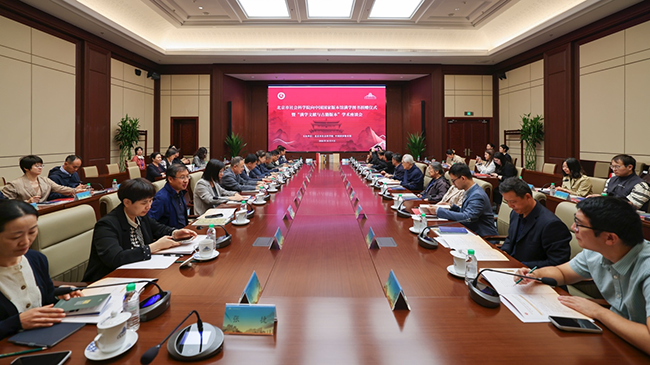
The participating scholars toured a series of exhibitions at the China National Archives of Publications and Culture. An opening ceremony followed, at which Professor Xie Hui, Secretary of the Party Leadership Group of the Beijing Academy of Social Sciences, delivered remarks.
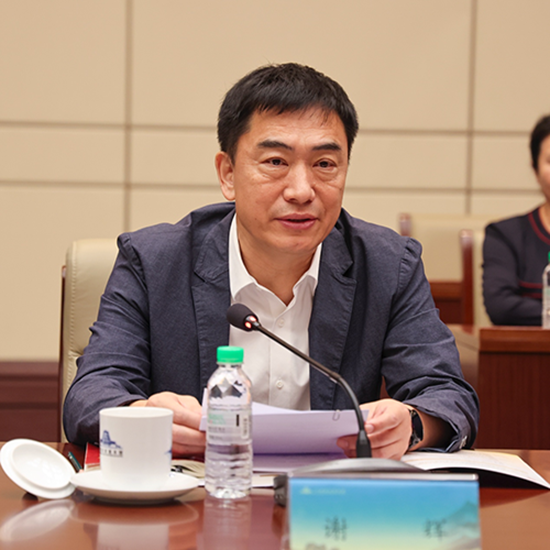
In his remarks, Xie Hui noted that the China National Archives of Publications and Culture is a major cultural project personally approved by General Secretary Xi Jinping and is known as the “gene bank of Chinese culture.” The Beijing Academy of Social Sciences is among the first group of pilot institutions for high-end think tanks in the capital and has long attached great importance to research on Beijing’s history and culture. Within the fields of philosophy and social sciences, Manchuology is a “rare discipline” with significance for cultural transmission and is also one of the Academy’s distinctive disciplines. The Academy’s donation of Manchuology books to the China National Archives of Publications and Culture, the signing of a letter of intent for cooperation, and the joint organization of the academic symposium mark an important beginning for deeper cooperation between the two institutions. He expressed the hope that the two sides would establish long-term cooperation in areas including academic research and people-to-people and cultural exchange, and jointly contribute their wisdom and strength to carrying forward China’s cultural heritage and promoting the continued development of Chinese civilization.
Book Donation and Signing of the Letter of Intent for Cooperation
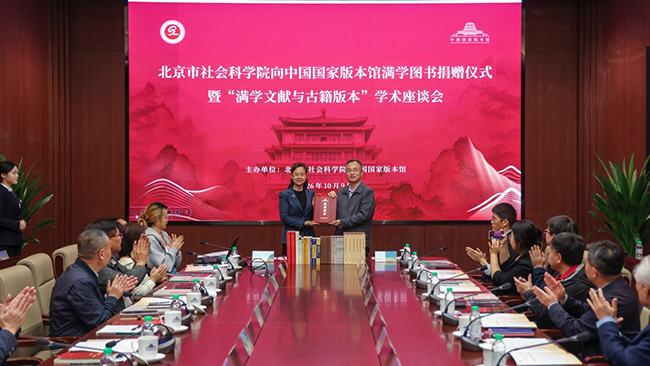
Research Fellow He Yalan, President of the Beijing Academy of Social Sciences, received the donation certificate. The two parties signed a letter of intent for cooperation, expressing their hope to further leverage their respective strengths and deepen cooperation in areas including donations of editions and publications, academic research, and international people-to-people and cultural exchanges, while making due contributions to the advancement of academic research and the continuation of China’s cultural heritage.
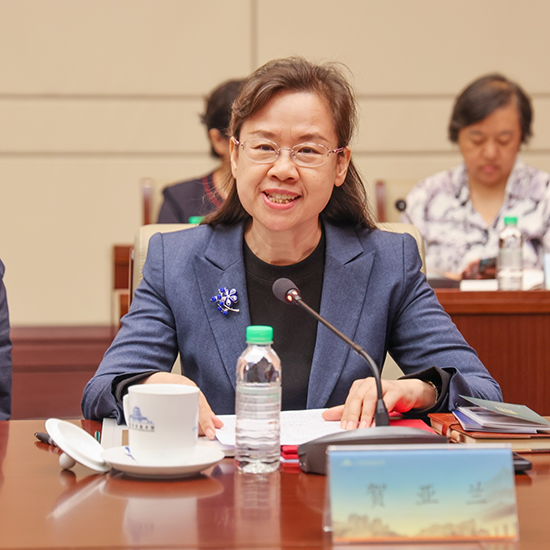
Speaking on behalf of the donating institution, He Yalan noted that Chinese civilization has endured for more than 5,000 years, and that documenting historical records, compiling classic works, and passing down culture through the written words have always been an important mission passed from generation to generation. She said that the strengthening of cooperation between the two institutions marks a memorable academic milestone. Looking ahead, guided by Xi Jinping Thought on Culture, particularly General Secretary Xi Jinping’s important ideas on promoting the fine traditional Chinese culture and accelerating the building of a strong cultural country, the Beijing Academy of Social Sciences and the China National Archives of Publications and Culture will uphold the principles of “resource sharing, complementary strengths, and mutual benefit”, deepen exchanges and cooperation, and jointly advance the building of a strong country in culture. Research Fellow Chang Yuenan, Director of the Institute of Manchuology at the Beijing Academy of Social Sciences, also spoke as a representative of the donating institution.
Keynote Speeches
The academic symposium session was chaired by Lu Ya, Member of the Party Leadership Group and Vice President of the Beijing Academy of Social Sciences. Six experts and scholars delivered thematic presentations on Manchuology, bibliography, and other related topics.
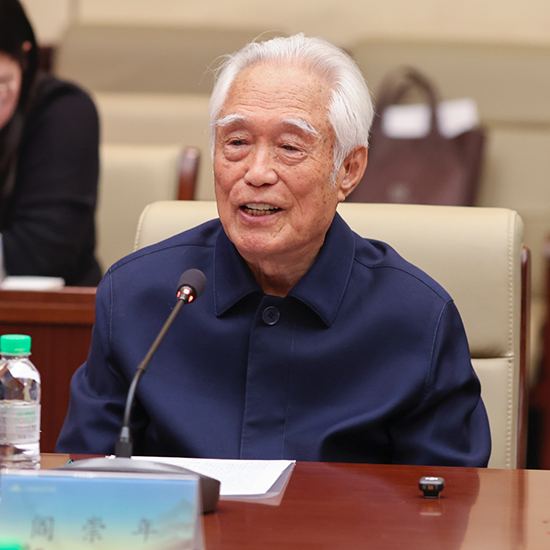
Yan Chongnian, Research Fellow at the Institute of Manchuology, Beijing Academy of Social Sciences
Yan Chongnian noted that China has a profound cultural heritage and a long tradition of book collection. He said that the Beijing Academy of Social Sciences’ donation of books to Wenhan Pavilion of the China National Archives of Publications and Culture, where they are preserved in a modern-day “Metal-sealed Cabinet and Stone Chamber (the ancient imperial archival repository for preserving state documents),” is an occasion for celebration in cultural circles and an innovative initiative in the academic community. In his presentation titled “Upholding Tradition, Pursuing Innovation, and Pooling Strength,” he outlined the future development path for Manchuology at the Beijing Academy of Social Sciences: upholding tradition, pursuing innovation and pooling strength. “Upholding tradition” means carrying forward what is valuable and not changing it; “pursuing innovation” means continuing to generate new ideas and innovate; and “pooling strength” means drawing on academic resources from Beijing, across China, and around the world.
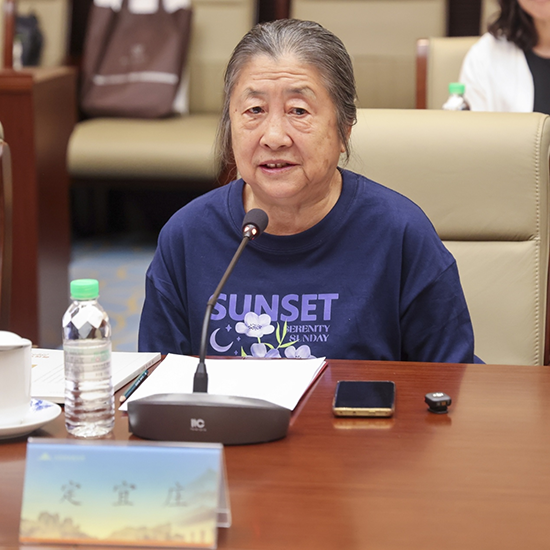
Ding Yizhuang, Research Fellow at the Institute of Ancient History, Chinese Academy of Social Sciences
Ding Yizhuang delivered a presentation titled “Making Full Use of Manchu Archives in Historical Research.” She noted that the large body of Manchu archival materials that has now been organized and made accessible provides scholars researching Qing history, ethnic history, and even social history with research conditions that earlier generations of scholars could scarcely have imagined. At the same time, she pointed out that these archival materials have yet to be fully utilized. Taking the institutional history of the Qing Dynasty as an example, she expressed the hope that Manchu archives would receive greater attention from the academic community in the future and that more young scholars would be willing and enthusiastic to devote themselves to this field.
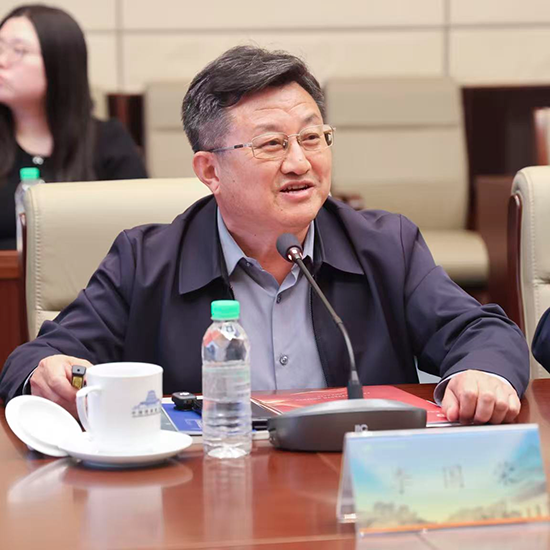
Li Guorong, Guest Editor-in-Chief of the Chinese Journal of Bibliological Editions at the China National Archives of Publications and Culture, former Deputy Director and Research Fellow at the First Historical Archives of China
Li Guorong delivered a presentation titled “The Culture of ‘Great Unification’ in Manchu Editions of Qing Dynasty Classics.” He noted that the vast and detailed body of Manchu archives preserved in the Qing imperial palace constitutes the most complete, systematic, and authoritative body of primary sources for research on the Qing Dynasty’s frontier governance. He further argued that textual editions are the authentic preservation of history and fully reflect the Qing emperors’ valuable concept of a “Greater China”. The large number of surviving multilingual parallel editions from the Qing Dynasty also reveal that the Qing government placed particular emphasis on the integration and joint governance of different ethnic groups in its handling of ethnic relations, which, in his view, demonstrated the considerable success of its ethnic policies.
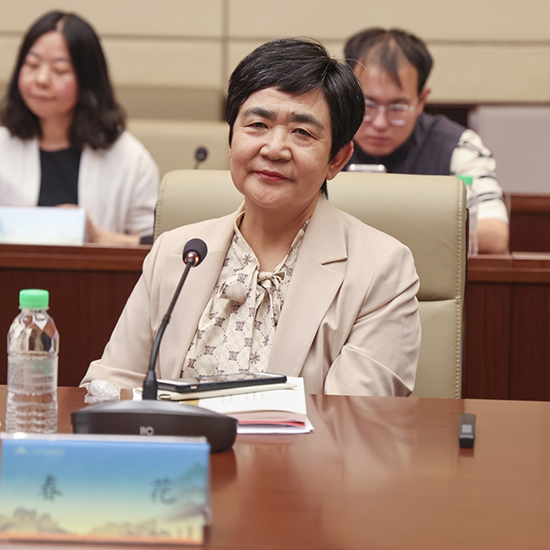
Chunhua, Research Librarian at the Palace Museum Library
Chunhua delivered a presentation titled “The Contents of Various Editions of the Imperial Almanac of the Qing Dynasty: A Mirror of History and Culture.” She noted that a rich body of ancient Manchu books from the Qing Dynasty has survived to the present day. Taking the Imperial Almanac of the Qing Dynasty as an example, she argued that the scholarly value of these ancient Manchu books still offers considerable scope for further exploration. For example, the gradual increase in place names in successive Qing Dynasty editions of the Almanac serves as a mirror reflecting the changes in the country’s territorial extent as well as its economic and cultural development. It also reflects the history of cultural exchanges between China and the West during the Qing Dynasty and the evolving process of the great unification among different ethnic groups.
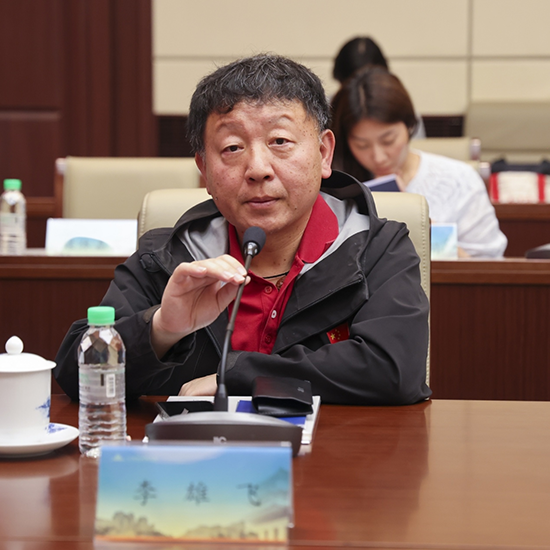
Li Xiongfei, Associate Research Librarian at Peking University Library
Li Xiongfei delivered a presentation titled “Historical Documentary Studies and Manchuology,” in which he called on the academic community to strengthen research on the historical documentary studies of Manchuology and to establish a disciplinary framework for Manchu historical documentary studies as soon as possible, thereby placing Manchuology on a sound path toward high-quality development. He noted that the collation and study of Manchuology literature tend to “prioritize archives over ancient books” and “prioritize content over form.” Researchers often approach the content of Manchu literature from the perspective of their own research interests, while study of the Manchu materials themselves still needs to be strengthened.
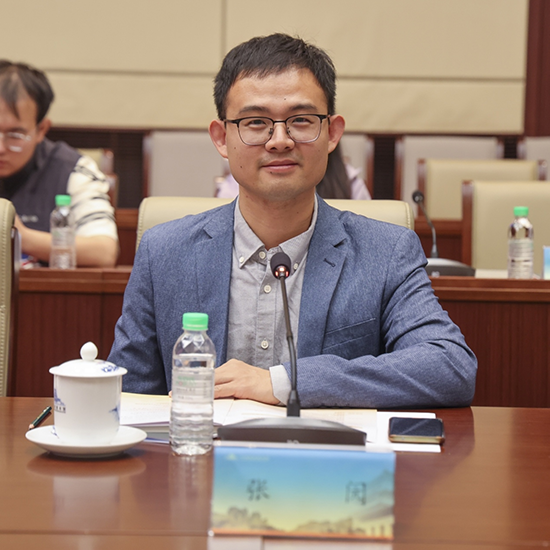
Zhang Kang, Associate Professor at the School of Chinese Classics, Renmin University of China
Zhang Kang delivered a presentation titled “An Exploration of a Newly Discovered Manchu Translation of the British Macartney Mission’s Letter of Credence.” He mentioned that scholars should pay greater attention to the translation of the multilingual versions of the letter of credence associated with the Macartney Mission’s visit to China in the 58th year of the Qianlong reign. Drawing on a newly discovered “Manchu Tribute Memorial” in the First Historical Archives of China, he argued that it was the Manchu translation of the document titled “The Translated Manchu-Chinese Tribute Memorial from the Kingdom of England.” The discovery of this “Manchu Tribute Memorial” provides richer historical materials and more diverse perspectives for studying the translation of diplomatic documents during the Qing Dynasty.
Research Fellow Zhao Zhiqiang of the Institute of Manchuology, Beijing Academy of Social Sciences, submitted a conference presentation titled “The Importance of Philological Research on Manchu Literature.” He noted that, compared with the long-established tradition of edition studies for ancient Chinese books, the origins and development of Manchu woodblock editions, the characteristics of manuscript copies, the transmission history of ancient Manchu books, and the mutual influence between Manchu-Chinese bilingual editions all warrant further in-depth study.

In his concluding remarks, Lu Ya noted that the symposium brought Manchuology and textual bibliography into productive dialogue. Manchu literature provides vivid historical evidence of the formation and development of the Qing Dynasty as a unified multi-ethnic state. It also offers valuable documentary and bibliographical evidence for understanding and strengthening the Chinese national community, while reflecting the process of interaction, exchange, and integration among China’s ethnic groups, as well as the cultural exchanges between China and the West. He emphasized the need to make full use of Manchu archives and strengthen foundational work in areas such as textual collation, bibliography, and digital humanities. He noted that joint efforts should also be made in the four areas of collection, collation, research, and revitalization, so that the texts preserved in these rare ancient books can be brought to life.
The Beijing Academy of Social Sciences’ book donation to the China National Archives of Publications and Culture, together with the signing of the letter of intent for cooperation, has further advanced exchanges and cooperation between the two institutions and promoted the dissemination and utilization of the Academy’s original research achievements in Manchuology. At the academic symposium, experts and scholars held in-depth discussions around the core theme of “Manchuology Literature and Ancient Book Editions,” exploring the research and preservation of multilingual Qing Dynasty textual editions and discussing pathways for interaction, integration, and development across disciplines. The book donation ceremony and academic symposium focused on carrying forward China’s outstanding traditional culture and also constituted a positive and constructive exploration in advancing the development of China’s independent intellectual system in philosophy and social sciences with Chinese characteristics. The event was of both practical and inspirational significance for strengthening the Beijing Academy of Social Sciences’ external academic exchanges and promoting high-quality development of its disciplines.
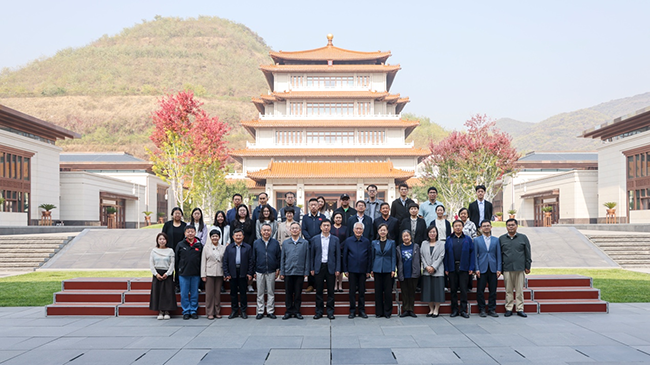
Group Photo from the Conference