Symposium on the Development of the Modern Capital Metropolitan Area Held
 打印
打印 收藏
收藏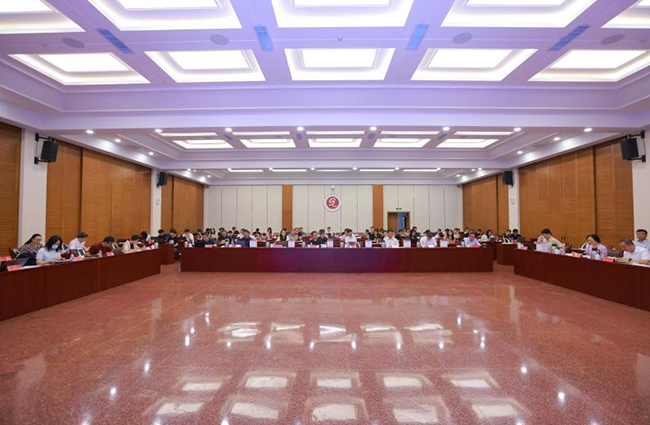
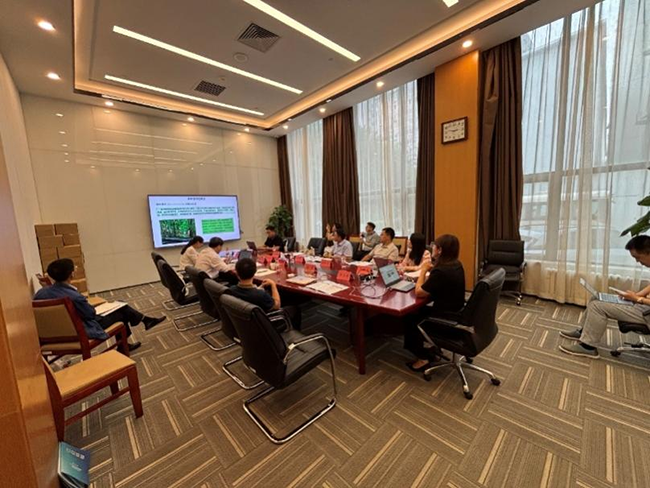
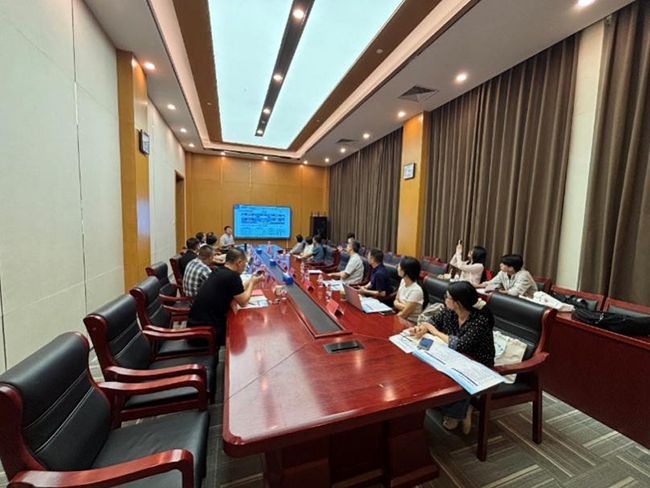
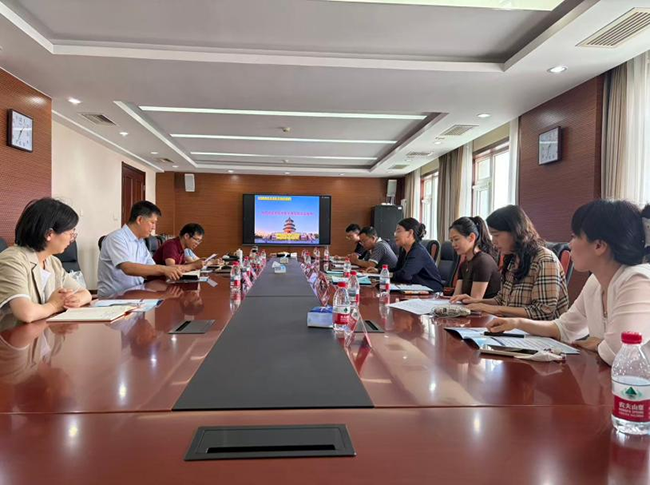
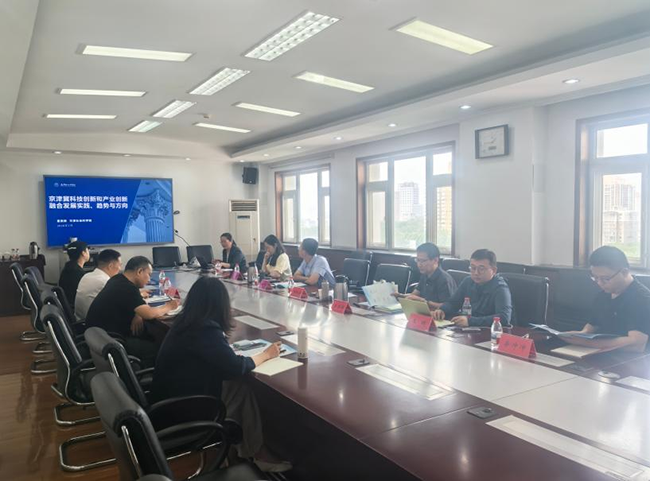
On July 20, the Symposium on the Development of the Modern Capital Metropolitan Area, hosted by the Beijing Academy of Social Sciences, was held in Beijing. Closely aligned with the key stage in implementing the Spatial Coordination Plan for the Modern Capital Metropolitan Area (2023–2035), the symposium featured in-depth, cross-sectoral discussions on major tasks, key difficulties and bottlenecks, as well as innovative pathways in the development of the modern capital metropolitan area, with the aim of contributing insights and expertise to deepening the coordinated development of the Beijing-Tianjin-Hebei Region and building a modern capital metropolitan area. Zhou Hao, Member of the Party Leadership Group of the Beijing Municipal Development and Reform Commission, Deputy Director of the Beijing Municipal Leading Group Office for Promoting Coordinated Development in the Beijing-Tianjin-Hebei Region, and Deputy Director of the Joint Work Office for Coordinated Development of the Beijing-Tianjin-Hebei Region, and Fan Wenzhong, Member of the Party Leadership Group and Vice President of the Beijing Academy of Social Sciences, delivered remarks. Lu Ya, Member of the Party Leadership Group and Vice President of the Beijing Academy of Social Sciences, chaired the opening ceremony, while Xiao Junfeng, Member of the Party Leadership Group, Vice President of the Beijing Academy of Social Sciences, and Head of the Lecturer Group of CPC Beijing Municipal Committee, chaired the keynote speeches. More than 100 participants attended the event, including representatives from relevant central and Beijing-Tianjin-Hebei institutions, universities, research institutes, academic journals, as well as leaders and researchers from the Beijing Academy of Social Sciences.
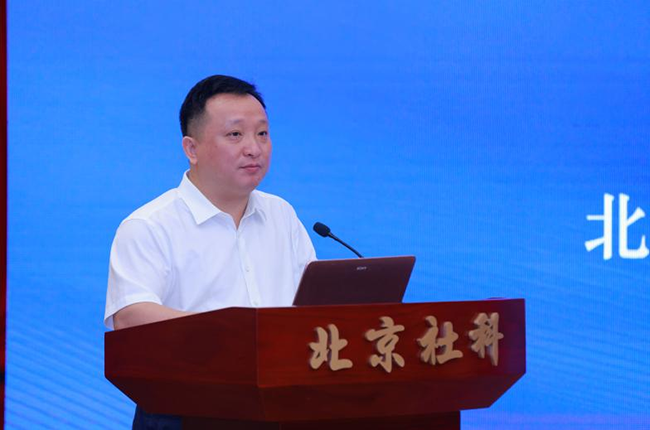
Zhou Hao, Member of the Party Leadership Group of the Beijing Municipal Development and Reform Commission, Deputy Director of the Beijing Municipal Leading Group Office for Promoting Coordinated Development in the Beijing-Tianjin-Hebei Region, and Deputy Director of the Joint Work Office for Coordinated Development of the Beijing-Tianjin-Hebei Region, Delivers Remarks
In his remarks, Zhou Hao pointed out that the Spatial Coordination Plan for the Modern Capital Metropolitan Area (2023–2035) is the first metropolitan area plan in the country to have been approved by the CPC Central Committee and the State Council. He emphasized that the next steps will continue to focus on the capital’s core functions, strengthen the two strategic pillars of the Beijing Municipal Administrative Center and the Xiong’an New Area, improve the cross-regional connectivity system, foster the Beijing-Tianjin-Xiong’an Innovation Triangle, deepen all-around coordination in industry, ecology, and public services, and address practical challenges such as commuting efficiency, industrial supporting capacity, and the flow of production factors, thereby driving the coordinated development of the Beijing-Tianjin-Hebei Region to greater depth and substance.
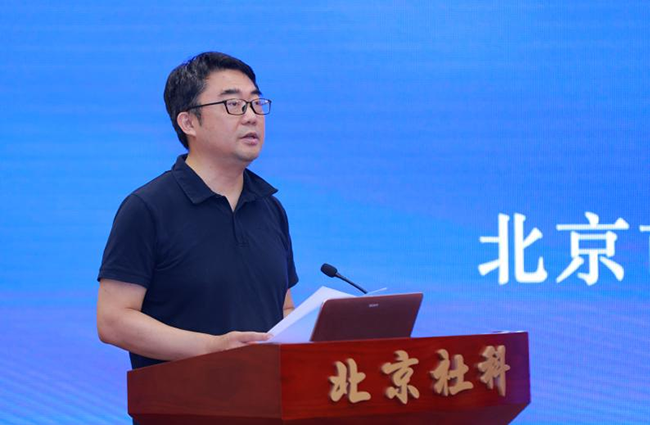
Fan Wenzhong, Member of the Party Leadership Group and Vice President of the Beijing Academy of Social Sciences, Delivers Remarks
In his remarks, Fan Wenzhong noted that the Beijing Academy of Social Sciences has long been deeply engaged in research on the coordinated development of the Beijing-Tianjin-Hebei Region and the high-quality development of the capital. For 22 consecutive years, it has published the Regional Economic Blue Book series. Relying on its multidisciplinary research institutes, core journals, and research bases, the Academy has produced a series of high-level academic achievements and policy reports, with many research findings receiving written comments from provincial and ministerial-level leaders. Fan Wenzhong stated that the Beijing Academy of Social Sciences will continue to leverage its strengths as a high-end think tank of the capital, focusing on key areas such as three-circle linkage, industrial synergy, and the empowerment of scientific and technological innovation, and continue to produce original and policy-oriented research findings to support the high-quality development of the capital metropolitan area.
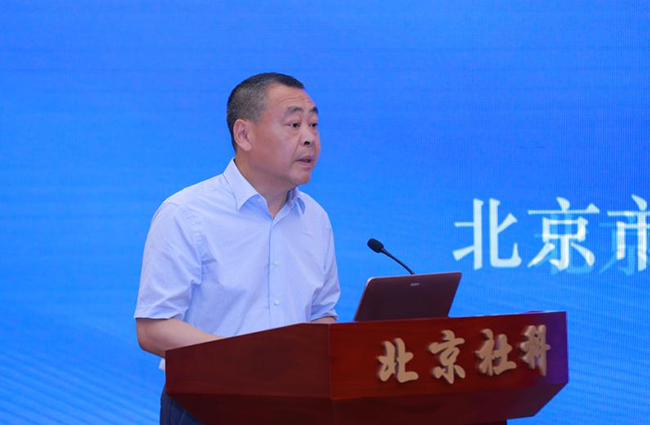
During the keynote presentation session, seven leading domestic experts delivered keynote presentations on the development of the modern capital metropolitan area.
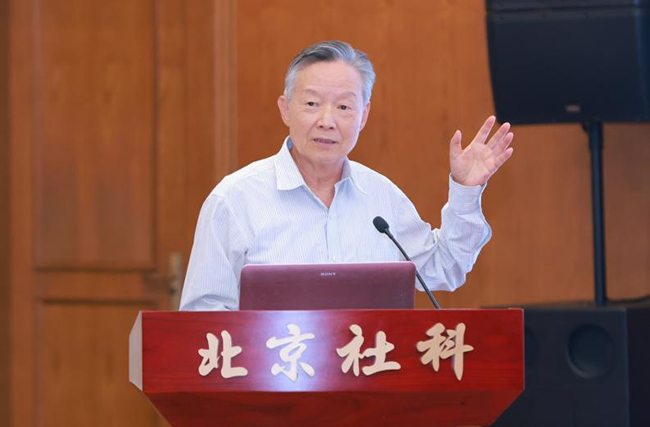
Qiu Baoxing, former Vice Minister of Housing and Urban-Rural Development and Academician of the International Eurasian Academy of Sciences, delivered a keynote presentation titled “Can a Science and Technology Innovation Ecosystem Overtake Established Leaders? — The Cases of Boston and New York.” By comparing the trajectories of Boston and New York as two major innovation hubs of science and technology, he argued that a region’s core competitiveness stems from an endogenous innovation ecosystem rather than the mere concentration of high-end factors. He suggested that the Beijing-Tianjin-Hebei Region should proceed from its own realities, draw on New York’s experience in developing “Silicon Alley”, foster a development environment that embraces innovation and tolerates failure, improve the full-chain innovation cultivation system, and address shortcomings in regional innovation-driven development.
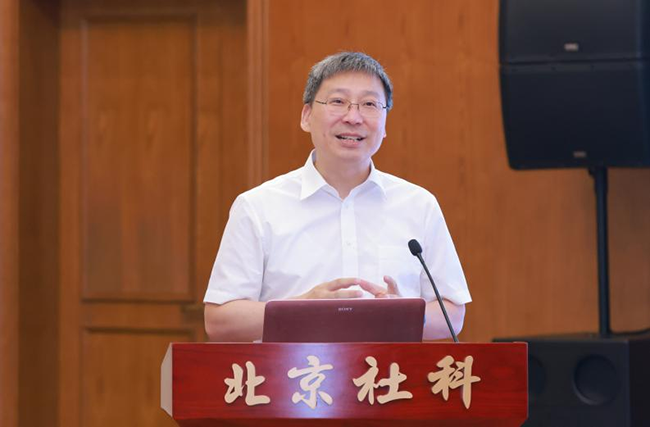
Wu Weixing, Deputy Secretary of the Party Committee and President of the Capital University of Economics and Business, delivered a keynote presentation titled “Financial Support for Building the Capital Metropolitan Area: Priority Domains and Realization Pathways,” focusing on financial empowerment. Drawing on the practices of international metropolitan areas such as London, Tokyo, and the European Union, he proposed establishing a market-based mechanism under the principle of “those who benefit should pay”, promoting the integrated development of rail transit and property, and building a cross-regional risk-sharing system, so as to create a multi-tiered financial service system suited to the three-circle coordinated development of the Capital Metropolitan Area.
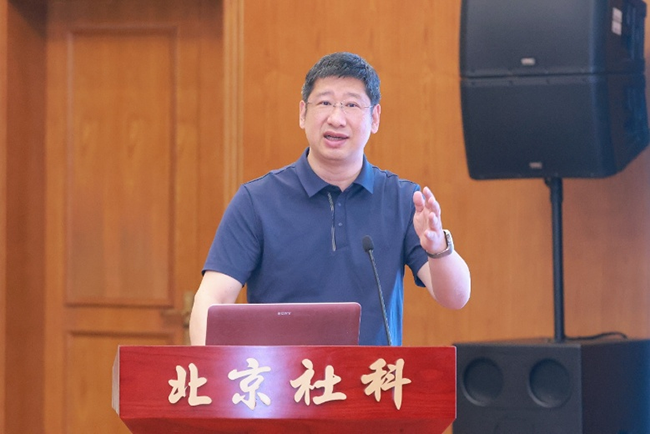
Focusing on industrial innovation, Li Guijun, Deputy Secretary of the Party Committee and President of Hebei Normal University delivered a presentation titled “The Impact of the Beijing-Tianjin-Hebei Coordinated Development Strategy on Enhancing Enterprises’ New Quality Productive Forces,” based on empirical analysis of data from more than a thousand listed companies. He suggested that the focus of regional coordinated development should shift from project implementation to capacity building, address human capital shortcomings in Tianjin and Hebei, and open up channels for the regional transformation of innovation outcomes.
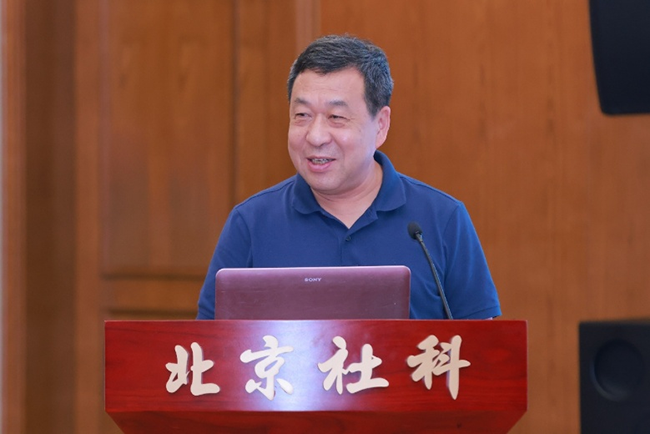
Liu Binglian, Distinguished Professor, Director of the College of Economic and Social Development, and Dean of the Institute for Coordinated Development of the Beijing-Tianjin-Hebei Region at Nankai University, delivered a keynote presentation titled “Capital Circle Planning and the Coordinated Development of the Beijing-Tianjin-Hebei Region,” in which he assessed the new landscape of coordinated development in the region during the period of the 15th Five-Year Plan. He proposed leveraging AI technology to build a large regional industrial model, optimizing the spatially differentiated layout across the three regions, and establishing a modern industrial system so as to propel the coordinated development of the Beijing-Tianjin-Hebei Region from a stage of “climbing slopes and overcoming obstacles” toward a leap in high-quality development.
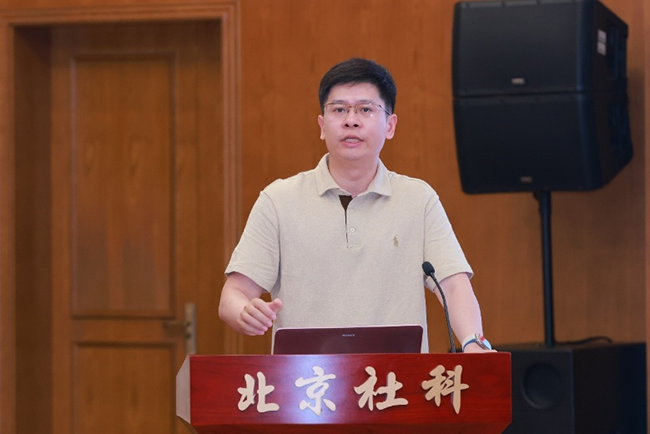
Focusing on urban renewal and green development, Wu Kang, Jingshi Distinguished Professor at Beijing Normal University, delivered a keynote presentation titled “Strategic Reflections on the Vitality Effects and Emission-Reduction Potential of Urban Renewal in the Megacity of Beijing.” Based on multi-scenario simulations and calculations, he proposed strategies such as differentiated layouts for charging infrastructure, vehicle-grid interaction, and the optimization of commercial district functions.
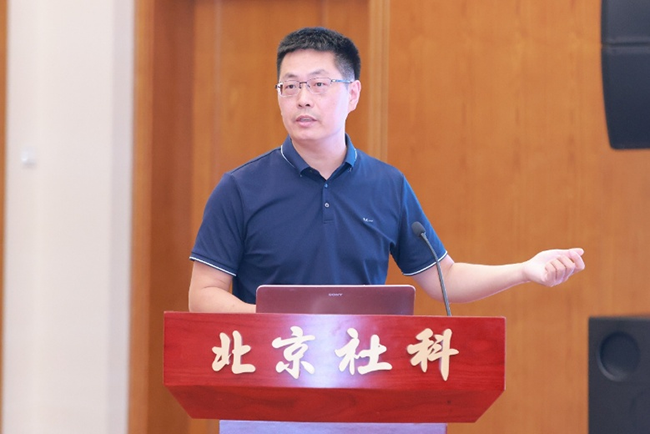
Wang Deli, Deputy Director and Research Fellow at the Institute of Economics of the Beijing Academy of Social Sciences, delivered a keynote presentation titled “Coordinating the ‘Three Key Relationships’ in Building a Modern Capital Metropolitan Area During the 15th Five-Year Plan Period.” He proposed that in this new phase, it is necessary to break down economic barriers between administrative regions, establish mechanisms for shared investment and shared benefits, vigorously develop suburban railways, and build a “self-reliant urban cluster” around Beijing.