
Seminar on Studying and Implementing the Spirit of General Secretary Xi Jinping’s Important Speech at the Symposium on the Work of Philosophy and Social Sciences and Conference on the Release of Major Achievements Held
 打印
打印 收藏
收藏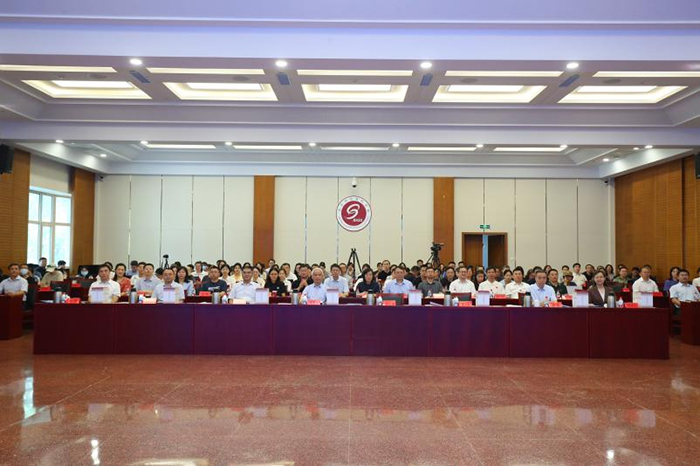
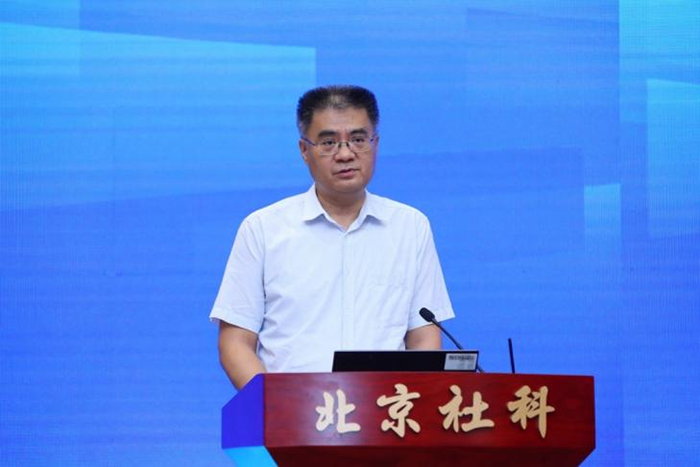
In his remarks, Zhao Chuandong emphasized that promoting the high-quality development of philosophy and social sciences requires upholding the correct political direction, strengthening a sense of mission and responsibility, and maintaining a focus on talent cultivation. He expressed the hope that the Beijing Academy of Social Sciences would build on the capital’s theoretical strengths in the social sciences, align itself with Beijing’s functional positioning as the “Four Centers,” and regard talent as the primary resource so as to provide solid theoretical and intellectual support for the comprehensive advancement of Chinese modernization.
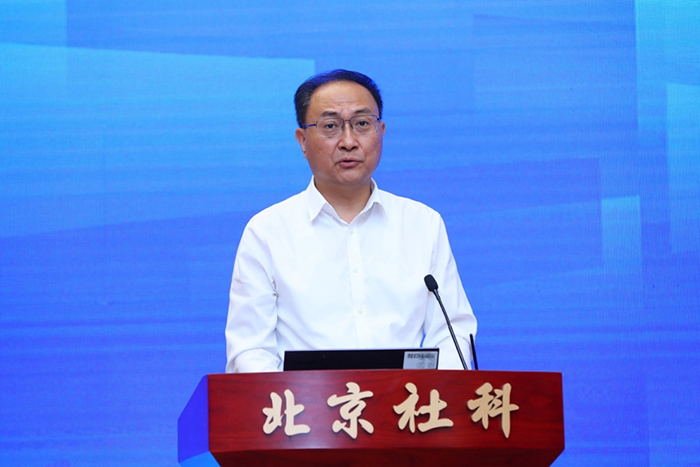
In his remarks, Zhang Shuhui stated that the period of the “15th Five-Year Plan” is a critical stage for laying a solid foundation and building momentum, and that Beijing bears the important responsibility of serving as a model by taking the lead in basically realizing socialist modernization. He called for continued in-depth research on the theme of “Chinese modernization in the capital” and the regular refinement of the Beijing Blue Book series, expressing the hope that all parties would work together to contribute solid publishing support and think tank strength to accelerating the construction of an autonomous intellectual system for Chinese philosophy and social sciences.
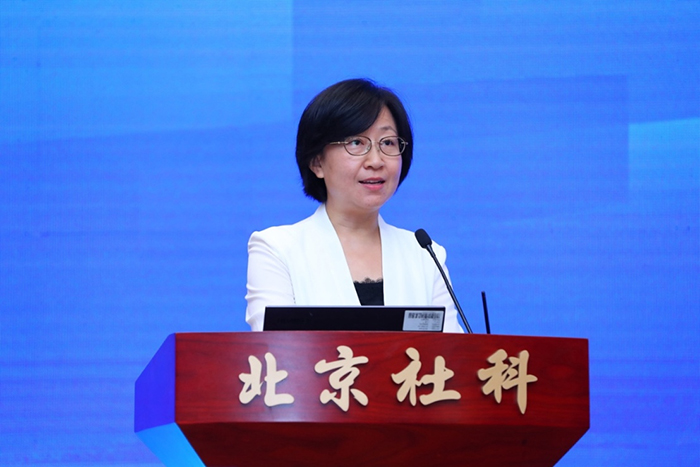
Tan Yiming, Deputy Director of the Publicity Department of the CPC Beijing Municipal Committee, Delivers Remarks
In her remarks, Tan Yiming first fully affirmed the achievements made in the development of the capital’s philosophy and social sciences, as well as the Beijing Academy of Social Sciences. She then put forward specific requirements on how to better study and implement the spirit of General Secretary Xi Jinping’s “May 17” important speech and further develop the capital’s philosophy and social sciences, focusing on three aspects: raising political awareness, strengthening academic foundations, and taking root in the capital.
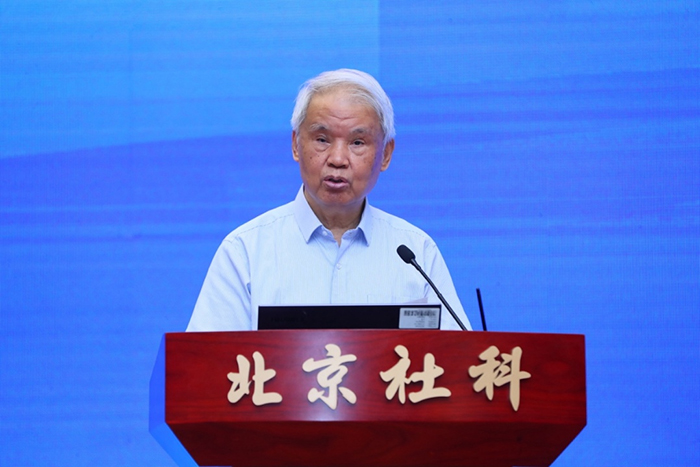
Li Zhongjie, Member of the Advisory Committee of the Central Project for the Study and Development of Marxist Theory and former Deputy Director of the Party History Research Office of the CPC Central Committee, Delivers a Keynote Speech
In his keynote speech, Li Zhongjie pointed out that The Beijing Practice of Chinese Modernization series is a landmark achievement of local social science institutions rooted in local practice and serving the development of an autonomous intellectual system. He further recommended deepening research on the Beijing practice of Chinese modernization from six perspectives: think tank research, implementation-oriented research, theoretical research, technical research, thematic research, and comparative research.
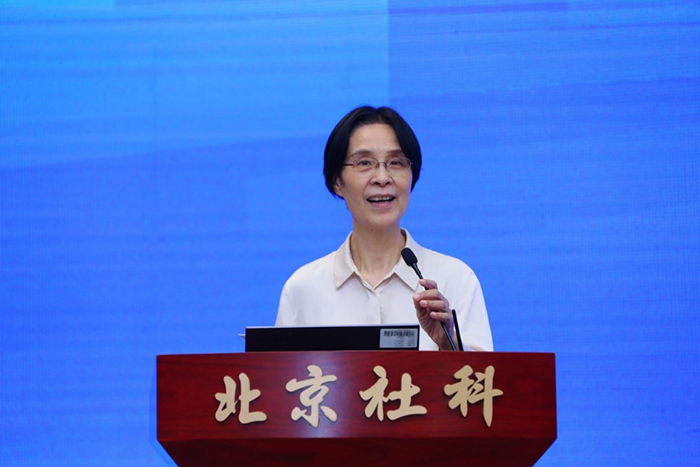
Jiang Xiaojuan, Professor at the University of the Chinese Academy of Social Sciences and Co-Chair of the Beijing International Advisory Committee on the Digital Economy, Delivers a Keynote Speech
Jiang Xiaojuan stated in the keynote speech, that building an autonomous intellectual system for Chinese economics requires an accurate understanding of policy behavior, and that case studies should seek broader applicability and move beyond empirical summaries to conduct in-depth theoretical analysis. Jiang Xiaojuan also noted that the construction of an autonomous intellectual system requires long-term, sustained research at the levels of points, lines, and planes, embedding each part within a more complex and concrete context of real-world development.
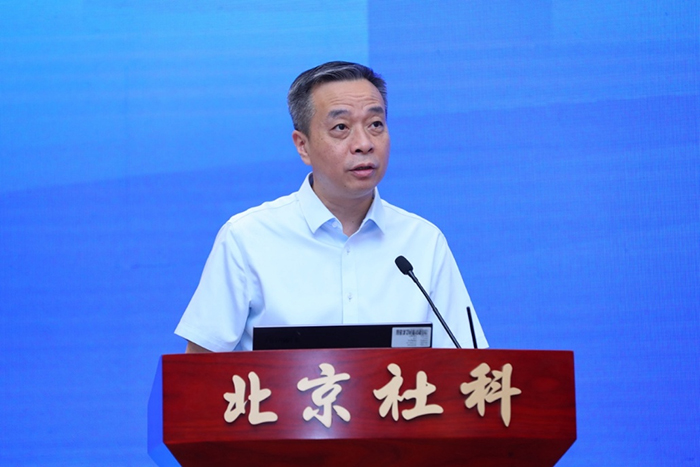
Kang Zhen, Member of the Standing Committee of the Party Committee and Vice President of Beijing Normal University, Delivers a Keynote Speech
In his keynote speech, Kang Zhen, proceeding from the discipline of Chinese language and literature, proposed three major principles for constructing an autonomous intellectual system: upholding continuity and national character, highlighting originality and contemporary relevance, and strengthening systematicity and professionalism. He stated that the discipline of Chinese language and literature should break the monopoly of Western theories and achieve the autonomous production of a local intellectual system; original theories proposed by the academic community in recent years, such as the “New Popular Literature and Art Theory,” are beneficial explorations in this regard.
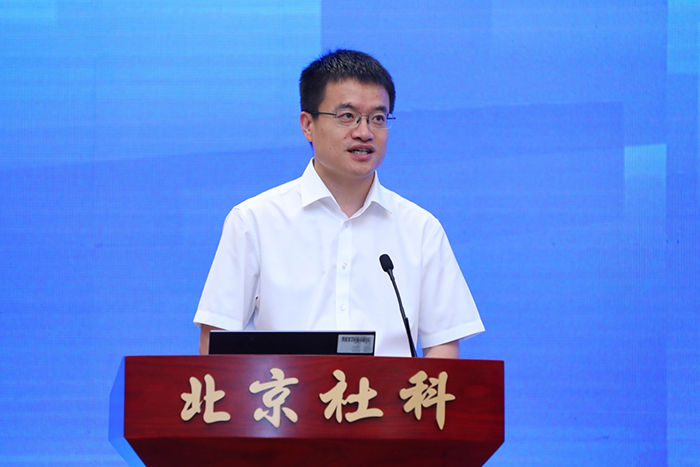
Hu Heng, Dean of the School of History and Director of the Institute of Qing History at Renmin University of China, Delivers a Keynote Speech
In his keynote speech, Hu Heng stated that in the age of artificial intelligence, the discipline of history holds unique value in shaping AI’s value alignment. He proposed that constructing an autonomous intellectual system for Chinese historical studies requires, on the one hand, a two-way integration of local knowledge traditions and modern academic paradigms so as to reshape the intellectual depth and broad vision of historical research; and on the other hand, it necessitates actively responding to the demands of the changing times by improving the top-level design of digital historiography and strengthening the development of digital history laboratories and high-quality datasets.
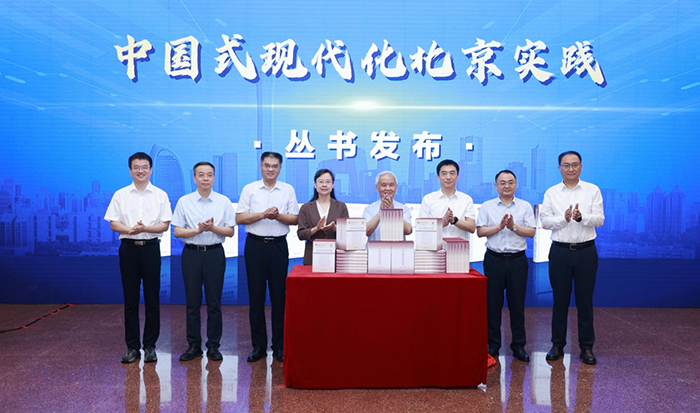
During the session on the release of major academic achievements of the Beijing Academy of Social Sciences, attending leaders and experts jointly unveiled The Beijing Practice of Chinese Modernization series. On behalf of the Beijing Academy of Social Sciences, He Yalan gave a detailed introduction to the background and main contents of the series, noting that it is grounded in the capital’s development practice and systematically presents Beijing’s theoretical explorations and practical achievements in advancing Chinese modernization across seven dimensions: economy, culture, society, ecological civilization, scientific and technological innovation, international exchange, and the rule of law. It is hoped that the series will serve as a reference for Party and government decision-making, provide materials for academic research, and offer a window through which all sectors of society may better understand the capital’s modernization efforts. The series is expected to help Beijing continue to lead the way and set an example in the process of Chinese modernization, thereby contributing greater strength from the capital and more think-tank wisdom to the building of a strong nation and national rejuvenation.
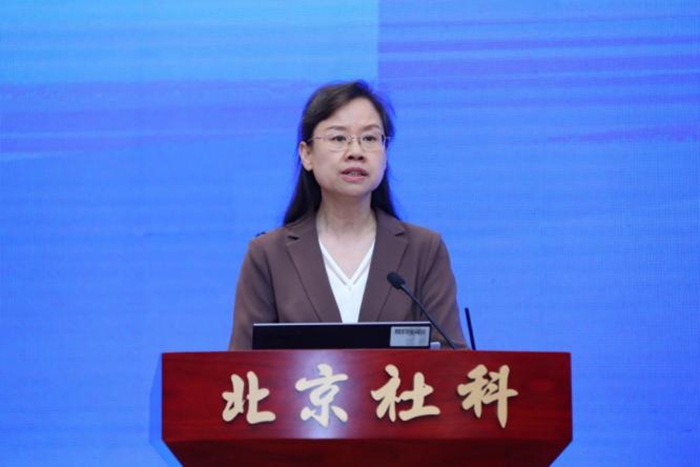
He Yalan, President of the Beijing Academy of Social Sciences, Introduces the Contents of the Series
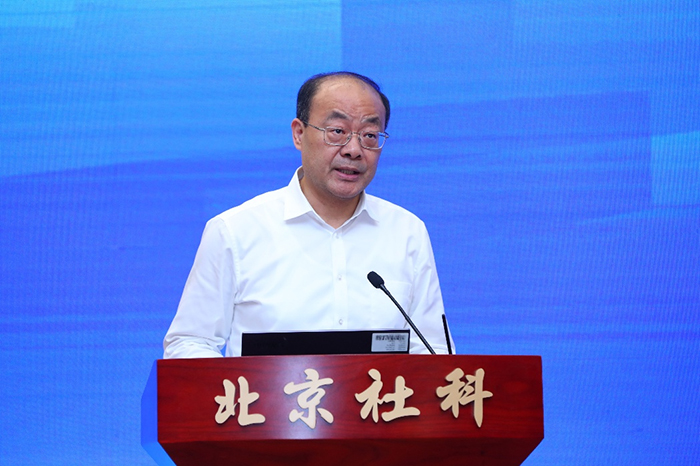
Yang Weiguo, Deputy Secretary of the Party Leadership Group and Vice President of the Beijing Academy of Social Sciences, Chairs the Series Release and Keynote Speech Session
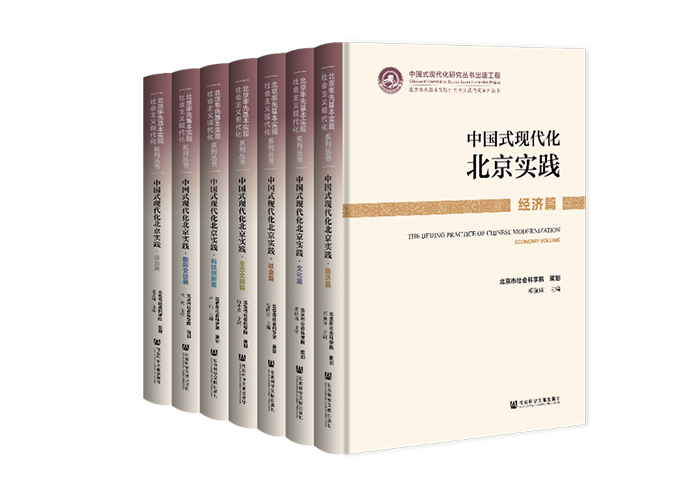
The Beijing Practice of Chinese Modernization Series
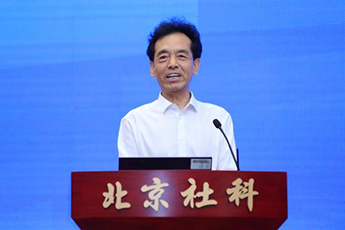
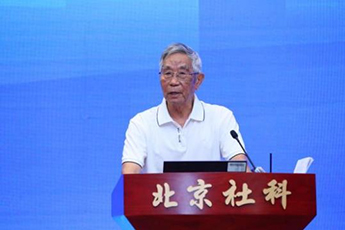
During the keynote speech session that afternoon, two senior experts—Research Fellow Zhao Hong, former Vice President of the Beijing Academy of Social Sciences, and Research Fellow Hong Handing of the Institute of Philosophy—respectively introduced the development of emblematic theoretical concepts of broad academic influence, such as “headquarters economy” and “classical hermeneutics,” and shared reflections drawn from their own efforts to build an autonomous intellectual system for Chinese philosophy and social sciences.
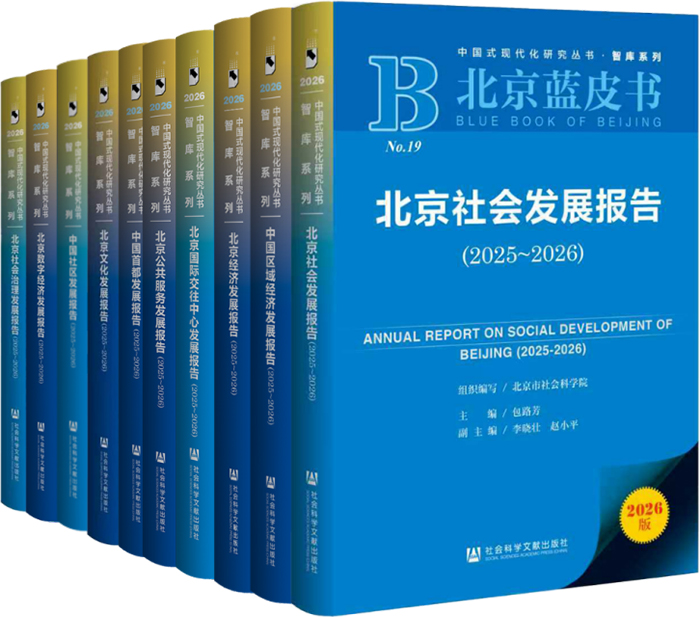
During the release of the “Beijing Social Sciences” Think Tank Blue Book series, representatives of the research teams for ten blue books including the Annual Report on China’s Regional Economy (2025–2026), Annual Report on Community Development of China (2025–2026), Annual Report on Economic Development of Beijing (2025–2026), Annual Report on Cultural Development of Beijing (2025–2026), Annual Report on Digital Economy Development of Beijing (2025–2026), Annual Report on Public Services Development of Beijing (2025–2026), and Annual Report on Social Development of Beijing (2025–2026), Annual Report on the Center of International Exchanges of Beijing (2025–2026), Annual Report on the Development of Social Governance in Beijing (2025–2026), Annual Report on the Development of China’s Capital (2025–2026). introduced their basic contents and main features of their respective publications.
During the discussion session, Chang Yuenan, Director of the Institute of Manchuology; You Guozhen, Director of the Institute of Marxism; Yan Shengwen, Deputy Director of the Institute of Management; Qin Fengli of the Institute of Rule of Law; and Zhao Lu of the Institute of Sociology at the Beijing Academy of Social Sciences each delivered remarks, drawing on the work of their respective institutes and their own research, on the in-depth study and implementation of the spirit of General Secretary Xi Jinping’s important speech at the Symposium on the Work of Philosophy and Social Sciences.
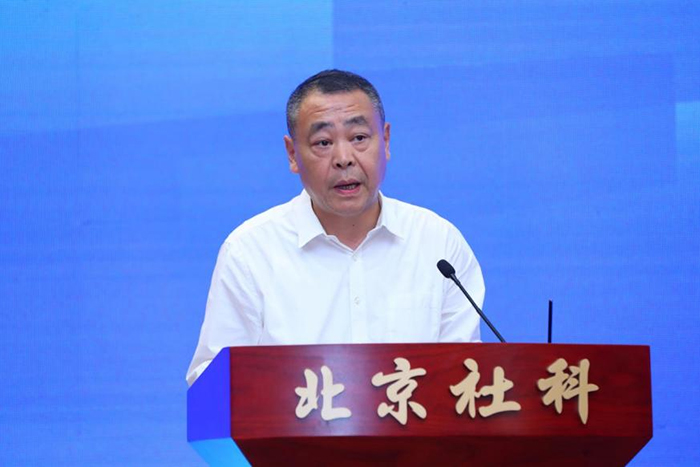
Lu Ya, Member of the Party Leadership Group and Vice President of the Beijing Academy of Social Sciences, Delivers the Concluding Remarks
In his concluding remarks, Lu Ya noted that the conference thoroughly studied and implemented the spirit of General Secretary Xi Jinping’s “May 17” important speech as well as his important instructions on promoting the high-quality development of philosophy and social sciences and further consolidated consensus within the social sciences community through keynote speeches, the release of major achievements, and academic discussions. He stated that the Beijing Academy of Social Sciences would take the successful hosting of this conference as an opportunity to continue advancing the construction of an autonomous intellectual system for Chinese philosophy and social sciences, and to contribute wisdom and strength to the high-quality development of the capital in the new era.