
The Digital Economy and Urban Development Forum Successfully Held as Part of the Global Digital Economy Conference 2026
 打印
打印 收藏
收藏 As a key component of the Global Digital Economy Conference 2026, the Digital Economy and Urban Development Forum, themed “Data-Driven Cities, Smart Future” , was successfully held at the China National Convention Center on July 3. The forum was organized by the Beijing Academy of Social Sciences and co-organized by the Central University of Finance and Economics, the Beijing Future Science City Administration Committee, and Zhongcaiyuan Technology Development (Beijing) Co., Ltd. Over 100 representatives from government departments at all levels, universities, research institutions, enterprises, and media outlets attended the forum.
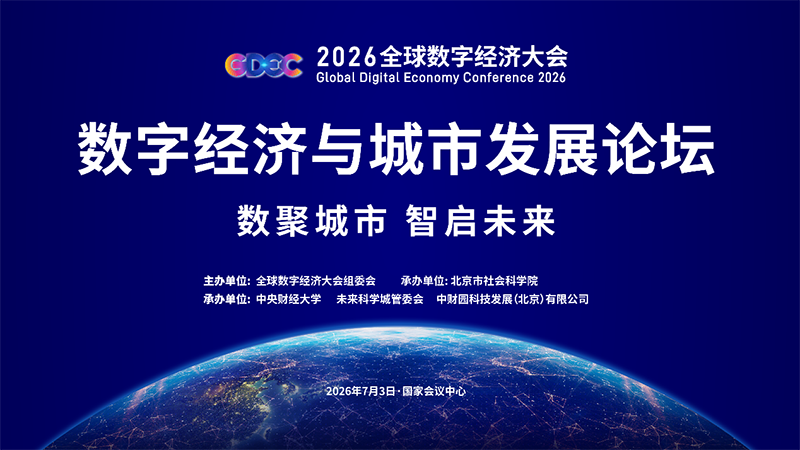
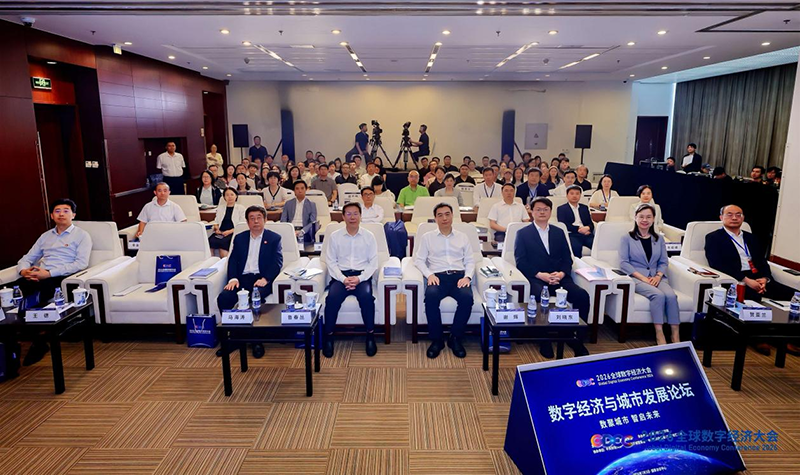
The forum featured guest remarks, keynote speeches, the release of research findings, and thematic presentations. Remarks were delivered in succession by Wang De, Chief Economist of the Beijing Municipal Bureau of Economy and Information Technology; Liu Xiaodong, District Mayor of Changping District and Director of the Beijing Future Science City Administration Committee; Ma Haitao, President, Deputy Secretary of the Party Committee, and Professor at the Central University of Finance and Economics; and Professor Xie Hui, Secretary of the Party Leadership Group of the Beijing Academy of Social Sciences. The guest remarks and keynote speech sessions were moderated by Research Fellow He Yalan, President of the Beijing Academy of Social Sciences.
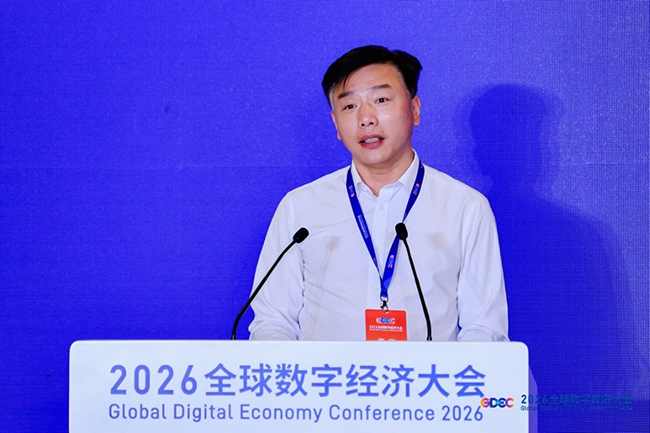
Wang De, Chief Economist of the Beijing Municipal Bureau of Economy and Information Technology, Delivers Remarks
On behalf of the Beijing Municipal Bureau of Economy and Information Technology, Wang De expressed sincere gratitude to the organizing and co-organizing institutions for their careful organization of the forum. He noted that this year’s forum, under the theme “Data-Driven Cities, Smart Future”, takes data as its core element and focuses on frontier issues in data-driven urban development. He emphasized that the forum carries practical significance and long-term value for deepening the empowering role of data elements in urban governance and advancing the development of digital-friendly cities.
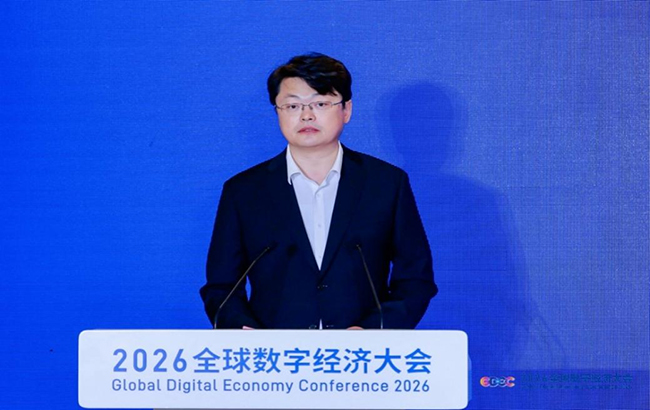
Liu Xiaodong, District Mayor of Changping District and Director of the Beijing Future Science City Administration Committee, Delivers Remarks
Liu Xiaodong introduced new trends and achievements in the development of Changping District’s digital economy and proposed fresh ideas for exploring the “Changping Model” for digital economic development from multiple perspectives. He also noted that, through cooperation with the Beijing Academy of Social Sciences and the Central University of Finance and Economics, the forum had created a platform for government-industry-university-research exchange and mutual learning, resource sharing, and collaborative innovation, thereby opening up new pathways for jointly exploring how the digital economy can empower urban development.
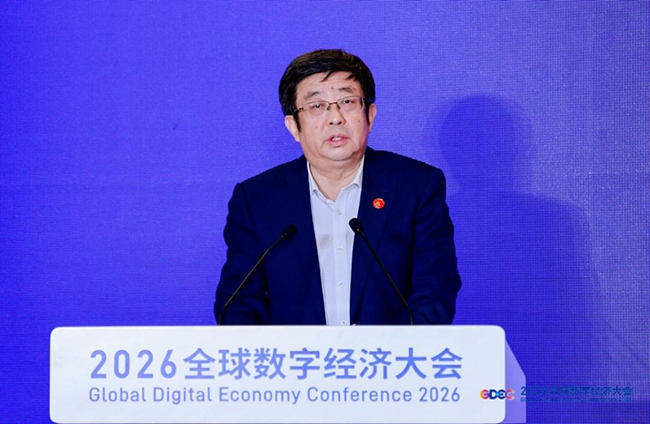
Professor Ma Haitao, President and Deputy Secretary of the Party Committee of the Central University of Finance and Economics, Delivers Remarks
Professor Ma Haitao introduced the distinctive features of the Central University of Finance and Economics, its teaching and research initiatives related to the digital economy and urban development, and its strategic vision for building on its position in the capital city and deepening joint research with relevant institutions in the future. He proposed further strengthening collaboration among government, industry, universities, research institutions, and end-users to jointly build an innovation research community for the digital economy, thereby providing more theoretical approaches and practical models for the digital transformation of cities across the country.
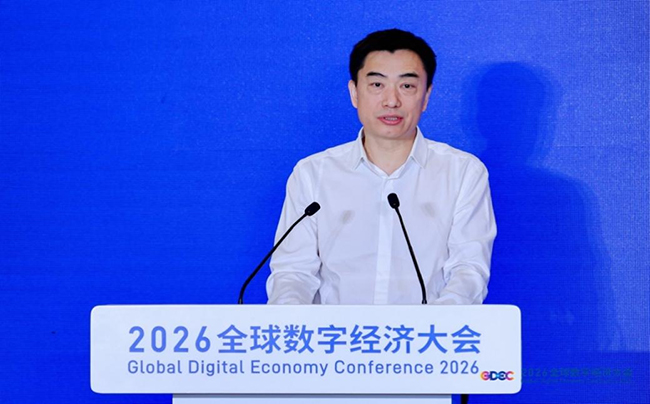
Professor Xie Hui, Secretary of the Party Leadership Group of the Beijing Academy of Social Sciences, Delivers Remarks
Professor Xie Hui extended a warm welcome and gratitude to the participating guests. He outlined the concrete measures taken by the Beijing Academy of Social Sciences to conduct in-depth research in fields such as the digital economy and smart cities and to support the high-quality development of Beijing’s digital economy. In particular, he highlighted the establishment of the “Digital Intelligence Economy Research Base” and the publication, for five consecutive years, of the Beijing Digital Economy Development Report Blue Book, which has been released at the Global Digital Economy Conference. He proposed working together with partners from all sectors to deepen practical cooperation and contribute wisdom and strength to Beijing’s accelerated development as a global benchmark city for the digital economy.
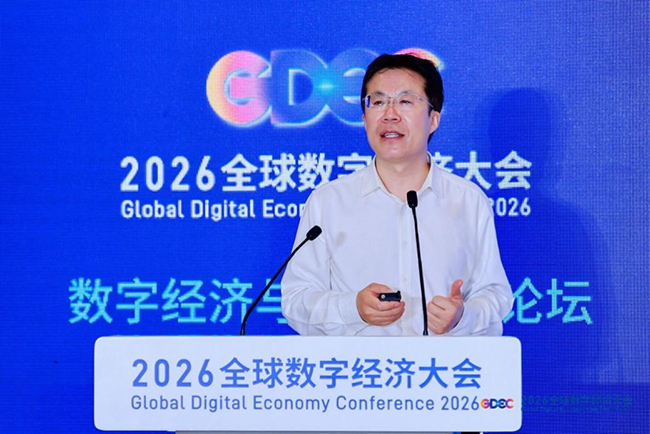
Lu Chuncong, President of the China Academy of Industrial Internet, Delivers a Keynote Speech
Lu Chuncong, President of the China Academy of Industrial Internet, delivered a keynote speech titled “AI Empowering New Industrialization.” He pointed out that China possesses the world’s most complete industrial system and has ranked first globally in manufacturing scale for 15 consecutive years. He emphasized that the Industrial Internet should serve as a key lever for advancing AI-enabled full-process intelligent transformation in manufacturing through six major tasks, including the development of smart equipment, digital and intelligent infrastructure, and industrial intelligence agents, thereby accelerating China’s progress toward becoming a manufacturing powerhouse.
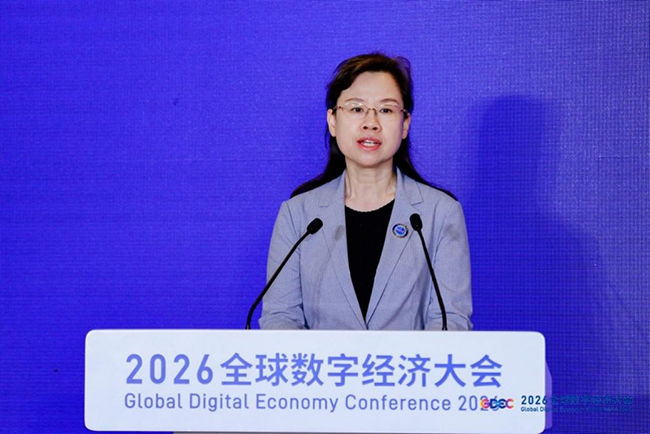
Research Fellow He Yalan, President of the Beijing Academy of Social Sciences
Chairs the Guest Remarks and Keynote Speech Sessions
In remarks as chair, He Yalan stated that, standing at the forefront of the era of digital and intelligent transformation, the forum had taken “Data-Driven Cities, Smart Future” as its annual theme and had carefully built a platform for exchange, bringing together insights from government, industry, universities, and research institutions to jointly explore frontier pathways for the digital economy to empower urban development. He Yalan also noted that this was not only a gathering of ideas, but also the beginning of a collective effort to build consensus and chart a shared blueprint.
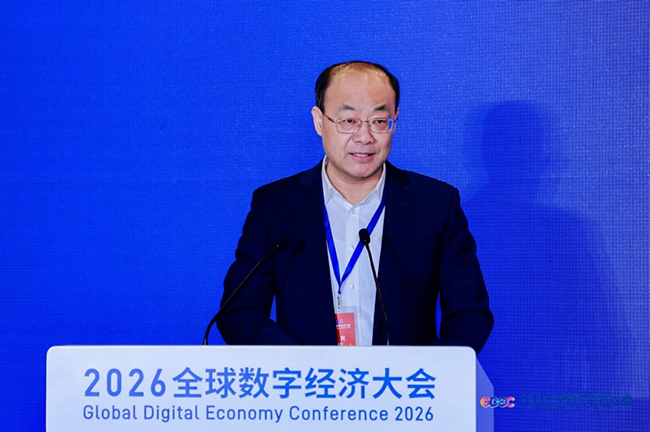
Professor Yang Weiguo, Deputy Secretary of the Party Leadership Group and Vice President of the Beijing Academy of Social Sciences
Chairs the Research Findings and Thematic Presentation Sessions
The research findings and thematic presentation sessions were chaired by Professor Yang Weiguo, Deputy Secretary of the Party Leadership Group and Vice President of the Beijing Academy of Social Sciences. The Beijing Academy of Social Sciences and the Central University of Finance and Economics released their respective research findings.
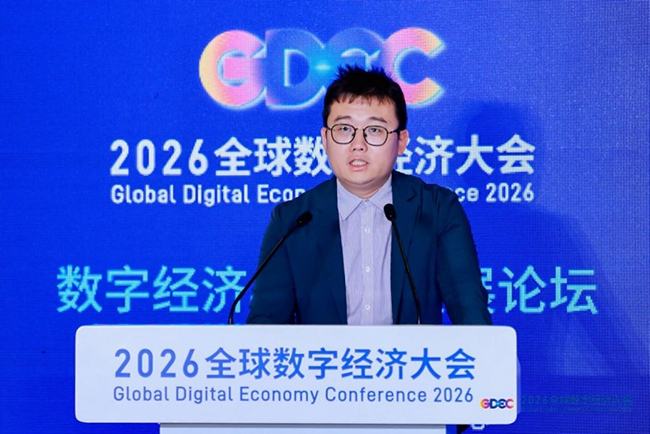
Associate Research Fellow Wang Peng, Secretary-General of the Digital Intelligence Economy Research Base at the Beijing Academy of Social Sciences
Releases the 2025 Report on the Evaluation of Innovative Development in China’s Digital Economy
Associate Research Fellow Wang Peng, Secretary-General of the Digital Intelligence Economy Research Base at the Beijing Academy of Social Sciences, released the 2025 Report on the Evaluation of Innovative Development in China’s Digital Economy. The report assesses the innovative development of the digital economy across China’s 31 provinces, municipalities, and autonomous regions from five major dimensions. The results show that Beijing ranks first, with Guangdong, Shanghai, Zhejiang, and Jiangsu forming the first tier. The Guangdong-Hong Kong-Macao Greater Bay Area records the highest average score, while the country as a whole exhibits a pattern of stronger development in the east and weaker development in the west. The report also offers recommendations from the perspectives of data factor reform, the transformation of small and medium-sized enterprises, talent and capital support, and high-level opening-up.
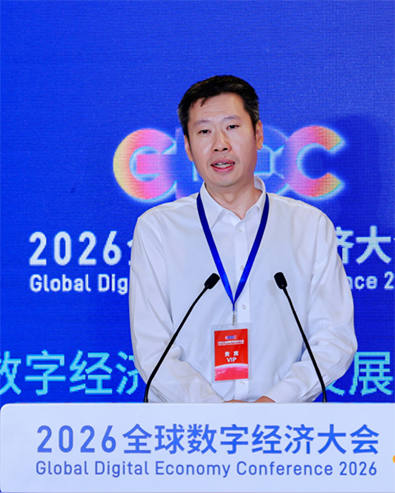
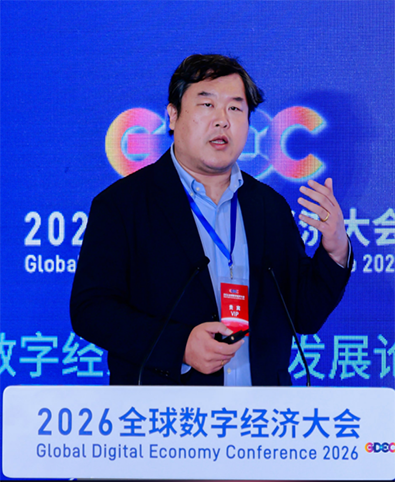
Professor Yu Peng, Party Secretary of the School of Government and Director of the Low-Altitude Economy Research Center at the Central University of Finance and Economics
Associate Professor Wang Wei, Head of the Department of Urban Management at the School of Government of the Central University of Finance and Economics
Release the White Paper on Low-Altitude +Urban Governance 2026: Toward a New Paradigm of Spatio-Temporal Governance
Professor Yu Peng, Party Secretary of the School of Government and Director of the Low-Altitude Economy Research Center at the Central University of Finance and Economics, and Associate Professor Wang Wei, Head of the Department of Urban Management, released the White Paper on Low-Altitude + Urban Governance 2026: Toward a New Paradigm of Spatio-Temporal Governance. The white paper proposes a transition in urban governance from a two-dimensional to a three-dimensional spatio-temporal framework, summarizes four national models of “Low-Altitude + Urban Governance,” and offers policy recommendations on building intelligent connected low-altitude infrastructure, advancing graded airspace management and the “Unified UAV Operation Platform,” improving data security, tackling core technological challenges, and fostering a supportive ecosystem.
During the thematic presentation session, Research Fellow Fan Wenzhong, Member of the Party Leadership Group and Vice President of the Beijing Academy of Social Sciences; Professor Li Zheng, Vice President of the Central University of Finance and Economics; Wang Xiuhua, Chairperson of China Anchu Energy Storage Group; Zhai Yun, Research Fellow and Doctoral Supervisor at the Department of National Governance of the Party School of the CPC Central Committee (National Academy of Governance); Cui Ying, Director of the Urban Digitalization Department of the Industry and Planning Research Institute at the China Academy of Information and Communications Technology; Xiong Yuchuan, Director of the School-University Integration Division of the Beijing Future Science City Administration Committee; and Xiao Zhijun, Chief Architect of Huawei Government One-Network Administration Corps—delivered presentations.
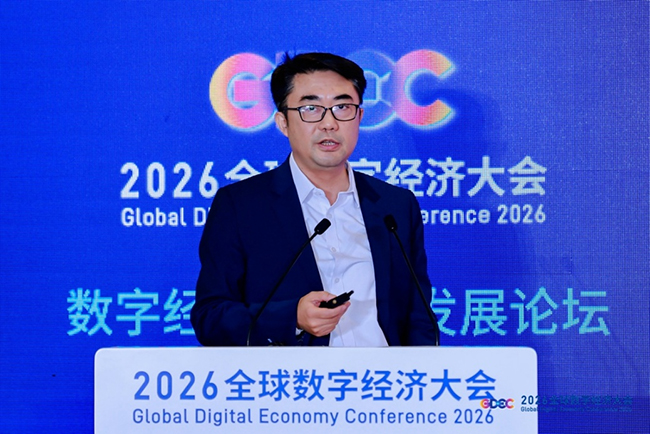
Research Fellow Fan Wenzhong, Vice President of the Beijing Academy of Social Sciences, Delivers a Presentation
Research Fellow Fan Wenzhong delivered a presentation titled “AI-Driven New-Quality Productive Forces and Future Infrastructure Development.” He pointed out that data has become a non-rival core factor, and that AI is driving the changes in the means of production, the workforce, and the core competitiveness of enterprises. He proposed making forward-looking plans for four major infrastructure areas—intelligent computing networks, data circulation mechanisms, AI Token trading platforms, and OPC communities and AI labor markets—while simultaneously improving ethical oversight and social security.
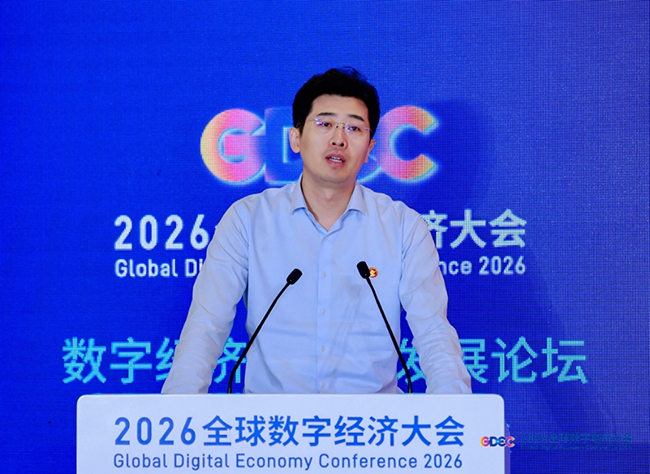
Professor Li Zheng, Vice President of the Central University of Finance and Economics, Delivers a Presentation
Professor Li Zheng delivered a presentation titled “Smart City Governance: The Integration of AI and the Rule of Law.” He noted that urban governance is shifting from “text-based techniques” to “digital techniques.” He advocated using Bayesian decision-making to build an anthropomorphic decision-making framework and to promote the deep integration of human carbon-based intelligence and AI silicon-based intelligence, thereby forming a hybrid governance system in which carbon-based and silicon-based rationalities complement one another.
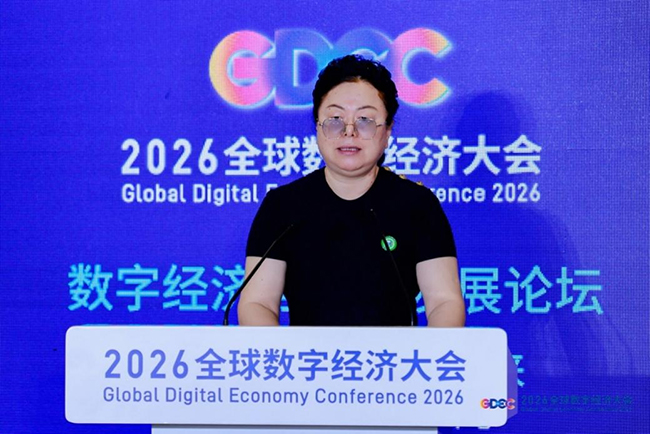
Wang Xiuhua, Chairperson of China Anchu Energy Group, Delivers a Presentation
Wang Xiuhua delivered a presentation titled “Urban Digital-Intelligent Transformation: The Inevitable Path of Development in the Digital Economy Era.” She pointed out that urban digital and intelligent transformation is an essential path for advancing Chinese modernization, with its core lying in the four-dimensional integration of “data as the foundation, intelligence as the brain, the city as the basis, and value as the lifeblood.” She emphasized that digitalization of assets can activate existing infrastructure assets in megacities, thereby providing sustained financial support for new urban infrastructure.
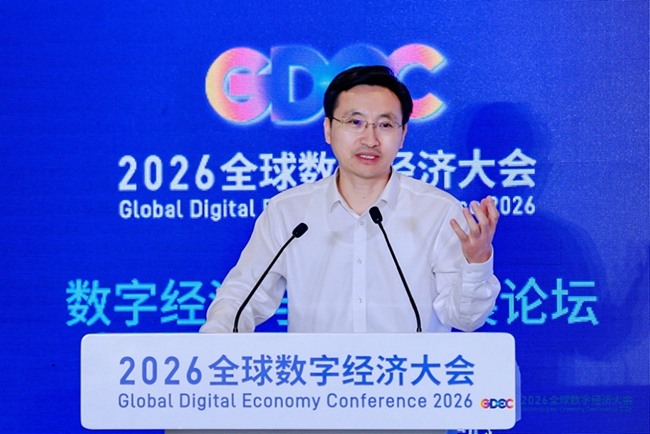
Zhai Yun, Research Fellow and Doctoral Supervisor at the Department of National Governance of the Party School of the CPC Central Committee (National Academy of Governance), Delivers a Presentation
Zhai Yun delivered a presentation titled “The Profound Transformations Brought About by Artificial Intelligence to the Economy and Society.” He pointed out that AI is evolving from a “key variable” into a “powerful engine of growth,” profoundly reshaping development modes, lifestyles, and governance, while also bringing risks such as algorithmic black boxes, deepfakes, and employment shocks. He emphasized the need to shift from “managing AI” to “co-governing with AI,” and to forge a new path of governance that is people-centered and ensures AI for good.
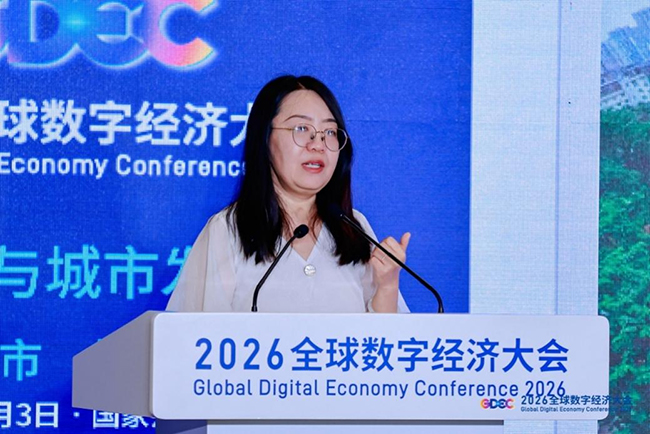
Cui Ying, Director of the Urban Digitalization Department of the Industry and Planning Research Institute at the China Academy of Information and Communications Technology, Delivers a Presentation
Cui Ying delivered a presentation titled “Fostering Citywide Digital-Intelligent Scenarios to Unleash New Quality Productive Forces in Cities: Reflections on the Cultivation and Large-Scale Application of Citywide Digital-Intelligent Scenarios.” She pointed out that digital-intelligent scenarios serve as a key vehicle linking technology and industry, and that most cities are still at the stage of piecemeal exploration. She proposed unlocking the potential of city-wide digital-intelligent scenarios by establishing scenario inventories, applying the “Five Stages and Ten Steps” methodology to design processes, and building a unified foundational platform.
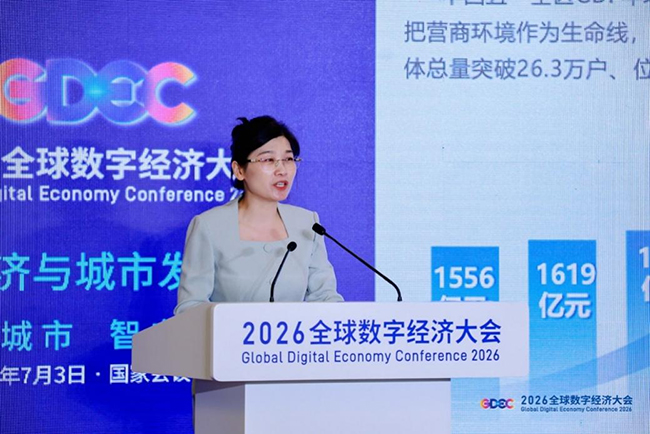
Xiong Yuchuan, Director of the School-University Integration Division of the Beijing Future Science City Administration Committee, Delivers a Presentation
Xiong Yuchuan delivered a presentation titled “Integration of Science and Education and the Symbiosis of Digital Intelligence: Changping District’s Integrated Empowerment of High-Quality Urban Development through Education, Technology, and Talent.” She introduced Changping District’s distinctive resources in education, science and technology, and talent, as well as its three major industrial clusters, each valued at over 100 billion yuan, including pharmaceuticals and healthcare. She summarized the pathways and mechanisms through which Changping District empowers high-quality urban development through the integrated development of education, science and technology, and talent, with a focus on the model of “universities + platforms + enterprises + industrial chains.”
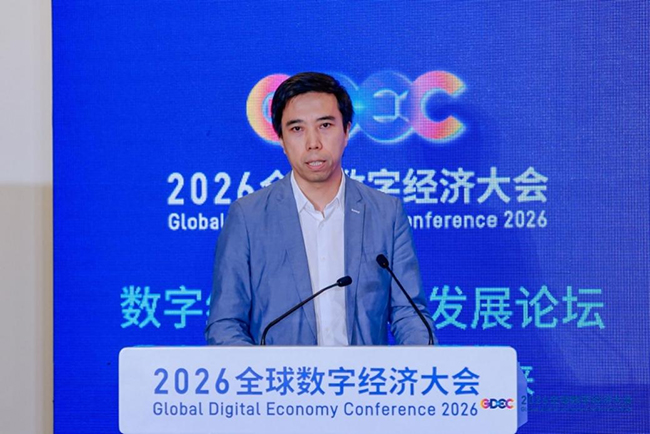
Xiao Zhijun, Chief Architect for Huawei Government One-Network Administration Corps, Delivers a Presentation
Xiao Zhijun delivered a presentation titled “Sharing Practices in AI+ Urban Governance.” He noted that cities are shifting from a primary focus on construction to a stronger emphasis on governance, and that smart cities have evolved from digitization to AI-enabled intelligence. He introduced the overall architecture of AI City and proposed that efforts should be advanced across four dimensions — strategy, business, technology, and foundational platforms — to jointly build a new type of smart city.
In his concluding remarks, Yang Weiguo noted that the forum had offered forward-looking insights on digital-intelligent transformation and urban development, providing important guidance for further deepening related research, developing Beijing as a practical model of a global benchmark city for the digital economy, and supporting the capital’s high-quality development.
The successful hosting of this forum not only created a platform for exchange and cooperation—combining both theoretical and practical value—for experts, scholars, and corporate representatives in the field of digital economy, but also helped foster greater consensus and gather stronger momentum for Beijing’s development as a global benchmark city for the digital economy.