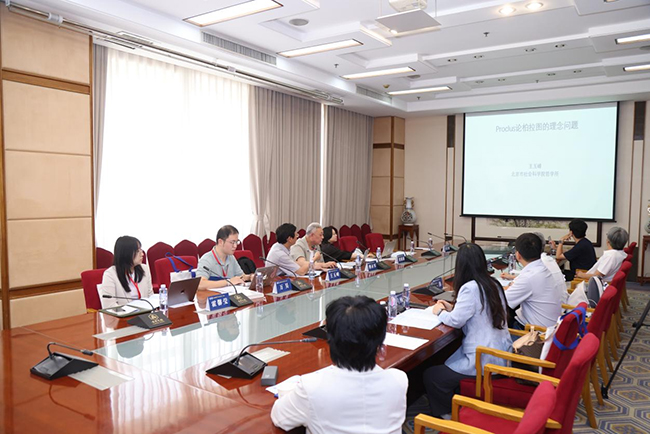
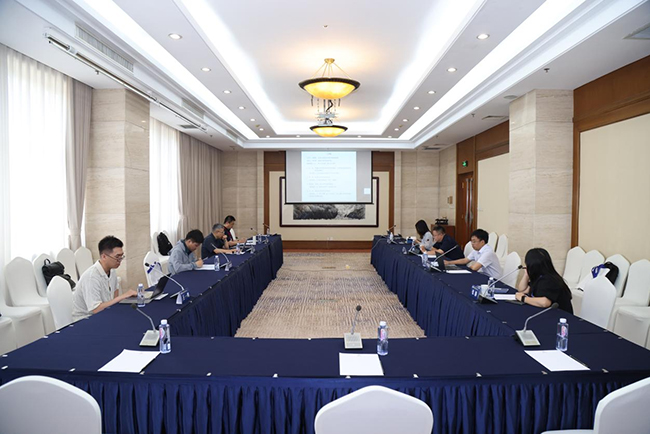
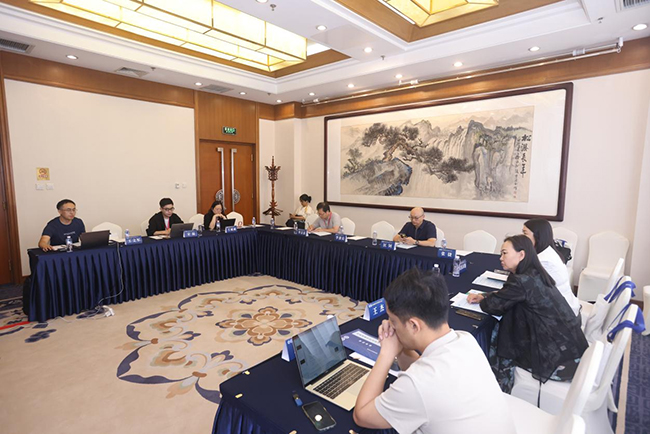
On June 27, the Classical Hermeneutics Conference (2026) was successfully held in Beijing. Focusing on the theme of “Classical Hermeneutics and the Construction of China’s Autonomous Intellectual System”, the conference aimed to contribute to the development of disciplinary, academic, and discourse systems in philosophy and the social sciences with Chinese characteristics. Professor Xie Hui, Secretary of the Party Leadership Group of the Beijing Academy of Social Sciences, attended and addressed the opening ceremony. Professor He Yalan, Deputy Secretary of the Party Leadership Group and President of the Beijing Academy of Social Sciences, presided over the opening ceremony and the first keynote session, while Professor Yang Weiguo, Deputy Secretary of the Party Leadership Group and Vice President, presided over the conference summary session. More than 100 scholars from dozens of universities and research institutions attended the event, including the Party School of the CPC Central Committee (National Academy of Governance), the Chinese Academy of Social Sciences, Peking University, Tsinghua University, Renmin University of China, Zhejiang University, Beijing Normal University, Nankai University, Shandong University, Hunan University, China University of Political Science and Law, Capital Normal University, Beijing Language and Culture University, Shenzhen University, Beijing International Studies University, Tianjin Academy of Social Sciences, Inner Mongolia Academy of Social Sciences, Guangdong Academy of Social Sciences, and the Beijing Academy of Social Sciences.
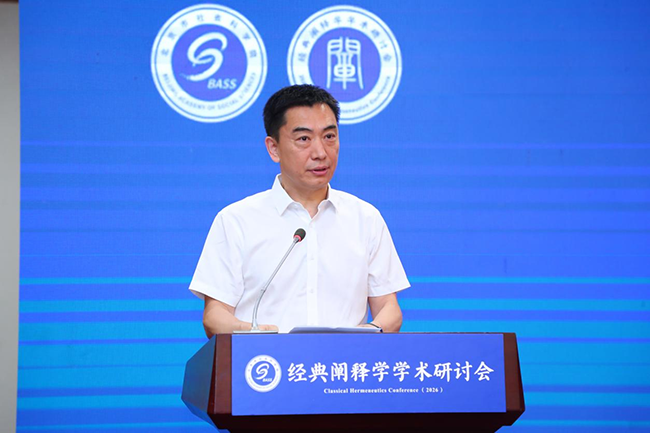
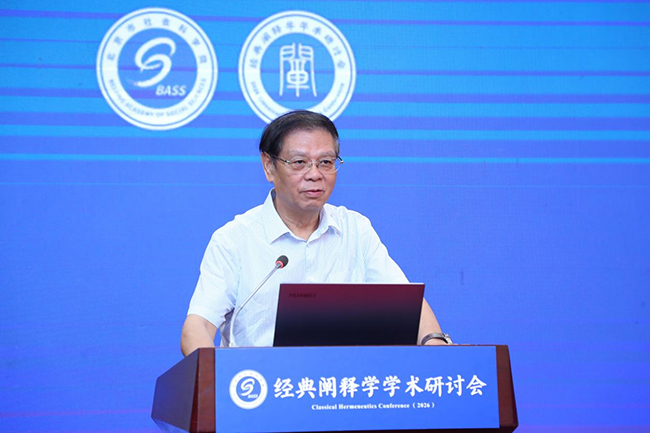
Professor Xie Hui, Secretary of the Party Leadership Group of the Beijing Academy of Social Sciences, Delivers Remarks
In his remarks, Professor Xie Hui, Secretary of the Party Leadership Group of the Beijing Academy of Social Sciences, pointed out that classical hermeneutics has irreplaceable and important value for advancing the high-quality development of philosophy and the social sciences, promoting cultural prosperity, and building a culturally strong nation. He stated that the Beijing Academy of Social Sciences has always upheld the academic principles and institutional philosophy of “upholding tradition while innovating” “diligent cultivation” “practical statecraft” and “harmony in diversity”, and is committed to building a high-level platform for academic exchange. He sincerely called on all participating scholars to move forward together and make new and greater contributions to accelerating the construction of China’s autonomous intellectual system in philosophy and social sciences and opening up new horizons for the high-quality development of these disciplines.
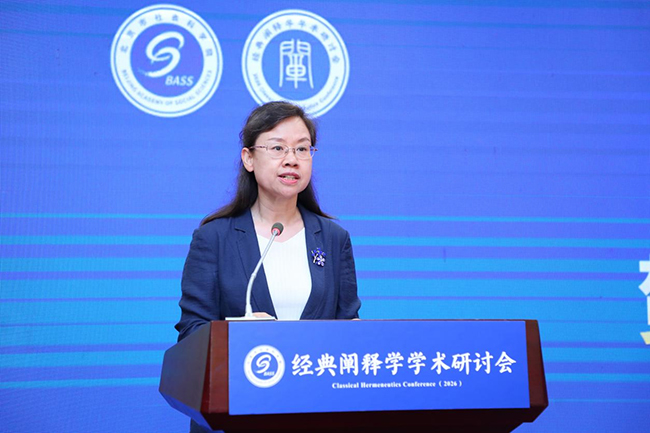
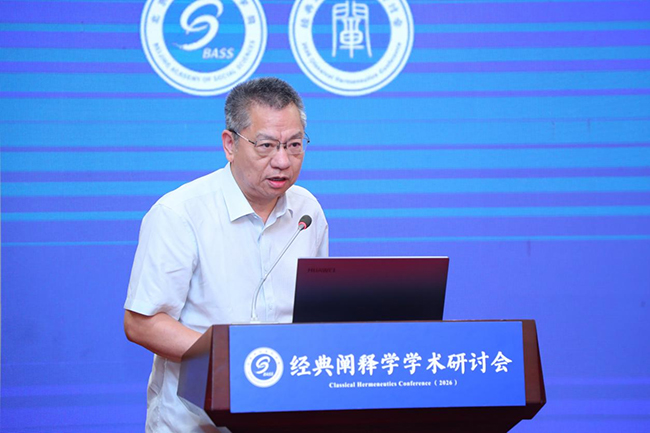
Professor He Yalan, President of the Beijing Academy of Social Sciences, Chairs the Opening Ceremony
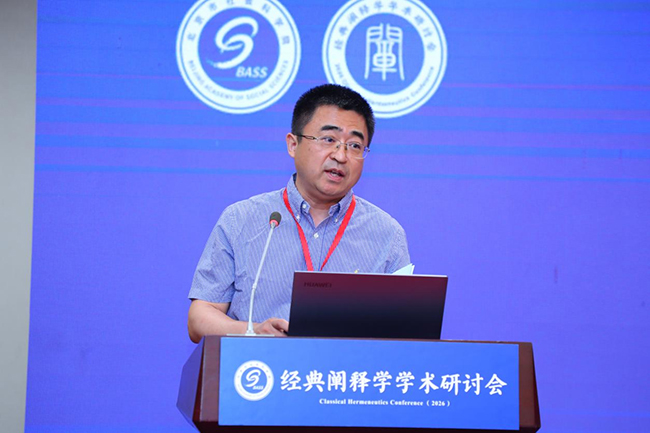
During the first keynote session, five experts and scholars spoke in succession: Professor Li Wentang, Vice President of the Party School of the CPC Central Committee (National Academy of Governance); Professor Zhang Jiang, Dean of the Institute of Advanced Hermeneutics at the University of Chinese Academy of Social Sciences; Professor Hong Handing from the Institute of Philosophy at the Beijing Academy of Social Sciences; Professor Jing Haifeng from the School of Chinese Studies at Shenzhen University; and Professor Gan Chunsong, Dean of the School of Philosophy at Nankai University. The speakers offered profound and distinctive insights on a number of cutting-edge topics, including why the principle of “seeking truth from facts” serves as the cornerstone for building an autonomous intellectual system; the distinction between “the true” and “truth” in human cognition; how classical hermeneutics can contribute to the construction of China’s autonomous intellectual system in philosophy and the social sciences; reflections on the subjectivity of Chinese classical philosophy; and Wang Guowei’s exploration of “pure scholarship” in traditional thought and his vision for establishing modern Chinese philosophy. Covering multiple dimensions, including fundamental philosophical questions and the disciplinary development of philosophy and hermeneutics, the presentations achieved an organic integration of classical hermeneutics from theory to practice, providing solid theoretical support and methodological inspiration for the implementation and deepening of China’s autonomous intellectual system.
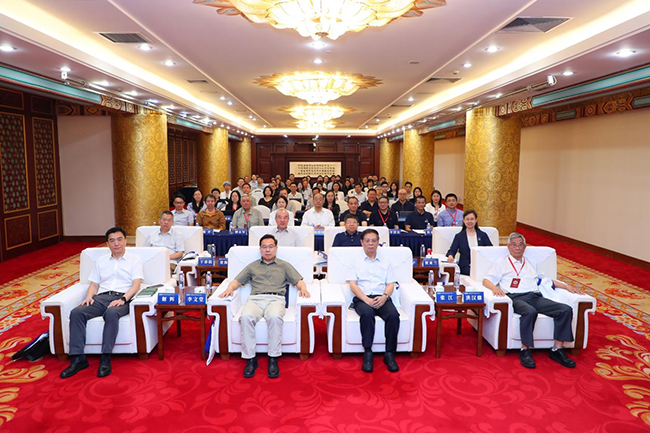
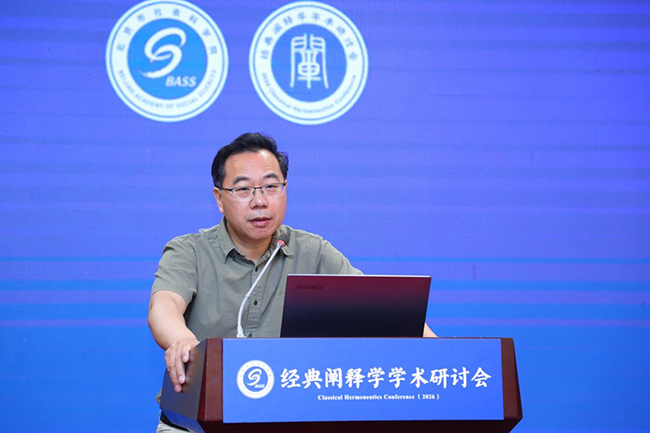
Professor Li Wentang, Vice President of the Party School of the CPC Central Committee (National Academy of Governance)
Professor Zhang Jiang, Dean of the Institute of Advanced Hermeneutics, the University of the Chinese Academy of Social Sciences
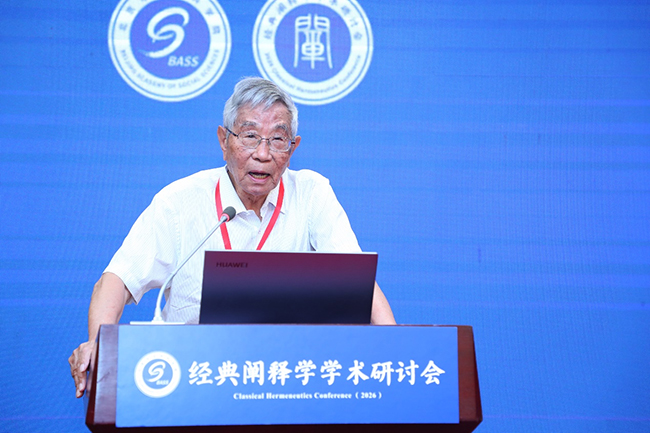
Professor Hong Handing, Institute of Philosophy, Beijing Academy of Social Sciences
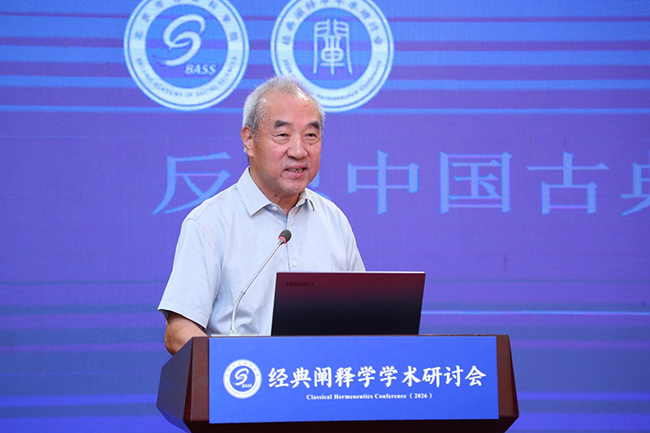
Professor Jing Haifeng, School of Chinese Studies, Shenzhen University
Professor Gan Chunsong, Dean of the School of Philosophy, Nankai University
The second keynote session was chaired by Professor Sun Wei, Director of the Institute of Philosophy at the Beijing Academy of Social Sciences. Five experts and scholars then spoke in succession: Professor Zang Fengyu, Dean of the School of Philosophy at Renmin University of China; Professor Fu Yongjun, Director of the Center for Chinese Hermeneutics at Shandong University; Professor Zheng Kai from the Department of Philosophy at Peking University; Professor Li Qingliang from Yuelu Academy at Hunan University; and Professor Lin Zhimeng from the School of Philosophy at Zhejiang University. The speakers engaged in a multidimensional dialogue on a range of cutting-edge topics, including ancient and modern, Chinese and Western conceptions of knowledge and China’s autonomous intellectual system; new interpretations of relevant passages in The Analects; the ontological turn in the construction of Chinese classical hermeneutics; the contribution of “authorial intention” to the Chinese tradition of classical hermeneutics; and the shift in ancient Greek natural philosophy. The presentations addressed these issues from the perspectives of epistemological construction, reinterpretation of classical texts, shifts in hermeneutic paradigms, and comparisons of histories of Chinese and Western thought. Grounded in the classics, engaged in dialogue between Chinese and Western thought, and oriented toward the contemporary world, these discussions provided important intellectual resources for the theoretical construction of China’s autonomous intellectual system.
Professor Sun Wei, Director of the Institute of Philosophy, Beijing Academy of Social Sciences
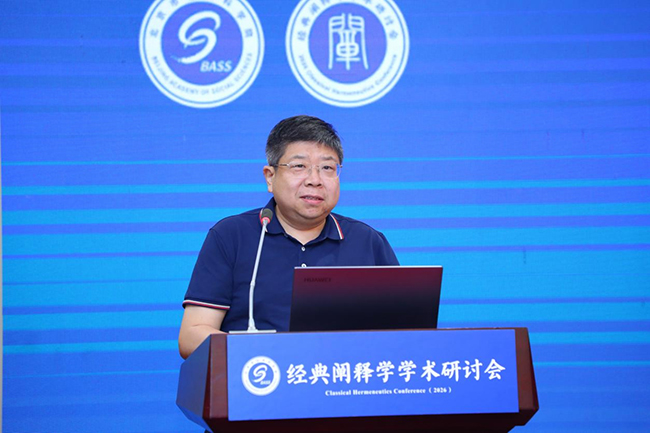
Professor Zang Fengyu, Dean of the School of Philosophy, Renmin University of China
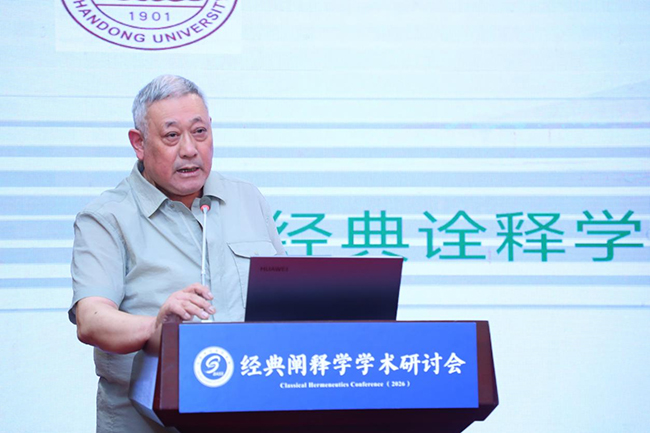
Professor Fu Yongjun, Director of the Center for Chinese Hermeneutics, Shandong University
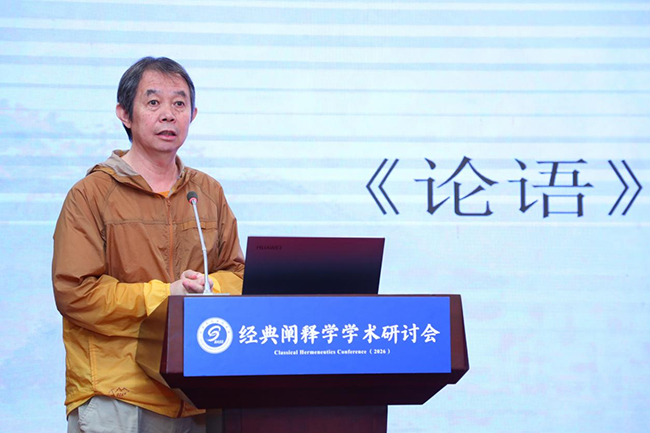
Professor Zheng Kai, Department of Philosophy, Peking University
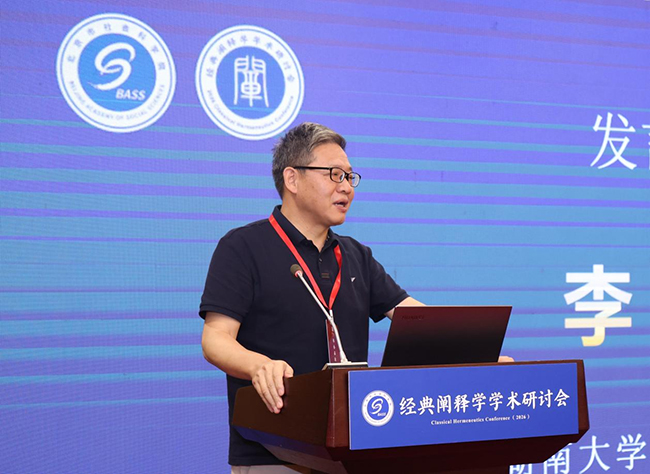
Professor Li Qingliang, Yuelu Academy, Hunan University
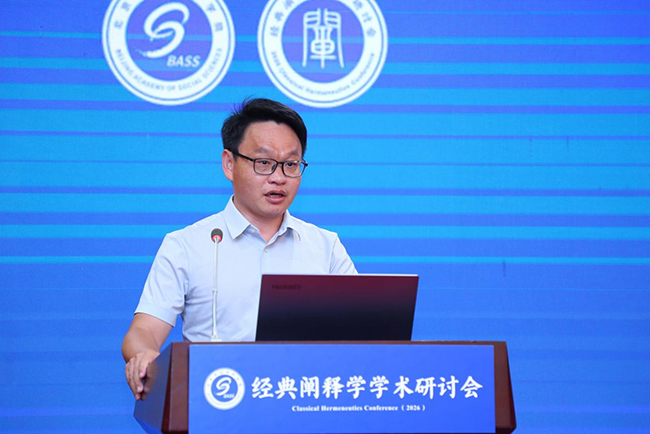
Professor Lin Zhimeng, School of Philosophy, Zhejiang University
In the afternoon, four parallel thematic seminars were held simultaneously.
The first session, titled “Research and Interpretation of Chinese Philosophical Classics”, brought together scholars focusing on classic texts and philosophical concepts of ancient Chinese philosophy, while actively exploring new approaches to interpretation. The presentations addressed topics such as individual virtue and the order of Heaven (Tian), conceptual-historical analysis, and the different dimensions of Confucian and Daoist thought, thereby opening up new horizons for textual interpretation while also promoting theoretical reflection on the tradition of classical exegesis.
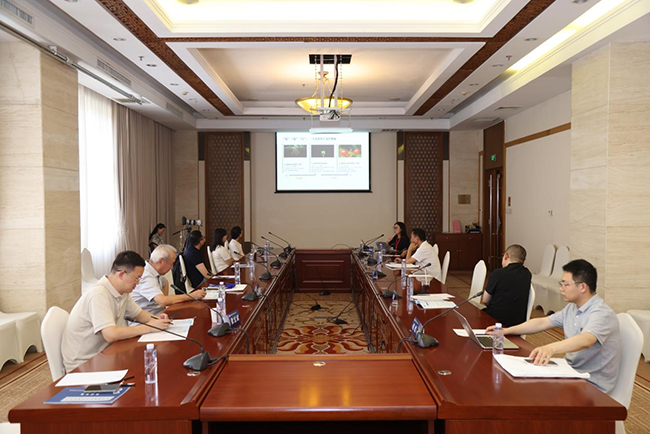
Scene from the First Thematic Session
The second session, titled “Research and Interpretation of Western Philosophical Classics,” centered on eleven conference papers. The presentations took ancient Greek philosophy as their intellectual point of departure and extended to diverse fields such as modern and contemporary phenomenology, analytic philosophy, political philosophy, and hermeneutics, forming a rich line of inquiry around classical interpretation and philosophical dialogue. They vividly presented the overall tension within the Western philosophical tradition and offered multidimensional perspectives on the logic of its internal evolution.
Scene from the Second Thematic Session
The third session was titled “Emblematic Concepts and the Construction of China’s Autonomous Intellectual System”. In this session, presentations by eight scholars covered core areas such as the theory of self-cultivation in Song and Ming Neo-Confucianism, methodologies of classical interpretation, the historical evolution of classical studies, theories of mind and human nature, and political order. The scholars’ research not only deepened the theoretical interpretation of emblematic concepts but also effectively expanded the interpretive space for the reciprocal interaction between body, mind, politics and classical text in traditional Chinese thought.
Scene from the Third Thematic Session
The fourth session, titled “Classical Hermeneutics and Contemporary Civilizational Exchange and Mutual Learning,” featured presentations by ten scholars. Their papers integrated textual criticism, philosophical interpretation, and methodological reflection. While deeply exploring diverse paths for the construction of Chinese classical hermeneutics, they also significantly expanded its comparative horizon and disciplinary boundaries.
Scene from the Fourth Thematic Session
The participating scholars each brought their unique strengths to the discussion, engaging in wide-ranging intellectual exchange. Their presentations covered topics ranging from ancient Greek metaphysics, phenomenology, and analytic philosophy to in-depth explorations of pre-Qin Confucian and Daoist theories of mind and human nature, the Song and Ming Neo-Confucian theories of self-cultivation, and the history of classical exegesis, while also extending to the theoretical construction of comparative philosophy and Chinese-language hermeneutics. Together, they painted a grand intellectual panorama of mutual learning between China and the West and the integration of past and present, providing a vivid example—from classical interpretation to practical cultivation—for the building of China’s autonomous intellectual system.
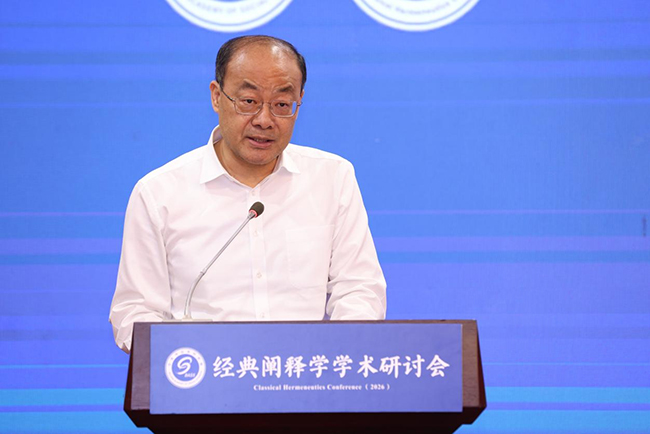
Professor Yang Weiguo, Deputy Secretary of the Party Leadership Group and Vice President of the Beijing Academy of Social Sciences, Presides over the Closing Ceremony and Delivers Concluding Remarks
The closing session was chaired by Professor Yang Weiguo, Deputy Secretary of the Party Leadership Group and Vice President of the Beijing Academy of Social Sciences. Four scholars—Associate Professor Sun Qingjuan from Yuelu Academy at Hunan University, Associate Professor Li Tao from the School of Philosophy at the University of Chinese Academy of Social Sciences, Assistant Researcher Zhang Jing from the Institute of Philosophy at the Beijing Academy of Social Sciences, and Assistant Researcher Wang Wenjun from the Institute of Philosophy at the Beijing Academy of Social Sciences—reported to the conference on the proceedings of their respective panel discussions.
Presenters from each panel reported on their respective discussions
In his concluding remarks, Yang Weiguo noted that during the two keynote sessions and multiple panel discussions, scholars engaged in extensive and in-depth deliberations on topics such as the interpretation of classical texts and the construction of China’s autonomous intellectual system. He emphasized that the conference featured a clear theme, rich content, and substantive exchanges. He stated that the interpretation of classical texts serves as a vital foundation for building an autonomous intellectual system, and that this conference represented a concrete step in advancing that academic endeavor. He further expressed the hope that scholars in the fields of philosophy and the social sciences would ground their work in the spirit of the times, delve deeply into their academic pursuits, and pursue scholarship that is both practical and forward-looking, thereby producing more academic achievements marked by intellectual depth and a commitment to real-world concerns.
Amid warm applause, the “Classical Hermeneutics Conference (2026)” came to a successful close!

 打印
打印 收藏
收藏