On the afternoon of June 10, the Second Yunju Temple Academic Symposium was held at the Beijing Municipal Archives. The event was hosted by the Beijing Academy of Social Sciences and CPC Fangshan District Committee and Fangshan District Government of Beijing Municipality, and organized by the Yunju Temple Historical Documents Research Base and the Yunju Temple Cultural Relics Management Office. Liu Xiaoyang, Level II Bureau Rank Official of the Beijing Municipal Archives Bureau; Lei Huan, Member of the Standing Committee and Director of the Publicity Department of CPC Fangshan District Committee; and Xie Hui, Secretary of the Party Leadership Group of the Beijing Academy of Social Sciences, delivered opening remarks. Among those attending were Zhang Caixiong, Deputy Director of the Learning Committee of Beijing Municipal Committee of the CPPCC; Zhai Degang, Secretary of the Party Leadership Group, Executive Vice Chairperson of the Beijing Federation of Social Science Circles (BFSSC), and Director of the Beijing Social Sciences Planning Office; Chen Wei, Level II Bureau Rank Official of the Publicity Department of CPC Beijing Municipal Committee; Wei Yeling, Deputy Editor-in-Chief of Qianxian Magazine Press, the CPC Beijing Municipal Committee; Liu Hongchang, Level II Bureau Rank Official of the Beijing Municipal Cultural Heritage Bureau; and relevant officials from the Beijing Municipal Bureau of Culture and Tourism. The meeting was chaired by He Yalan, President of the Beijing Academy of Social Sciences.
Centered on the theme “The Documentary Value and Global Significance of the Yunju Temple Sutra Collection,” the symposium brought together more than 150 experts and scholars from the Chinese Academy of Social Sciences, Peking University, Renmin University of China, Nankai University, Hainan University, the Research Institute of The Buddhist Culture of China, the Chinese Calligraphers Association, China Bookstore, the Beijing Institute of Archaeology, and the Beijing Academy of Social Sciences. Participants engaged in in-depth discussions on topics including the systematic collation, academic research, and international communication of historical documents from the Yunju Temple.
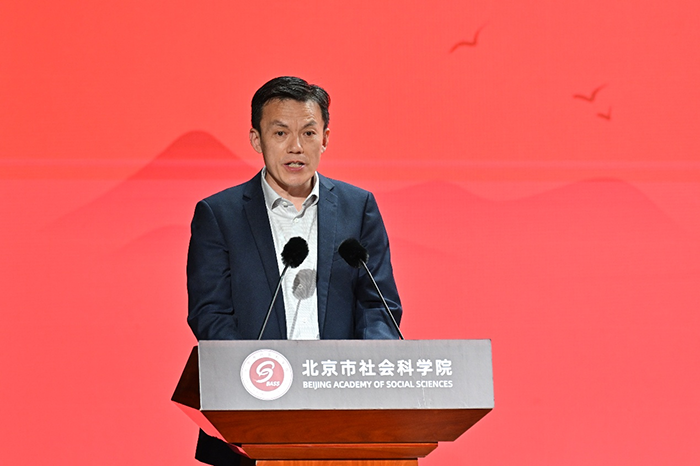
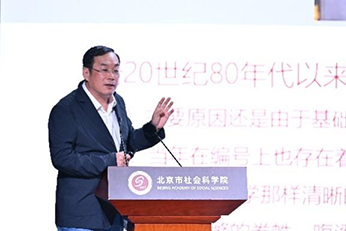
Liu Xiaoyang delivers remarks
In his remarks, Liu Xiaoyang stated that the Yunju Temple Sutra Collection is a precious historical and cultural heritage site unique to Beijing and rare in the world. He noted that the symposium is of great significance for promoting in-depth research on the Yunju Temple Sutra Collection and better exploring its contemporary value. Research on the Yunju Temple Sutra Collection, he said, should first be guided by academic principles to deepen the interpretation of its value; second, prioritize preservation while promoting adaptive use, making the collection both come alive and gain wider public attention through modern technologies such as digital and intelligent tools; and third, uphold openness and cooperation, fostering mutual learning among civilizations and bring the Yunju Temple Sutra Collection to the world.
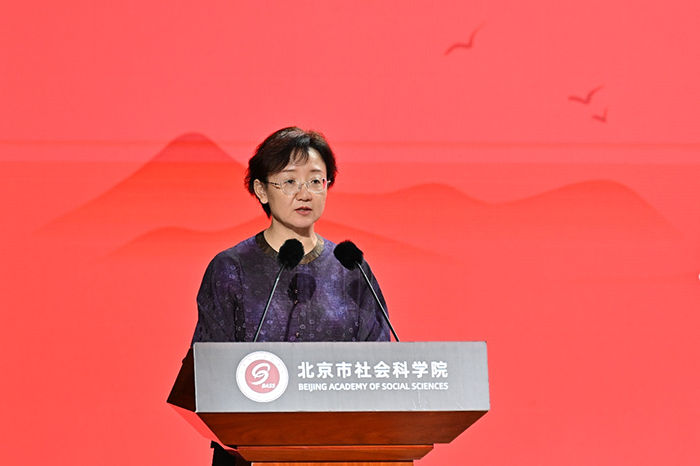
Lei Huan delivers remarks
In her remarks, Lei Huan stated that Yunju Temple is a cultural treasure of Fangshan District. The CPC Fangshan District Committee and the Fangshan District Government attach great importance to the exploration, preservation, and transmission of Yunju Temple’s cultural resources, and have continued to advance the collation, research, and revitalization of the Yunju Temple Sutra Collection, breathing new life into this millennium-old treasure.
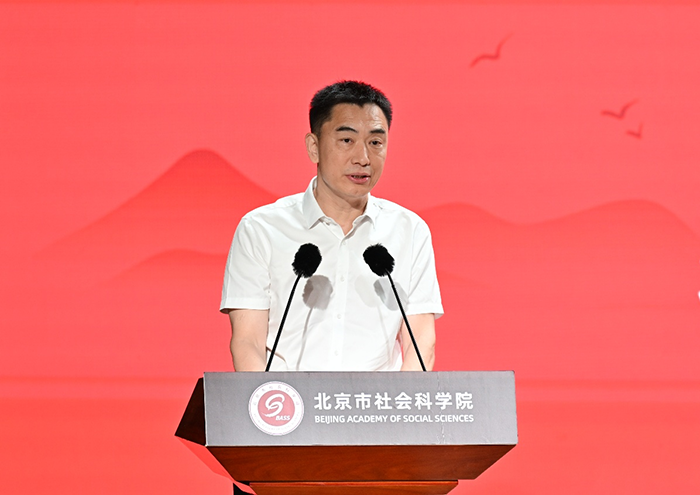
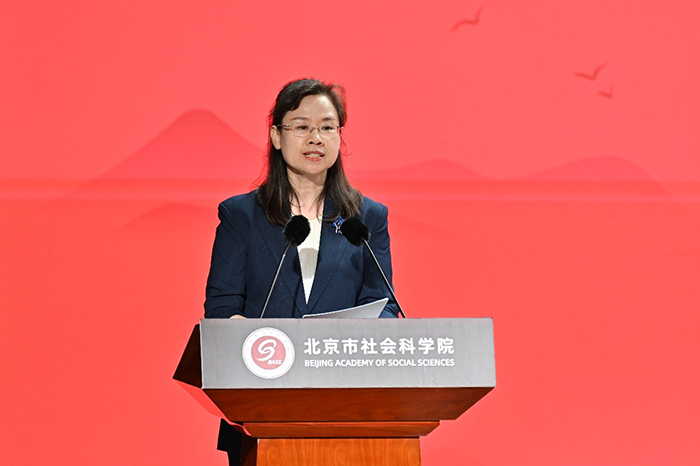
Xie Hui delivers remarks
In his remarks, Xie Hui pointed out that the Yunju Temple Sutra Collection is an extremely precious cultural emblem of Beijing, a city renowned for its history and culture. The Beijing Academy of Social Sciences has long been committed to research on Beijing’s history and culture, and will continue to integrate academic resources to deepen and substantiate research on the Yunju Temple Sutra Collection and contribute further to the development of Beijing as a national cultural center.
He Yalan chairs the symposium
During the keynote speech session, five experts systematically expounded on the multifaceted value and cutting-edge research of the Yunju Temple Sutra Collection from the perspectives of religious studies, history, philology, and calligraphy. Zhou Guangrong, Research Fellow at the Institute of World Religions of the Chinese Academy of Social Sciences, delivered a presentation titled “Capturing Sound and Image in Text: the Triple Attributes and Integration of Early Chinese Buddhist Stone Scriptures.” He argued that Chinese Buddhist stone scriptures are not only an embodiment of the Chinese tradition of literary and cultural education but also implicitly incorporate elements of teaching through sound and image. In his view, they represent a successful example of the Sinicization of Buddhism and a model of civilizational exchange and mutual learning. Kirill Solonin, a Russian Professor at the School of Chinese Classics at Renmin University of China, delivered a presentation titled “Yunju Temple and the History of Buddhism in North China”. He argued that the Yunju Temple Sutra Collection systematically reflects the overall characteristics of Buddhism in North China, centered on present-day Beijing, during the Liao and Jin dynasties, with its influence extending to the Buddhism of Northwest China as reflected in the Khara-Khoto Documents or Heishui Cheng Documents. Venerable Nengren of the Research Institute of The Buddhist Culture of China delivered a presentation titled “The Fangshan Stone Scriptures in the Context of Civilizational Exchange and Mutual Learning: Focusing on the WuGou JingGuang Great Dharani Sutra.” Centered on this early classic of the Esoteric Buddhism of milestone significance in the history of East Asian Buddhism, he revealed the unique value of the Fangshan Stone Scriptures in cross-civilizational exchange and integration. Zhang Yongqiang, Editor in Chief of the Chinese Calligraphers Association, delivered a presentation titled “The Reorganization of the Fangshan Stone Scriptures and the Establishment of a Digital Cataloging System.” He argued that the primary task regarding the Fangshan Stone Scriptures remains the collation of original materials, including the numbering, classification, and organization of all Fangshan Stone Scriptures and related inscriptions. He further proposed rescanning and photographing the rubbings of the stone scriptures with advanced technological means and using computer and digital imaging technologies to complete the digital transformation of the Fangshan Stone Scriptures. Wang Gang, Research Fellow at the Institute of History of the Beijing Academy of Social Sciences, delivered a presentation titled “On the Status of Yunju Temple in Beijing’s Cultural History.” He argued that Yunju Temple is an integral part of Beijing’s culture, one that has endured across different dynasties and been shared by people of various social strata.
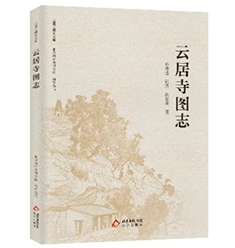
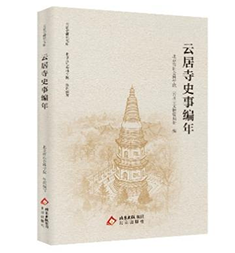
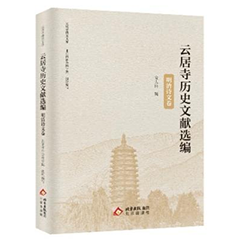
The symposium released the first three publications in the “Yunju Temple Research Series”: Illustrated Gazetteer of Yunju Temple, A Chronology of Yunju Temple History, and Selected Historical Documents of Yunju Temple (Volume: Ming and Qing Poetry and Prose).
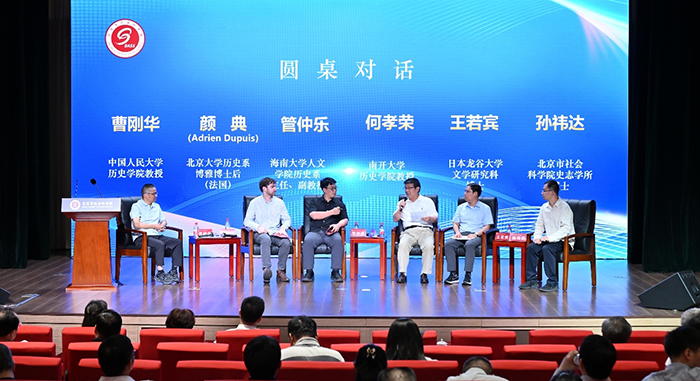
During the roundtable discussion, six scholars — Professor Cao Ganghua from the School of History at Renmin University of China, Professor He Xiaorong from the School of History at Nankai University, Associate Professor Guan Zhongyue from the School of Humanities at Hainan University, Dr. Wang Ruobin from Ryukoku University, Dr. Yan Dian from Peking University, and Dr. Sun Yida from the Beijing Academy of Social Sciences — engaged in an in-depth dialogue on the theme “The Mission and Future of the Yunju Temple Sutra Collection”. Cao Ganghua emphasized that the Yunju Temple Sutra Collection is a precious cultural heritage of all humanity. He Xiaorong pointed out that Jingwan’s engraving of the Sutras was carried out in the context of official Buddhist policy during the Sui Dynasty. Drawing on both material objects and documentary sources, Guan Zhongyue, Yan Dian, Wang Ruobin, and Sun Yida explored the significance of the engraving of the Fangshan Stone Scriptures in the medieval period and the historical development of the Yunju Temple. The participating scholars unanimously agreed that the Yunju Temple Sutra Collection is not only a cultural treasure of China, but also a shared heritage of all humanity. They called for accelerating its digital collation and multilingual dissemination, so as to promote its transition from a “national treasure” into a “memory of civilization”.
Following the first Yunju Temple Academic Symposium, this conference marked another high-level academic event. Its successful convening has further consolidated the academic consensus on the documentary study of the Yunju Temple Sutra Collection, clarified future research directions and pathways, and is of great significance for promoting the systematic preservation, in-depth study, and international transmission of Yunju Temple’s cultural heritage, thereby highlighting its historical depth and global significance.

 打印
打印 收藏
收藏