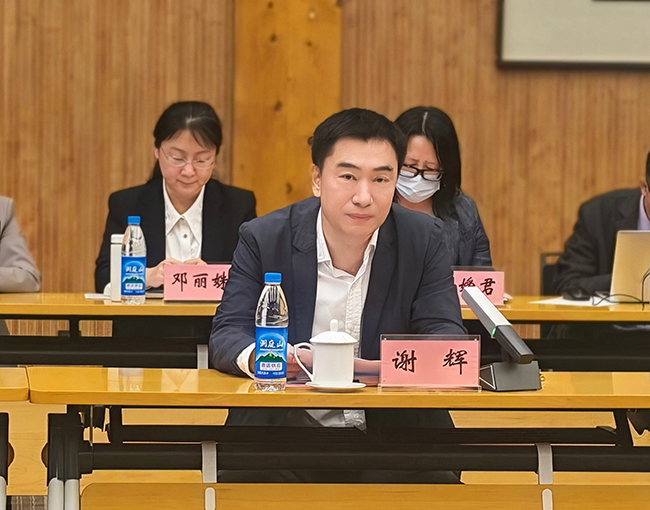
On April 10, the academic exchange event on “The Contemporary Significance of Cultural Heritage Conservation, Transmission, and Utilization” was jointly hosted by Beijing Academy of Social Sciences (BASS) and Suzhou Academy of Social Sciences (SASS) in Suzhou. Xie Hui, secretary of the Party Leadership Group of the Beijing Academy of Social Sciences, attended the event and delivered a speech. Yang Weiguo, deputy secretary of the Party Leadership Group and vice president of the Beijing Academy of Social Sciences, was also present. Wei Guoling, executive deputy director of the Publicity Department of the CPC Suzhou Municipal Committee and director of the Suzhou Municipal Press and Publication Bureau (Suzhou Municipal Copyright Bureau), attended and delivered remarks. The event was chaired by Wang Jun, president of the Suzhou Academy of Social Sciences. Attendees also included representatives from the Institute of Culture, the Institute of History, the Institute of Economics, the Institute of Sociology, the Institute of Urban Problems, the Institute of Municipal Situations, the Institute of Media and Public Opinion, the Institute of Historiography and Local Chronicles, the Editorial Department of the Journal of Urban Issues, as well as staff from the General Administrative Office, the Office of Scientific Research, and the Office of Think Tank of BASS.
Xie Hui expressed his gratitude to the Publicity Department of the CPC Suzhou Municipal Committee and the Suzhou Academy of Social Sciences for their meticulous arrangements and hard work. He noted that both Beijing and Suzhou are among the first group of nationally designated historic and cultural cities, and that the joint organization of academic exchanges on history and culture by the social science academies of the two cities constitutes a concrete step in implementing Xi Jinping Thought on Culture. He emphasized that the two cities share common challenge and complementary experience in areas such as cultural heritage conservation, preservation of townscape, and the integrated development of culture, commerce, tourism, sports, and exhibitions, indicating vast potential for cooperation. He expressed the hope that this academic exchange would serve as a high-level academic platform for experts and scholars from both cities to stimulate intellectual discourse and forge consensus, with the aim of jointly strengthening disciplinary foundations, exploring cutting-edge paradigms, building academic discourse, sharing research achievements, and broadening international horizons.
At the meeting, the two sides signed a strategic cooperation agreement and exchanged their representative research.
During the speech session, Shen Xiangping, professor at the School of Philosophy and Wu Yuzhang Chair Professor at Renmin University of China, delivered a presentation titled “Cultural Continuity in Urban Context: Practices and Reflections in Beijing and Suzhou.” Zhang Baoxiu, chief expert and professor at the Institute of Beijing Studies of Beijing Union University and member at the Beijing Research Institute of Culture and History, spoke on “The Contemporary Significance of the Conservation, Transmission, and Utilization of Cultural Heritage: An Interpretation Based on the Case of Beijing’s ‘Three Mountains and Five Gardens.’” Zhu Xiaotian, professor in the School of Sociology at Soochow University, spoke on “A Social-Historical Consciousness in Cultural Heritage Conservation,” while Ju Yi, professor at Suzhou University of Science and Technology and president of the Suzhou Environmental Culture Association, spoke on “A study on the Diversity of Intangible Cultural Heritage Transmission and Protection.” From various perspectives, the speakers discussed the course and experience of cultural heritage conservation, transmission, and utilization in Beijing and Suzhou, as well as their visions for the future development of historical and cultural initiatives in the two cities.
During the afternoon session, Gao Fumei, director and research fellow of our Institute of History; Huang Zhongshan, director and research fellow of our Institute of Culture; Ni Lerong, assistant research fellow at our Institute of Media and Public Opinion; and Jia Zhijie, assistant research fellow at our Institute of Culture, respectively elaborated on the dual logic of Beijing’s historical development and its conservation pathways, and narrative context and urban cultural ecosystem in heritage conservation, and introduced new forms of communication generated by the integration of cultural heritage and micro-dramas, and shared reflections and practices regarding the protection of intangible cultural heritage. Zhan Shihuang, associate research fellow at Institute of Economics of the Suzhou Academy of Social Sciences; Zhao Yunyun, assistant research fellow at the Institute of Sociology; and Duan Xiaoting and Xia Caiyi, researchers at its Institute of Culture, respectively reviewed the process of preservation and renewal of Suzhou’s ancient city from the perspectives of humanistic economics, poetry, and painting, as well as funerary cultural heritage. They distilled practical experience and explained the significance of renewing the ancient city. Professor Zhang Baoxiu and Professor Shen Xiangping offered comments on the presentations.
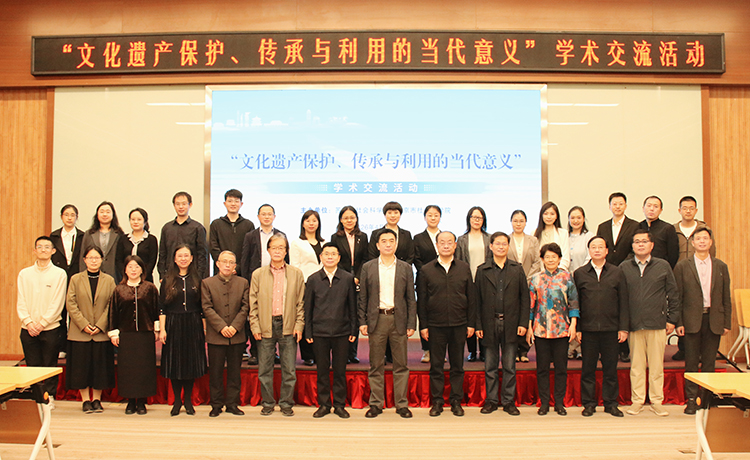
This academic exchange, jointly organized by the two academies, focused on the conservation, transmission, and utilization of cultural heritage, and established an important platform for cross-regional academic dialogue and mutual learning through practice. Drawing on the distinctive practices of Beijing and Suzhou, the participating experts and scholars engaged in in-depth discussions and built broad consensus. They not only summarized valuable experience in the protection of historic and cultural cities, but also explored innovative pathways for the revitalization and utilization of cultural heritage. Moving forward, both parties will continue to deepen exchanges and collaboration to jointly promote the creative transformation and innovative development of China’s outstanding traditional culture in both cities, and contributing stronger academic momentum and more social science insights to the protection and high-quality development of historic and cultural cities across the country.

 打印
打印 收藏
收藏